

_Leadership Plateau Why High Performers Still Get Stuck

Leadership Plateau: Why High Performers Get Stuck and How to Break Through

Key Takeaways of Leadership Plateau A leadership plateau occurs when impact stops scaling despite experience High performers plateau by overusing past success behaviors Leadership requires shifting from execution to system-level thinking Common signals include dependency, misalignment, and reduced leverage Breaking the plateau requires an identity shift from expert to enabler The PLATEAU Model provides a…
Read Full Article
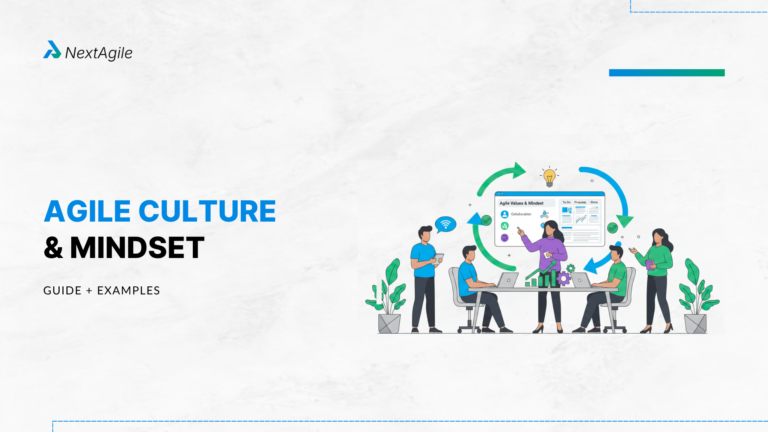
Agile Culture and Mindset Guide + Examples (2026)

Agile Culture and Mindset: Key Principles, Examples & How to Build

Key Takeaways Agile culture is driven by behaviors, leadership decisions, and team dynamics, not just frameworks Agile mindset enables teams to continuously learn, adapt, and improve delivery outcomes Most transformations fail because leadership and incentives don’t change, even if teams adopt Agile Core foundations include psychological safety, servant leadership, transparency, and outcome focus Agile culture…

Read Full Article
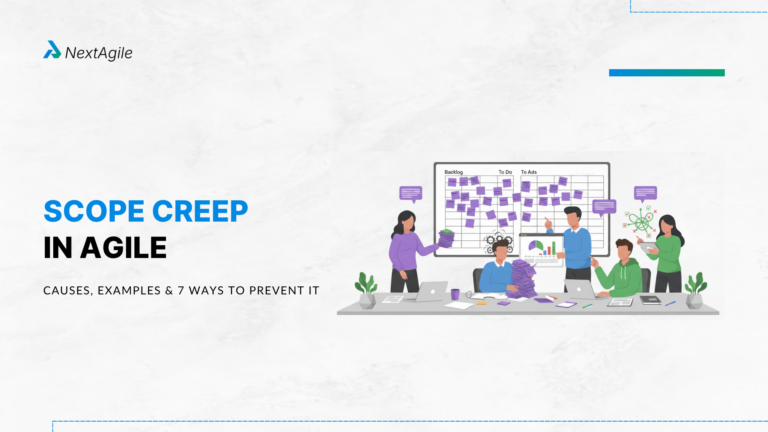
Scope Creep in Agile Causes, Examples & 7 Ways to Prevent It

Scope Creep in Agile: Causes & How to Prevent

Key Takeaways of Scope Creep in Agile Scope creep in Agile refers to uncontrolled changes or additions to a sprint without proper alignment or approval It differs from scope change, which is intentional, structured, and value-driven Common causes include poor backlog ownership, weak user stories, and stakeholder pressure Early signals include burndown spikes, velocity inconsistency,…

Read Full Article
AI Decision Making in Agile Who Controls AI-Driven Teams

AI Decision Making in Agile: What Happens When AI Starts Making Decisions?

Introduction Agile delivery has always relied heavily on human judgment. Product Owners decide what to build next, Scrum Masters help teams navigate delivery challenges, and engineers collaborate to determine how work should be executed within each sprint. However, the rapid rise of artificial intelligence introduces a new concept: AI decision making in Agile. Many organizations…

Read Full Article
How to Innovate Using Agile A Step-by-Step Guide

How to Innovate Using Agile: A Step-by-Step Guide

Key Takeaways Agile innovation combines Agile delivery with structured experimentation. Continuous feedback helps teams validate ideas early. Dual Track Agile separates discovery from delivery. Innovation backlogs help prioritize and manage ideas. Agile frameworks enable organizations to innovate faster with lower risk. What is Agile Innovation? In today’s fast-moving markets, organizations can no longer rely on…

Read Full Article
Agile Dashboard Explained 2026 (Tools + Examples)

Agile Dashboard Explained: Metrics, Tools & Examples

Key Takeaways (Featured Snippet Optimized) An Agile dashboard is a decision system that visualizes delivery health, flow efficiency, and risks in real time High-performing teams track a balanced set of metrics: velocity, flow (cycle time), quality, and outcomes (DORA) Dashboards fail when they focus on activity instead of actionable insights Different roles require different dashboards:…

Read Full Article
AI in Agile How It's Redefining Delivery for Enterprises

AI in Agile: Redefining Delivery from Scrum & Kanban to Enterprise Models

Introduction Over the past decade, Agile has transformed how organizations deliver software. Frameworks like Scrum and Kanban enabled teams to work iteratively, collaborate closely with stakeholders, and respond to changing requirements faster than traditional delivery models. However, as enterprises scale Agile across dozens or even hundreds of teams, new challenges emerge. Leaders struggle with delivery…

Read Full Article
Reaction vs Response in Leadership Break the Cycle

Reaction vs Response in Leadership: How Senior Leaders Move From Impulse to Intentional Action

Key Takeaways: Reaction vs Response in Leadership Reaction vs response in leadership is the difference between emotional impulse and intentional behavior Reactive leadership erodes trust, slows communication, and reduces team performance Responsive leaders create a pause between stimulus and action The R→R Shift Model (Recognize → Regulate → Reframe → Respond) provides a practical system…

Read Full Article