Top 10 Scrum Master Skills Checklist: Become a Trusted Agile Consultant
Anuj Ojha
Talk to Expert for Free
Table of Contents
Introduction
Scum Master’s role is one of the three most important roles in teams following scrum while working in Agile ways of working. Scrum master is a crucial and one of the most important roles in a scrum team. A scrum master is responsible for facilitating all the scrum ceremonies in the team, ensuring all the blockers are removed for smooth and seamless functioning of the development teams and smooth collaboration within the team members and with other teams. But how to become a scrum master? What skills do one needs to acquire to excel in this role? In this blog, we will dive deep into the scrum master skills, how one can develop them and why they are crucial for the success of an agile scrum team?
Who is a Scrum Master?
Scrum Master, is a servant leader who ensures that all the scrum practices are followed effectively by everyone within the team. Scrum master is responsible for facilitating all the scrum ceremonies and meetings/events. Also referred to as the Sankat Mochan of the team, they are responsible for solving problems and any kind of impediment that blocks the team from moving forward or achieving the sprint /project goal.
They also coach and train the team members regarding their roles and responsibilities, if they find any deviation. They also work towards solving problems in the work space and aim at achieving a high performing team culture that is cross functional and self organising. Scrum masters empower the team members to deliver value to the customer at the end of each sprint.
Importance of Scrum Master Skills
Having just theoretical knowledge of scrum is not enough to implement Scrum or Agile in a team. Scrum Master bridges the gap between Agile frameworks and its practical execution. If the scrum master lacks the right skills, scrum teams may be found struggling with inefficiencies, poor collaboration and sometimes even lack of direction. If you wish to become a successful and impactful scrum master, it’s necessary to develop the necessary skills. Implementing and learning the skills of a scrum master helps a team in fostering better collaboration, improve efficiency throughout the sprint, make the communication with stakeholders better, mitigate risks and remove roadblocks.
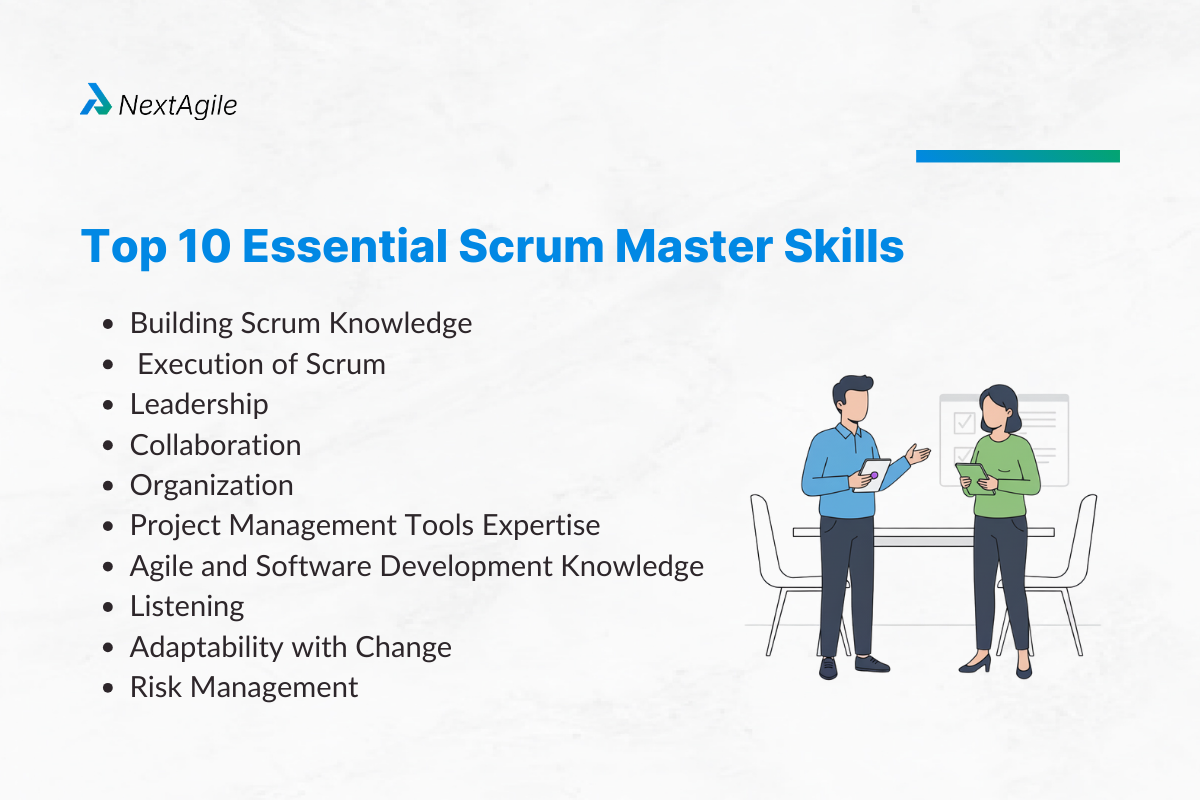
Top 10 Essential Scrum Master Skills
Being a scrum master is not just about facilitating the events and ceremonies for the team. It also requires a mix of leadership, technical and softskills. If one aims at becoming a scrum master, here is the list of skills one needs to dedicatedly learn and master.
1. Building Scrum Knowledge
To become great at the role of scrum master one must have a strong foundation in scrum principles. They should understand the 12 Agile principles and 4 values as mentioned in the Agile manifesto and all their suggestions, advice and observations should align with these values and principles.
They should also understand the responsibilities of each role well so that they can guide and coach each team member for specific roles like development team, product owner or even stakeholders, if they observe any deviation on the ground.
Not only this, they should learn and practice how to effectively and efficiently facilitate all the ceremonies in scrum viz. Sprint Planning, Daily Standups, Sprint Reviews and Retrospectives so that each ceremony solves its purpose and does not become an overhead for team members.
2. Execution of Scrum
As pointed out earlier in this blog, scrum isn’t just about knowing the theory but about its effective execution. A Scrum Master should ensure that the team follows all scrum practices without any exception. There may be some edge cases but then they should refer to the principles and values of Agile and take a call.
Scrum master should also be able to identify and remove impediments which hinder the progress of the project and stops the team from achieving the sprint goals.
3. Leadership
Since Servant Leadership is in the core of scrum master’s role, scrum master should be able to lead with authority. He/ she should work on empowering the team to take ownership of the project and not only stick to their specific tasks, encourage a culture of collaboration and transparency and resolve conflicts in a constructive manner.
 Skip to content