Executive Summary This white paper is about exploring the foundational “flashbacks” of prominent Agile frameworks—Scrum, Kanban, Extreme Programming (XP), Lean Software Development, and the Scaled Agile Framework (SAFe). The goal is to uncover their origins, who came up with the particular approach and how and most importantly the impact of these approaches on the ‘agile’ world.
From manufacturing floors to software development and enterprise-wide transformations, various organizations have used these approaches as a direct response to the limitations of traditional project management and have emphasized on iterative delivery, continuous feedback, and human-centric collaboration.
Their enduring popularity in an increasingly complex and dynamic business landscape is rooted in their proven ability to enhance adaptability, accelerate value delivery, improve product quality, and foster highly engaged teams.
Chapter 1. Introduction: The Evolution of Agile Thinking Why Agile Emerged or the origin of Agile methodology? Project management hit a real wall. The old-school “Waterfall” methods, with their strict, step-by-step approach, just couldn’t keep up with the mind-boggling complexities and lightning-fast changes happening in modern industries, especially in the world of software development. These traditional ways typically demand you plan everything out to the nth degree right at the start, then follow a straight line through design, building, and testing. The big problem? There was next to no wiggle room once a step was “finished.” This rigidity often meant agonizingly long waits for feedback, a real delay in getting anything truly valuable out the door, and, far too often, projects going belly-up, leaving everyone involved utterly fed up.
The challenges of the 1990s, famously dubbed the “ Software Crisis ,” only cranked up the pressure for smarter, more adaptable strategies. Back then, software requirements were often fuzzy from day one and prone to sudden, unpredictable shifts. That made detailed, upfront planning not just impractical, but usually a total waste of time. Clearly, what was on offer simply wasn’t cutting it; a complete rethink of how projects were dreamed up, handled, and finally delivered was desperately needed.
The Agile Manifesto as a Unifying Force A truly game-changing moment for project management arrived in 2001. Seventeen influential software gurus got together, driven by one big idea: to formalize a whole new way of thinking. This standout group also included those who were behind the frameworks we will talk about later, like Jeff Sutherland, Ken Schwaber, and Kent Beck. Their shared vision boiled down to something pretty radical: putting adaptability, collaboration, and quick responses to change way ahead of simply sticking to a rigid, predefined plan.
This historic meeting led directly to the creation of the “Manifesto for Agile Software Development.” This groundbreaking document laid out four core values that would completely shake up project management: it was all about valuing “individuals and interactions over processes and tools,” preferring “working software over comprehensive documentation,” stressing “customer collaboration over contract negotiation,” and, crucially, choosing “responding to change over following a plan.”
The birth of the Agile Manifesto 2001 acted as a vital spark, bringing coherence and a shared identity to various emerging methodologies. Sure, individual approaches like Scrum and Extreme Programming (XP) were already brewing or even actively in use throughout the 1990s, but the Manifesto offered them a unifying banner. Jeff Sutherland even mentioned that the attendees deliberately settled on the term “ Agile ” to boost their collective standing and establish a common language for their diverse, yet philosophically aligned, ideas. This intentional move to unite different methods under one clear, recognizable brand gave them immense credibility and a shared vocabulary. This collective identity and set of values dramatically speed up the broader acceptance and adoption of these “new ways of working” well beyond their initial niches, genuinely fueling their collective rise to widespread popularity.
Let’s delve deeper into the history of different types of agile frameworks.
Chapter 2. Scrum: The Iterative Game Changer Origin Story Ever wonder where Scrum actually kicked off? It wasn’t born in some Silicon Valley garage, surprisingly. Its true genesis dates back to 1986, with a seriously influential Harvard Business Review article called ‘The New New Product Development Game’ written by two sharp Japanese academics, Hirotaka Takeuchi and Ikujiro Nonaka, this paper laid out a truly holistic, team-first way to develop products. They drew a cool analogy to a rugby scrum—imagine a diverse team, all working together, pushing forward, step-by-step, toward a unified goal. Here’s the really interesting bit: they were talking about hardware companies that were killing it with these agile, collaborative, iterative methods. The core ideas were thriving long before software folks even thought to adopt them!
Now, the Scrum framework we know today, largely thanks to Jeff Sutherland and Ken Schwaber. They are the recognized co-creators, and get this: back in the early 90s, they were both experimenting with similar concepts, completely separately, within their own companies. It all started clicking into place when Sutherland, along with John Scumniotales and Jeff McKenna at Easel Corporation, rolled out an early version of Scrum to their teams in 1993. Building on those practical experiences, Sutherland and Schwaber officially pulled it all together and codified Scrum at the 1995 OOPSLA conference. Their collaboration didn’t stop there, either. They were key players in drafting and co-signing the famous Agile Manifesto in 2001. And then, for the definitive word on Scrum, they authored and continually updated the ‘Scrum Guide,’ which, since 2010, has been the authoritative resource.
Path to Popularity – Scrum’s Rise to Stardom So, Scrum has absolutely exploded in popularity. It’s now the undisputed champion among Agile methods globally. We are talking about a whopping 58% of companies using it as their primary approach, and then another 18% integrating it alongside other tools. Seriously, you will find it everywhere – from the biggest Fortune 500 giants to organizations all over the world. It’s genuinely changing how we tackle gnarly, complex projects.
The Genius of Simplicity Why is Scrum such a hit? Its brilliance lies in its stunning simplicity. It basically strips away all the usual, mind-numbing complexities of project management, leaving you with this wonderfully clear, easy-to-grasp framework that just nails the absolute essentials. This no-fuss approach means teams can dive right in and quickly get the hang of its core components: the Sprints, those clearly defined roles, the set events, and the specific artifacts they’ll be using. This “ just-enough ” structure is crafted to foster real self-organization and adaptability. Ken Schwaber, one of the framework’s co-creators, drives this point home so well: in those truly complex environments where you might never see the full picture from the start, Scrum’s whole philosophy is to “just start and then you will know what you need.” That, right there, effectively limits your project risk to just one sprint’s worth. This sweet spot – minimal rules paired with tightly time-boxed iterations – gives teams incredible freedom. They discover solutions organically, which, in turn, sparks innovation, ownership, and let’s be honest, seriously boosts productivity and engagement.
Conquering Complexity Through Feedback Scrum genuinely shines when you are up against complexity, empowering teams to navigate the unknown through constant learning and super-fast feedback loops. This makes it an absolute powerhouse for intricate problems, especially the kind we constantly bump into in software development. The entire framework, from top to bottom, is built around this idea of non-stop feedback. Daily Scrums helps with focused check-ins where team members quickly share what’s up and any snags they have hit. Sprint Reviews is your chance for a really thorough look at what’s been completed and to make any necessary tweaks to the product backlog. And Sprint Retrospectives provide opportunities for teams to reflect on their own process and pinpoint exactly where they can improve. This unwavering commitment to continuous learning and adaptation basically bakes improvement right into the team’s DNA.
Priorities, Progress and Predictability The framework is focused on identifying priorities and those iterative cycles is another major force behind its massive adoption. In Scrum each work-item is prioritized based on absolutely critical factors like Return on Investment (ROI) or deadlines, Product Owner does that and, all managed dynamically through the Product Backlog. The actual work happens in short, time-boxed iterations, usually running one to four weeks, known as sprints. This method allows for the frequent delivery of tangible “chunks of work.” Not only does this keep users genuinely engaged by consistently delivering value, but it also keeps investors happy, always seeing solid, undeniable progress.
The Power of Team & Role Clarity Beyond the mechanics, Scrum also does an excellent job of cultivating strong teamwork and clear role definitions. It spells out three core roles – the Product Owner, Scrum Master, and Development Team – and each has distinct responsibilities, which just naturally brings more effective collaboration. The Scrum Master, for instance, plays an incredibly crucial part. They are there to support the team, clear out obstacles, and even shield them from outside pressures, ensuring everyone stays focused and morale remains high. Jeff Sutherland himself has highlighted a direct, almost undeniable link between team happiness and stellar performance, even pointing to an astonishing 400% surge in output at Scrum Inc. when they started using a “happiness metric” to gauge and actively boost team well-being.
The Unseen Hurdles of Adoption Despite Scrum’s widespread appeal and undeniable benefits, there’s still a significant, often overlooked, challenge in getting organizations to adopt it more broadly. Jeff Sutherland doesn’t pull any punches when he talks about the high failure rate in Agile transformations. A truly disheartening 53% don’t meet management expectations, and what’s even more staggering: 67% of those companies actually end up going out of business. He squarely attributes half of these failures to “bad Scrum” implementations and the other half to a flat-out lack of an “agile” mindset within leadership. This observation underscores an absolutely critical point: the genuine success and lasting benefits you get from Scrum – and Agile in general – aren’t guaranteed just by mechanically putting the framework in place. History screams that a fundamental shift in how the organization thinks, particularly among leaders, is a non-negotiable prerequisite for long-term success. Without leaders who truly embrace and champion Agile values and principles, the whole transformation is, frankly, prone to failure, no matter how strong the framework itself seems. This highlights a crucial, broader implication for any organization even contemplating an Agile journey.
Chapter 3. Kanban: Visualizing Flow for Continuous Delivery
Kanban: From Factory Floors to Modern Desks So, where did Kanban even come from? Its roots are deeply industrial, specifically in post-World War II Japan. We are talking about the late 1940s, right there at the Toyota Motor Corporation. It was pioneered by an industrial engineering genius named Taiichi Ohno. Kanban actually started as a key part of Toyota’s “just-in-time” (JIT) production system. The whole idea could be encapsulated in one statement: make only what you needed, exactly when you needed it , to make manufacturing way more efficient. The word “Kanban” itself is Japanese for “visual signal,” or literally a “sign board” or “card.” It literally refers to those physical cards they used to signal demand for materials or parts coming from earlier stages of the process. This incredible system aimed to drastically cut down on waste – think huge piles of excess inventory – and seriously pump up the overall flow of production .
How Kanban Jumped to Knowledge Work? Now, here’s where it gets interesting. Those Kanban principles, initially cooked up for physical factories, turned out to be incredibly flexible, perfectly fitting the world of knowledge work. The big shift really began in the early 2000s. People started realizing that the core ideas – managing flow and, crucially, limiting work-in-progress (WIP) – applied just as well to all that intangible stuff we do, too.
David J. Anderson is widely credited with adapting and popularizing Kanban for software development and knowledge work in general. He actually built and put a Kanban system into action at Microsoft’s XIT Sustaining Engineering Group back in 2004. Then, he did it again at Corbis (that was a Bill Gates company) between 2006 and 2007. Anderson’s foundational insights are captured in his influential 2010 book, “ Kanban – Successful Evolutionary Change for Your Technology Business .” That book basically became the go-to guide for making Kanban work in creative and knowledge-based businesses.
Of course, other big brains contributed to Kanban’s evolution for knowledge work. There was Corey Ladas with his “Scrumban” (2008), which explored how Kanban and Scrum could actually play nice together. And then Jim Benson and Tonianne DeMaria Barry gave us “Personal Kanban” (2011), extending these principles even to individuals and small teams. Jim Benson, in his typical concise style, sums up Personal Kanban’s essence with just two rules: “ visualize your work and limit your work in progress. ” Simple, powerful.
This whole leap of Kanban from factories to knowledge work really highlights a profound change in what we define as “waste.” Taiichi Ohno’s original Toyota Kanban system was all about getting rid of physical inventory waste. But when David Anderson brought it to knowledge work, he brilliantly saw that limiting WIP applied just as much to “virtual work.” Jim Benson takes that idea even further, explicitly linking limiting WIP in knowledge work to cutting down on “too much cognitive load” and stopping teams from “prematurely finish[ing]” tasks with annoying defects. This shows a seriously sophisticated understanding of “waste” in the world of information and thought, moving way beyond tangible goods to focus on the actual efficiency of human thinking. The underlying connection is clear: cut down on work-in-progress, and you directly reduce multitasking and brain overload. That, in turn, sharpens focus, boosts the quality of individual tasks, and ultimately, ramps up overall team productivity while keeping defects to a minimum.
The Kanban Takeover Kanban has truly become a favorite for implementing Agile project organization. About 43% of organizations use it, often mixing it with other Agile methods. And get this: its adoption has absolutely skyrocketed, jumping from just 7% in 2019 to a massive 56% by 2022! That clearly shows its growing importance across all sorts of industries and departments, far beyond just traditional IT.
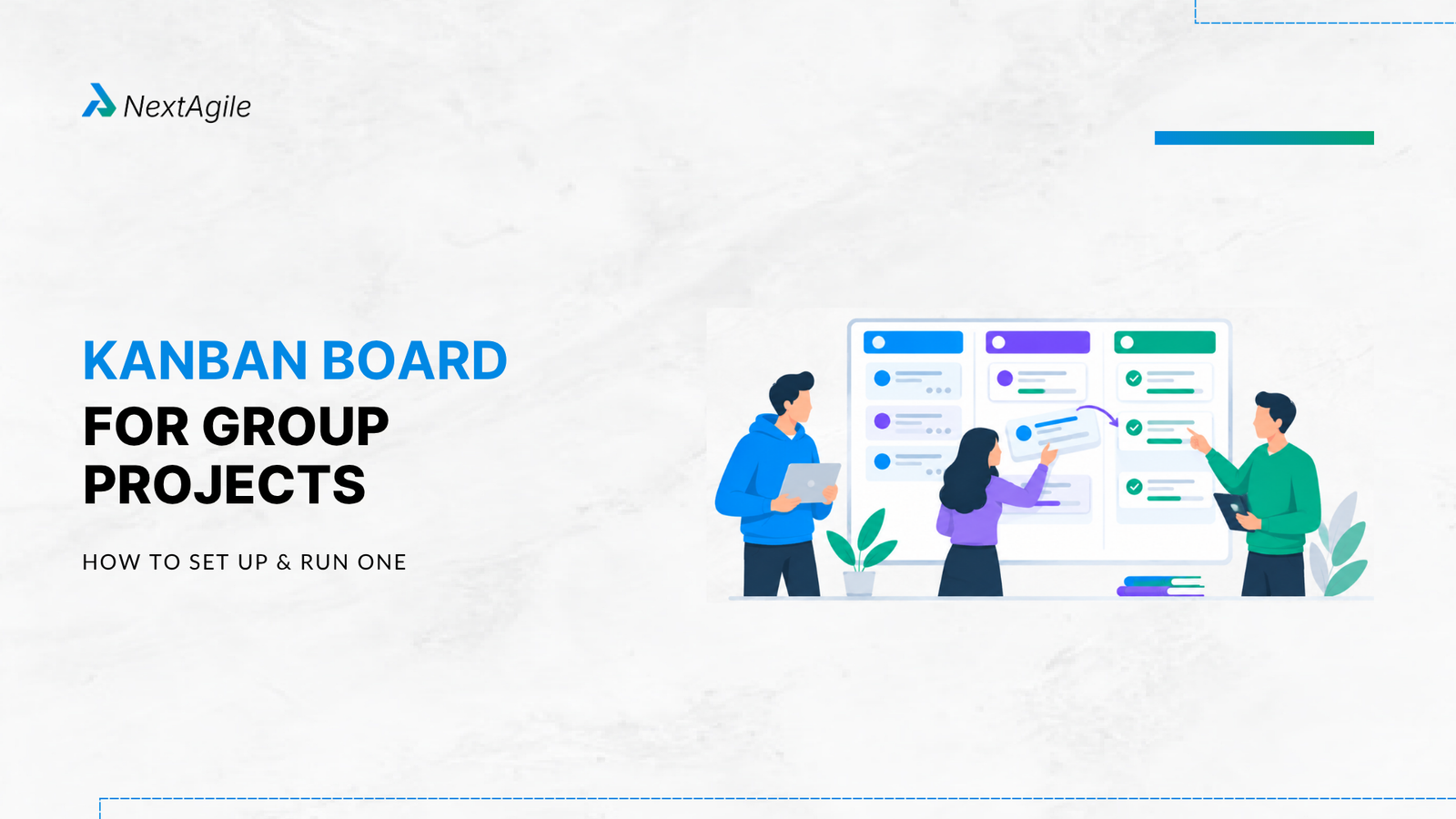
A huge part of Kanban’s appeal? Its amazing visibility. The core tool is the Kanban board, which literally shows you project tasks as cards moving through different columns – usually “To Do,” “Work in Progress,” and “Done.” This visual snapshot gives you real-time transparency on project progress, so teams can instantly spot bottlenecks and inefficiencies the moment they pop up.
This visual management directly translates into better productivity and smoother flow. By making workflows transparent and shouting out where things are getting bogged down, Kanban helps teams laser-focus on the actual work. It puts a big emphasis on measuring and managing the flow of work, using metrics like cycle time (how long a task takes to zip through the process) and throughput (how many tasks get done in a certain period). This ensures a steady, consistent pace of delivery, making sure work balances out nicely over time.
Kanban’s baked-in flexibility and adaptability as an Agile method means teams can react super fast to changing demands. The Kanban board is dynamic – cards can be moved around in a snap, due dates adjusted, resources re-assigned. It’s incredibly responsive to whatever the project needs to throw at it.
Another crucial practice for Kanban’s effectiveness is smart workload management by limiting Work in Progress ( WIP ). This principle explicitly caps the number of tasks a team or person can be juggling at once. It’s a “pull system”: new work only gets pulled into the system when the team genuinely has the capacity for it. This isn’t just about preventing multitasking; it slashes cognitive overload and ensures higher quality because everyone can focus deeply on one thing at a time. Not only does this optimize individual focus, but it also brilliantly reveals exactly where those workflow bottlenecks are hiding, allowing for targeted improvements.
Finally, Kanban naturally promotes a ‘continuous improvement’ mindset. It really pushes for ongoing collaboration and innovation. Teams are constantly refining their workflows and processes by regularly analyzing flow and solving problems together, all to squeeze out the maximum value possible.
And let’s not forget the “start with what you do now” principle and its focus on evolutionary change. This makes Kanban a much less disruptive entry point for organizations compared to some other, more prescriptive frameworks. Unlike methodologies that practically demand you tear down your entire existing process and rebuild, Kanban lets you simply visualize your current workflow and then slowly, incrementally introduce changes. This lower barrier to entry, combined with its focus on small, continuous improvements, makes it incredibly appealing to large, established companies or those who just shy away from dramatic overhauls. That’s a huge reason for its exponential adoption across so many different industries.
Chapter 4. Extreme Programming (XP): Engineering Excellence for Adaptability So, What’s the Story with Extreme Programming? Extreme Programming , or XP, found its feet back in the 1990s. It came straight out of the messy, real-world problems that software developers were wrestling with every single day. Kent Beck , pretty well-known in the software engineering world, hands-on involved, especially when he took the reins as the project leader for the Chrysler Comprehensive Compensation System (C3) payroll project in March 1996 – that was just critical for XP to take shape.
Picture this: Beck was seeing slow progress and those annoying system performance issues started and it was required to do something about it. He started with certain practices on the job & these were the methods that eventually fused together to become XP. He was honestly just fed up with how stiff and unyielding traditional Waterfall development was. That approach simply couldn’t keep up with customer requirements that seemed to shift constantly in software projects. This firsthand frustration fueled his innovation. It’s what pushed him to lay out the core values, principles, and practices of XP in his hugely influential 1999 book, Extreme Programming Explained: Embrace Change .
The Core Ideas and How They Actually Play Out? XP basically rests on five key values: Communication, Simplicity, Feedback, Courage, and Respect . Look, these aren’t just feel-good words; they’re directly backed up by a collection of really specific, interconnected engineering practices. And here’s the kicker: these practices are often taken “to an extreme” to really squeeze every last bit of benefit out of them.
Communication: XP really drives home the importance of talking face-to-face and constantly sharing knowledge within the dev team. Think pair programming , where two people literally work together at one computer, or just having teams sit together in the same room. It makes things so much smoother. Simplicity: The framework pushes you to build “the simplest thing that will work” to meet current needs. The goal here is to dodge any needless complexity, which, frankly, makes the code easier to grasp, maintain, and expand over time. Feedback: XP thrives on quick, continuous feedback loops. This comes from both customers (like having an on-site customer and doing small, frequent releases) and from within the development process itself (through Test-Driven Development and continuous integration ). This steady stream of feedback helps teams learn and get better, fast. Courage: Kent Beck defined courage as “effective action in the face of fear.” This value basically encourages developers to refactor code without hesitation, tackle those tough technical problems head-on, and adapt to change, all with the confidence that really strong testing practices offer a safety net. It’s a big deal. Respect: Mutual respect among everyone—team members, stakeholders—is seen as totally vital. It’s the bedrock for open talks, for giving and taking constructive feedback, and for just working together to find straightforward designs and solutions. These XP values come alive through several absolutely essential practices:
Pair Programming: Two developers team up at a single workstation, writing code together. This supercharges code quality, gets knowledge flowing immediately, and dramatically cuts down on bugs. It’s genius. Test-Driven Development (TDD): This is a cornerstone of XP, no doubt about it. It means writing automated tests before you write the actual production code. This approach doesn’t just guarantee high code quality; it also guides the software’s design, giving you instant feedback on any changes. Kent Beck himself explained how TDD helps make crucial design decisions about the Application Programming Interface (API) even before any real coding starts. Continuous Integration: Developers merge their code into a shared repository multiple times a day. Each merge is immediately checked by an automated build and test process. This catches and fixes integration problems early, stopping them from spiraling completely out of control. Small Releases: Working software gets delivered in very short cycles, often every week or two. This consistently delivers value to customers and allows for rapid feedback, letting the team adjust course really quickly. Collective Code Ownership: Every single person on the team is responsible for the entire codebase. This builds shared accountability, promotes knowledge sharing, and makes sure no one person becomes a bottleneck in the development process. Honestly, it’s brilliant for team dynamics. Why Did XP Catch On? XP really took off as a direct answer to the “Software Crisis” of the 1990s. Its explicit aim was to make the coding process way more efficient and deliver maximum value to the customer. Its strict technical practices, especially Test-Driven Development and continuous integration , led to significantly fewer defects, more dependable software, and increased robustness—hitting key pain points of older development styles dead-on.
The iterative nature of XP, combined with its focus on small releases and constant customer feedback, lets teams quickly adjust to changing requirements. This flexibility is a huge edge over those more rigid, traditional ways of working. Plus, practices like pair programming and collective ownership just ignite intense collaboration, spread knowledge throughout the team, and reduce reliance on individual “key players,” which honestly cuts down project risks a ton.
The “Extreme” in Extreme Programming doesn’t mean radical or outlandish practices, by the way. Instead, it signifies an intense, ongoing commitment to doing foundational practices exceptionally well. The Agile Alliance puts it clearly: XP “prescribes a small number of essential practices and encourages teams to perform them as well as possible, almost to an extreme.” This laser focus on technical discipline—like writing tests before code or having two developers constantly reviewing each other’s work—directly tackles the root causes of software bugs and technical debt. This direct connection between rigorous discipline in core practices and higher code quality, fewer bugs, and easier maintenance was a major sore spot in traditional software development, and a huge reason why development teams adopted XP.
Now, while XP might not be the most widely adopted standalone framework today, like Scrum or Kanban, its historical importance and lasting impact on the technical execution within the broader Agile movement are profound. Even if some reports don’t list XP among the top five most popular frameworks by direct adoption, other sources confirm its status as a popular Agile methodology. Crucially, many teams embracing Agile often start with a different framework but then, recognizing a need for more disciplined engineering, gradually bring in many, if not all, of XP’s engineering practices. This suggests that XP’s true, lasting contribution isn’t about being a dominant, isolated framework. Instead, it’s about providing those fundamental engineering practices—like TDD, Continuous Integration, and Pair Programming —that are now considered absolutely essential for building high-quality, sustainable software, no matter which Agile methodology a team uses. Its principles have truly woven themselves into the very fabric of effective Agile teams, cementing its legacy as a cornerstone of modern software development.
Chapter 5. Lean Software Development: Maximizing Value, Minimizing Waste So, Where Did Lean Software Development Even Come From? The whole concept of Lean Software Development comes directly from these principles they used in Lean Manufacturing started with the Toyota Production System (TPS) way back in the 1950s. Imagine 50 years before software was really a thing for most of us! The core philosophy of Lean, when you think about it in manufacturing, is pretty straightforward: you need to maximize what the customer values while, at the same time, ruthlessly slashing anything that’s just waste. It’s all about getting the whole process to hum along to “make the cars customers ordered in the fastest and most efficient manner,” and then, always keep making things better.
Taking Lean and Sticking It on Software Now, the actual phrase “Lean Software Development” got formalized by Mary Poppendieck and Tom Poppendieck . Their book, “Lean Software Development: An Agile Toolkit,” published in 2003, was quite popular and through all their work, they basically took those seven core principles from Lean manufacturing and meticulously translated and adapted them. They put them right into the very specific world of software development. And they showed everyone, clearly, how these ideas weren’t just for building physical cars or widgets; they totally worked for building software, too. It was a revelation.
The Seven Principles of Lean Software Development Lean Software Development’s power comes from its seven fundamental principles. Each one is designed to make the software development process as good as it can possibly be. Let’s break them down:
Eliminate Waste: This one is at the core. It means finding anything ie. any activity, any piece of code you wrote, any effort you put in – that doesn’t actually add value for the customer or to the software itself, and then you just get rid of it . The waste in software like code you don’t need, those soul-crushing delays, misunderstandings because no one’s talking properly, defects, mountains of documentation nobody reads, or having, like, twenty tasks open but none of them finished. Honestly, project managers have these regular meetings just to sniff out these problems and brainstorm ways to fix them. Amplify Learning: Lean is all about learning, all the time, throughout the whole process. How do you do that? Practices like deep, meaningful code reviews, cross-team meetings that actually accomplish something, and pair programming – they actively stop knowledge from getting stuck in little silos. They really encourage everyone on the team to get on the same page. Mary Poppendieck herself points out how much you learn when you have to respond quickly to an emergency. Teams just jump in, solve the problem, and boom! Valuable insights. It’s incredible. Decide as Late as Possible: This is a smart one. It tells you to hold off on those big, irreversible decisions until the “last responsible moment.” That’s when you actually have enough facts, enough new knowledge, to make the right call. This way, you keep things super flexible. You can adapt to new requirements, to what the market is doing right now . It just drastically cuts down the risk of building something that, turns out, nobody really wants. Deliver Fast: Lean is, like, obsessed with shrinking the time it takes from having an idea to actually getting working software into someone’s hands. By focusing only on the essential features and being absolutely brutal about eliminating waste, teams can deliver working software quickly . This lets you get rapid feedback from users and lets you respond to the market super fast. This often means going with an MVP (Minimum Viable Product) strategy , just to get something out there quickly with the core stuff. Bake Quality In: Look, quality assurance isn’t something you just tack on at the end. It’s integrated throughout the entire development process. We are talking about practices like test-driven programming (TDD) and constant feedback from your team members and project managers. This stops defects from piling up, which, frankly, saves you a ton of headaches later. It ensures you get a higher quality product right from the get-go. Respect the Team: Lean is big on empowering team members. It’s all about creating a truly collaborative, supportive atmosphere and, crucially, avoiding micromanagement. It totally recognizes that people are more important than fancy tools, and that motivated, self-organizing teams are just, well, inherently more productive. Tom Poppendieck really emphasizes that you need “ passionate leaders ” who can genuinely share their vision and light a fire under their teams. Optimize the Whole System: This principle shouts about optimizing the entire value stream. From that initial customer request, all the way to the final delivery. It’s not about making one tiny piece perfect in isolation. This big-picture view makes sure that if you make improvements in one spot, you don’t accidentally create new bottlenecks or screw things up somewhere else. It leads to overall system efficiency and, you guessed it, better outcomes all around. So, Why is Lean Software Development Widely Adopted? Lean practices have shown tangible benefits, and that’s basically why everyone adopted them. Organizations that actually put Lean into practice have reported things like boosted productivity (around 70% of them!), cutting time-to-market (up to 50% faster!), fewer defects after release (a 40% reduction!), and, best of all, happier customers (20% higher user satisfaction!). Those numbers speak for themselves.
Lean is especially good for startups. It lets them prototype like crazy, get those Minimum Viable Products (MVPs) out the door, iterate super fast based on user feedback, and really make every limited resource count. For established companies, it’s brilliant at finding and eliminating those hidden inefficiencies in old processes and just streamlining maintenance. And for really complex systems, Lean helps you break down those intricate components and get multiple teams to coordinate way better.
The emphasis in Lean on “delaying commitment” and “building quality in” is a fundamental philosophical leap away from those traditional, “plan everything upfront” methodologies. In Waterfall, for example, you do tons of planning before any actual development happens, which often leads to wasted effort if requirements change (and let’s be real, they always change). Lean, though, it actually embraces that uncertainty. It pushes off irreversible decisions until more information is available, and it bakes quality checks right into the whole process. This adaptive way of making decisions, combined with continuous quality integration, leads to significantly more flexibility, way less rework, and higher quality products that genuinely meet changing customer needs. That’s why it’s so incredibly attractive in today’s constantly shifting markets.
While Lean Software Development is definitely recognized as its own distinct framework, its principles are so core, so fundamental, that they just permeate and boost other Agile methodologies. Take Scrum’s concept of sprints, for example. It aligns perfectly with Lean’s “small batch sizes” and its focus on continuous improvement, similarly, Kanban’s main practices of visualizing flow and limiting work-in-progress. They are directly rooted in Lean’s waste reduction principles. And get this: the Scaled Agile Framework (SAFe) explicitly incorporates Lean principles into its comprehensive approach. This widespread influence also suggests that Lean isn’t just one Agile framework among many. No, it serves as a foundational intellectual current that truly underpins so much of what makes other Agile methods effective. Its entire history just screams that it’s a pervasive philosophy that continues to shape the evolution of Agile practices across all sorts of domains.
Chapter 6. Scaled Agile Framework (SAFe): Bringing Agility to the Enterprise Why Scaling Agile? You know, as individual Agile teams started really knocking it out of the park – just crushing it at delivering software and managing projects – larger organizations suddenly ran into a brick wall. They started seeing massive challenges when they tried to stretch those same benefits across multiple , interdependent teams, and, like, really complex, enterprise-level initiatives. While there are a lot of agile methods that are super effective for a single team, often just don’t have the kind of coordination, alignment, or governance that you need when you are doing something huge. It was a real gap.
Recognizing this huge problem, Dean Leffingwell , who was an experienced software executive and consultant, went ahead and developed the Scaled Agile Framework (SAFe) . He first introduced SAFe in 2011, with Drew Jemilo as a co-creator, as this comprehensive solution designed to really help big organizations actually scale their Agile practices effectively. The name itself, “SAFe,” was coined in 2012, which was the same year Leffingwell put out his book, “The Scaled Agile Framework.” SAFe’s explicit goal was to let enterprises grab all those well-documented benefits of Agile development while, at the same time, dealing with the unique complexities and coordination headaches that come with big, often hierarchical, organizational structures. It was a tall order!
How Does It All Fit Together? So, SAFe is this really comprehensive and pretty structured framework. What it does is systematically bring together principles and practices from a bunch of proven methodologies. We are talking about Lean, Agile, and DevOps. It also pulls in bits and pieces from other popular Agile methods like Scrum, Kanban, and even Extreme Programming (XP). What you end up with is this really holistic way of approaching agility across an entire enterprise.
The framework gives you a clear path for scaling Agile principles and practices. It starts at the program level, where multiple teams need to get their acts together, and then it goes all the way up to the enterprise level, where strategic objectives absolutely have to align with what’s actually getting built. This includes clearly defined roles, specific “ceremonies” (which are basically just planned events), and artifacts – all designed to make it easier to coordinate a ton of Agile teams within a larger company.
SAFe actually works at a few interconnected levels within an organization:
Team Flow: This is the base. Individual Agile teams (often using Scrum or Kanban, you know) just focus on delivering value in short sprints or iterations. ART Flow (program level): Here’s where teams get grouped into what they call Agile Release Trains (ARTs). These are kind of like virtual organizations, and their whole job is to coordinate and deliver those bigger, cross-functional projects. Agile Release Train or ARTs are key to making sure everyone is aligned and in sync, working towards a shared mission. Solution Train Flow (large solution level) : When there are solutions that are too big in size and require multiple ARTs to coordinate, the large solution level is applied. Solution. Like ART backlog, here we have a solution backlog from where multiple ARTs pull their work and coordinate throughout the planning internally to integrate their outcomes to build and deliver unified solutions. Portfolio Flow: This is the top, where leadership steps in. They align organizational initiatives with the big strategic objectives and manage investments across different value streams. It’s all about making sure resources are put to the best use to hit those business goals. Why Is It So Dominant? SAFe has just exploded onto the scene as the most widely adopted and talked-about framework for scaling Agile. 53% of respondents in the 16th State of Agile report said they use it. And Gartner also says SAFe is the number one most considered and adopted framework for scaling Agile. So, what’s behind this massive popularity?
Always Changing (Continuous Evolution): SAFe is built to be “always evolving.” They do regular updates (they’re at version 6.0 now!) that bring in all the new industry best practices like DevOps, Flow, and Design Thinking. This commitment to constantly improving means it stays relevant, even in our super dynamic business world. Dean Leffingwell himself has talked about how they are always fine-tuning how compliance fits into SAFe, showing it can adapt to new rules and quality needs. Beyond Just IT: This is a key. A huge difference maker for SAFe is that it understands true business agility isn’t just about IT or software development. It brings all departments and stakeholders across the organization into a “Value Stream narrative.” This makes sure you get end-to-end alignment and value delivery across the entire enterprise. It’s not just a tech thing anymore. Tons of Training and Content: SAFe’s popularity really gets a boost from its huge educational ecosystem. They offer structured courses for specific roles, giving clear guidelines and a proven way to implement it successfully. And their website, the Scaled Agile Framework site, has an incredibly comprehensive, free knowledge base, full of articles, cross-references, and advanced guidance. It just makes it easy for anyone to learn and adopt it. Flexible Configurations: SAFe isn’t a one-size-fits-all thing. It actually gives you multiple configurations (Essential SAFe, Large Solution SAFe, Portfolio SAFe, Full SAFe). This lets organizations pick the right level of adoption based on what they really need and what their goals are. This flexibility lets companies “ start small, experiment, and then implement the patterns and practices appropriate in their context ,” which, let’s be honest, reduces the perceived risk of a full-blown transformation. Proven Way to Do It (Proven Approach and Roadmap): SAFe offers a “proven implementation roadmap.” It’s built from patterns they saw in hundreds of successful enterprise adoptions. And it consistently delivers tangible benefits: things like more productivity, faster time-to-market, better quality, and better alignment across the organization. It just works. A super critical reason for SAFe’s success in big companies is how it manages to balance centralization and decentralization for enterprise agility. I mean, how do large organizations, when they go Agile, keep everyone on the same strategic page while still letting teams run with things on their own? That’s a huge challenge. Dean Leffingwell directly addresses this. He says SAFe allows “ strategy to be centralized… but decentralizing execution, decentralizing planning, decentralizing governance .” SAFe is popular because it gives you explicit ways – like those Agile Release Trains for syncing things up, and Lean Portfolio Management for smart funding – that really let you hit that delicate balance. This structured approach, where strategy comes from the top but execution is distributed, makes SAFe uniquely appealing to those big, often hierarchical enterprises that need top-down alignment but also really want the benefits of Agile’s bottom-up innovation.
What’s more, SAFe’s structured and comprehensive nature positions it as this sort of “bridge” for traditional companies to finally jump into Agile at scale. SAFe’s creators understood that many large organizations just aren’t ready to transform in such a drastic way overnight. SAFe gives them a proven, trusted and resilient framework that lowers the perceived risk of a full Agile transformation. This pragmatism, this approachable way of doing things, makes it a less scary choice for large-scale adoption. It lets them achieve business agility in contexts where less prescriptive Agile methods might just struggle to get any traction at all. This ability to bridge that gap between old structures and new Agile aspirations is a massive reason for its widespread popularity.
Chapter 7. Conclusion: The Enduring Impact and Future Trajectory of Agile Frameworks Why Agile Just Works When you really look at where all these big Agile frameworks came from – you know, Scrum, Kanban, Extreme Programming (XP), Lean Software Development , and even those scaled-up ones like SAFe – what you see is a pretty consistent story. From factory floors to the rough-and-tumble world of software development, these frameworks helped us from the changing demands which required us to be Agile to sustain. All of them have one thing in common – they guide us to be more adaptable, to work smarter, and to deliver real value in environments that are just getting more and more complicated.
Why did these ideas take off? Following are the things that explain the reasons of the wide usage:
All Approaches expect you to be flexible: This is, like, a universal truth across all of them. It’s about being able to respond quickly to requirements that keep changing and to market conditions that are always shifting, instead of sticking to rigid, “set-in-stone” plans. In today’s super-fast business world, this flexibility is just absolutely vital. Focus on small, frequent deliveries built iteratively, incrementally: This is a core practice they all share. It means actually getting working solutions out the door in small, regular chunks. Why? Because it lets you get feedback faster, you see value being delivered earlier, and you can course-correct continuously. This dramatically lowers the risk of building something that turns out to be completely useless. Customer obsession over technology or feature obsessions: There’s this huge emphasis on truly understanding and constantly delivering genuine, tangible value to the customer. This usually happens through direct conversations, those frequent feedback loops we’ve talked about, and just a relentless focus on solving actual user problems. Believing in your people, empower them, let them collaborate: This is fundamental. There’s a deep belief in how powerful self-organizing, cross-functional teams can be. These frameworks really foster strong communication, shared responsibility, and a supportive work environment. Because, let’s face it, engaged and empowered teams are just more productive and more innovative. Always Getting Better: Every single one of these frameworks or approaches has built-in ways for teams to regularly reflect, inspect what they’re doing, and adapt. This commitment to constantly making things better applies to both the product you are building and the way you are building it. It just creates a culture where everyone’s always learning. Reduce waste for operational efficiency: This is a huge theme that runs through all of them. Whether it’s getting rid of physical inventory (like in Kanban and Lean’s manufacturing roots) or reducing mental overload, unnecessary work, and those annoying delays in knowledge work (which you see in Scrum, XP, and Lean Software Development). The focus, always, is on streamlining processes to get the most bang for your buck. What’s Next for Agile? A Quick Look The way Agile has evolved, from frameworks for single teams to those comprehensive, scaled solutions like SAFe, LeSS, and Nexus , it just perfectly shows how adaptable it is to organizations growing and getting more complex. This whole trend of scaling agility is definitely going to keep going as more and more enterprises try to achieve end-to-end business agility across everything they do. And the fact that Agile principles are popping up beyond just software development – into marketing, HR, finance, even hardware! – signals this much bigger, ongoing shift towards enterprise-wide business agility. That’s where cross-functional collaboration and rapid iteration become the absolute norm.
Future developments will probably involve refining how these frameworks play nice with emerging technologies. Think about using AI-driven insights to make planning smarter or to optimize how work flows. They will also have to tackle new challenges that come with increasingly distributed and dynamic work environments, including those hybrid and fully remote teams. That’s a big one, for sure.
But here’s the thing: the biggest, most enduring challenge for organizations isn’t just about adopting the practices and tools of Agile frameworks. It’s about really cultivating that underlying Agile mindset and making sure leadership is consistently on board. As Jeff Sutherland, one of the Scrum creators, once pointed out, without Agile leadership, these transformations often just fall flat, leading to some serious business headaches . That really emphasizes that the real reason Agile sticks around goes way beyond the mechanics of individual frameworks. It’s about the fundamental shift in how organizations think . Mary Poppendieck, she put it so well, saying “ what you have to copy is how people think ,” not just their processes and practices. This means that the lasting power comes from developing a mindset not just setting up a framework within the organization. Carefully curating that culture that values collaboration, promotes constant learning, adaptability, and invests in building the empowered teams. That mindset.
The research clearly shows that there’s a super pragmatic trend toward mixing and matching in Agile adoption. The fact that people are talking about “Hybrid” approaches, combining bits of Waterfall and Agile, and that new frameworks like “Scrumban” are showing up. It really highlights that organizations aren’t just sticking to one framework rigidly. Instead, they are more and more willing to blend and customize approaches to best fit their own unique company contexts and specific problems. This suggests that the future of Agile will probably involve continued customization and mixing of methodologies, rather than just one framework dominating everything. Why? Because organizations are just trying to use the strengths of different approaches to hit their specific business goals. This adaptable, pragmatic way of implementing things is going to be absolutely crucial for staying relevant.
Leverage an external agile consulting company like NextAgile to help you contextualize agile to your business environment. It always helps to have a neutral expert at your disposal while you are planning to disrupt traditional gated ways of working or to improve existing agile adoption maturity.
With this, our white paper on Agile Frameworks: Origin and Popularity comes to an end and we hope that it gives you a good insight into the origins of agile as well as widely popular frameworks like Scrum, Kanban, XP, SAFe, Lean and others . We would be glad to support resolving bottlenecks in your agile journey as an Agile Consulting firm . Please write to us at consult@nextagile.ai for any queries or feedback.
Anuj Ojha is Co-Founder & Consulting Head at NextAgile. Anuj has designed & led multiple turnkey transformation journeys across industries, domains & geographies and has 16+ years of experience as an agile practitioner. He has worked with CXOs, CTOs & Key Leaders to translate their business objectives on the ground, contextualizing org transformations and creating buy-in across level, leading a team of coaches/consultants to implement agility across 150+ teams & trained more than 12k team members. Anuj’s core area of interest is business agility & working with leaders & teams to achieve long term sustainable, Agile culture & mindset.
 Skip to content