As a working professional, if you get a chance to talk to our parents about how things were in their era then it is likely that they will talk more about consistency, stability and assurance. The business world, and by that extension the organizations during their times were stable, they had little disruptions in the nature of their general life, ways of working and there was a kind of consistent demand and supply. Most of their career was spent doing the same things in repetition. I apologise if I have generalised this but it is purely based on my experience interacting with people around me and definitely there would have been exceptions.
We have all witnessed the generational conflict that happens between us and our parents (and will happen with us and our children in near future). We can hardly connect to the career advice which our parents share. Our parents generation might feel that things are easy today in the age of technology with so much information available at fingertips compared to their times while our reality is that today due to rapid changes in technology it has become increasingly difficult to upskill oneself all the time and things we may be good at become obsolete in no time.
The business world is in constant flux with changes happening at an unprecedented pace, technology, customer preferences, business environment, competition everything is changing all the time. We do not just have to build products but businesses, which have to beat the VUCA tides by being agile, innovative, and customer-focused. Absolutely not easy, but it is definitely possible. Let’s face it, the pressure is on. The challenges are endless.
This necessitates new ways to develop disruptive solutions and new ways of product development. We will discuss one such approach for building new products called NPD or New Product Development approach.
Technology is a continuously moving target & as one blinks, there’s a new AI tool or a technology like blockchain threatening to change the game. We need to stay ahead and not just keep up to even survive in such a market. It becomes imperative to inculcate a culture of continuous learning in organizations to leverage changing trends in technology space and set up mechanisms to adapt and show measurable benefits to business.
While we are busy upgrading ourselves, the businesses around us are also launching features, stealing the market share, and generally making life difficult, because competitors are hungry hence we need to be sharper, faster, and more creative. While these competitors are building differentiators, they are also building features to kill the uniqueness of other businesses, reducing their own operational cost and aligning with compliance and regulatory requirements.
If we are relying on one product then it is a risky game. Either that product is perfect and can’t be replicated, which I believe is quite tough to sustain or the business needs to continuously find new revenue streams, explore new markets, and expand the product portfolio, in short diversify or die. Customers have got demanding and want personalized experiences, they want instant gratification, and they want us to read their minds and that can’t happen unless we are agile and responsive to their changing needs.
Managing internal constraints & using them efficiently like budget cuts, hiring freezes, and pressure to do more with less are normal these days hence being strategic with our resources is key. Likewise, we couldn’t compromise with our reputation, just by one bad review, one social media blunder, we will have to get into damage control. It is important to build a strong, positive brand image, all the time.
To summarise, growth is non-negotiable and we need to be continuously mindful of ramping up our product development plan. Let’s dive into what the new product development process is and how to implement it in the next few paragraphs. We will try to address the following pointers and more in this blog –
What is the New Product Development Process?
What are the various Product Development stages?
What are the phases of Product Development?
What does a new product development life cycle look like?
What is the new Product Development Life cycle?
What Is The New Product Development Process (NPD)?
NPD is a systematic process of taking an idea from its initial spark all the way to a product that’s sitting on a shelf (or in someone’s hands). It is about building something people actually want and do it in a way that makes business sense. When it reaches the shelf, the product should hit all our anticipated targets in terms of business metrics and we should continuously grow it to sustain and beat the competition.
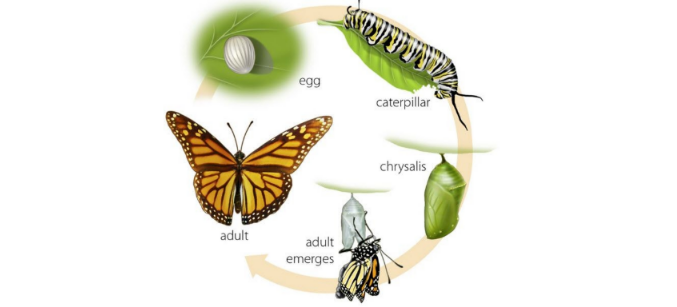
Think of New Product Development Life Cycle as a journey with distinct stages and each Product Development stage adds to the maturity of a product in it the Product Development life cycle, possibly just like the butterfly’s life cycle:
Generate ideas (Egg): The butterfly lays eggs on a suitable host plant, representing the initial spark of an idea. This is where it all begins. Likewise, it is about finding those gaps in the market, those problems customers are crying out to have solved. This is not just about sitting in a room throwing out random thoughts. It is about deep research, competitor analysis and keeping a tab on emerging trends.
Screen ideas (Caterpillar): we’ll have a bunch of ideas, but not all of them are winners. This Product Development stage is about being ruthless. Which ideas are actually feasible? Which ones fit with our business strategy? Which ones will people actually pay for? It’s about filtering out the noise. Think of it as the caterpillars hatching and beginning to consume the host plant to survive. And only the most promising ideas SURVIVE.
Develop the concept & test (Chrysalis stage): The caterpillar enters the chrysalis, undergoing a transformation into a new form. This is a period of intense development and change. In terms of our new product development, now we are getting serious. We are building a clear picture of what our product will be, who it is for and why they’ll want it. User testing is crucial here. Get feedback early and often. Build prototypes, run surveys and make sure we are on the right track.
Analyse the business impact (Inside the Chrysalis): This is the product development stage where the numbers come in. Can we actually make money from this product? What’s the potential market size? What are the costs? We need a solid business case to justify moving forward. While the chrysalis appears still, inside, vital systems are being formed and checked.
Develop the product-market fit (early butterfly): The butterfly emerges from the chrysalis, a fully formed product ready to take flight. Time to build the real thing. This is not just about coding or manufacturing. It is about creating a product that’s reliable, user-friendly and meets our quality standards. Agile methodologies are often used in this product development stage, to deliver in iterations. Leverage an agile consulting company for align your business objectives with agile adoption.
Conduct product testing in the market (first flight): Do not assume we have got it right. Get the product into the hands of real users. Beta testing, A/B testing, whatever it takes. This is where we find the bugs, iron out the kinks and make sure our product is ready for prime time. The butterfly takes its first flight, testing its wings and adapting to its environment.
Commercialization & ‘THE’ product launch (A matured butterfly): The mature butterfly flies, mates and lays eggs, continuing the cycle. In our product context, it’s a ‘Launch day!’ But it is not just about flipping a switch. We need a solid marketing plan, a clear pricing strategy and a plan for ongoing customer support. In this product development stage, the rubber hits the road. All the phases of product development are equally important and should be given due importance.
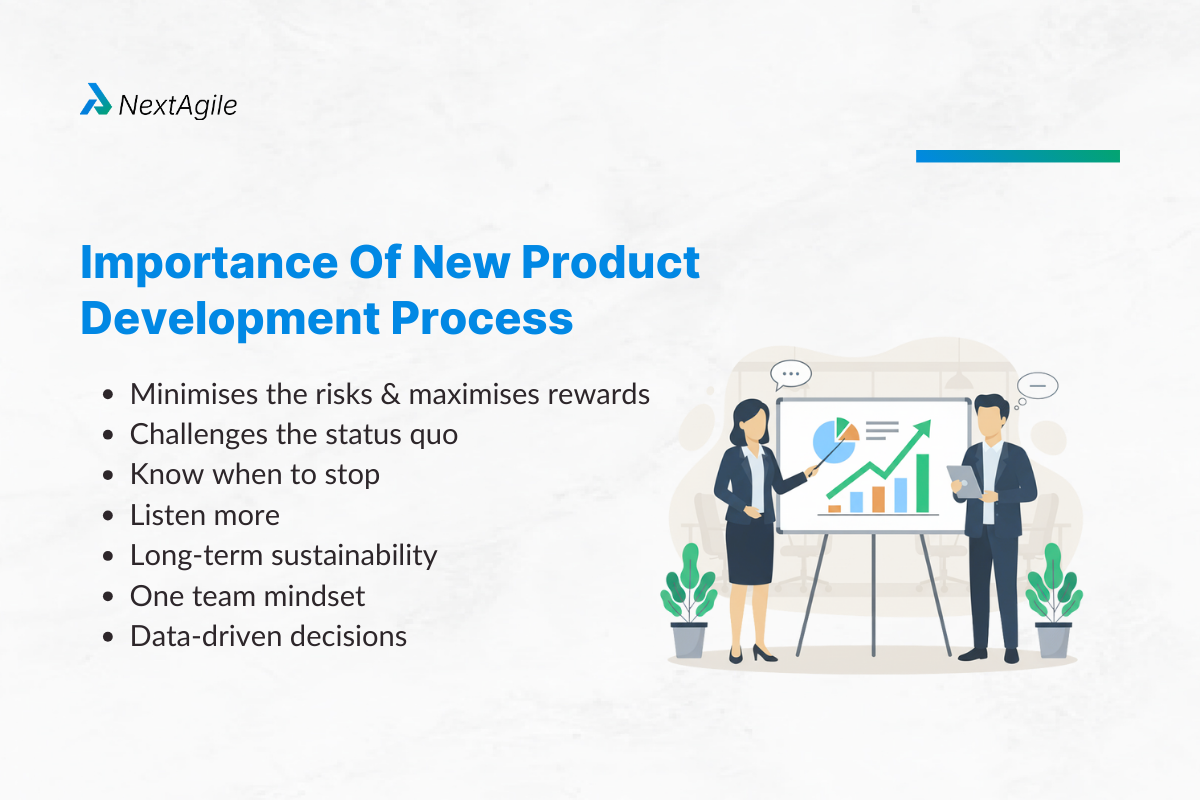
Importance Of New Product Development Process
The end goal of any product firm or team building the product is to stay relevant to customer & business needs, in demand and be adaptable to changing customer preferences so as to be ahead of the competition. Following are the important aspects of NPD:
 Skip to content