What Is a Lean-Agile Center of Excellence (LACE) and How Does It Work?
Anuj Ojha
Talk to Expert for Free
Table of Contents
Key Highlights of Lean Agile Center of Excellence
LACE is a small group of change agents who drive real Agile transformation by identifying problems, implementing improvements, and sustaining change across the organization
It helps organizations move beyond isolated Agile efforts by creating a consistent, scalable approach to continuous improvement and better collaboration
The success of LACE depends more on people than structure, especially those who have a lean-agile mindset, strong communication, and a genuine intent to help teams improve
Unlike an Agile PMO, LACE focuses on cultural transformation and long-term agility rather than just processes, governance, or project delivery
Introduction
‘Lean Agile Center of Excellence!’ Isn’t it a fancy name?
Imagine LACE or ‘Lean Agile Center of Excellence’ as a group of people who are passionate about making processes leaner, more efficient and easy to understand for everyone within an organization. Being part of LACE is an additional responsibility they take apart from actively participating in different teams and instrumental in observing the current ways of working, identifying bottlenecks and other improvements. You may think of it as a cohort of representatives from different groups or teams or ARTs who come together to talk about their success, challenges, cross-team collaborations and finding better ways to make organizations more agile by making processes leaner and meaningful.
Characteristics of a Lean Agile Center of Excellence
Roles and responsibilities of a Lean Agile Center of Excellence
LACE Models
How is LACE different from an Agile PMO?
What is a Lean Agile Center of Excellence?
LACE is responsible for identifying the change required, finding the best way to implement that change, monitoring the impact and then sustaining the change till we find a better way. We may call the members of LACE also as ‘change agents’. In SAFe or Scaled Agile Framework, the primary responsibility of LACE is to apply SAFe Lean agile practices and bring necessary changes in the behaviors.
The members of LACE are intended to have championed solving critical problems, act as a vital catalyst in bringing the culture of continuous improvement and learning across the organization. However, achieving genuine, sustainable agility at scale requires more than just adopting frameworks, actually it demands a strategic and purposeful approach, one that fosters a culture of continuous improvement and empowers teams to deliver exceptional value.
Why Do Organizations Need a LACE?
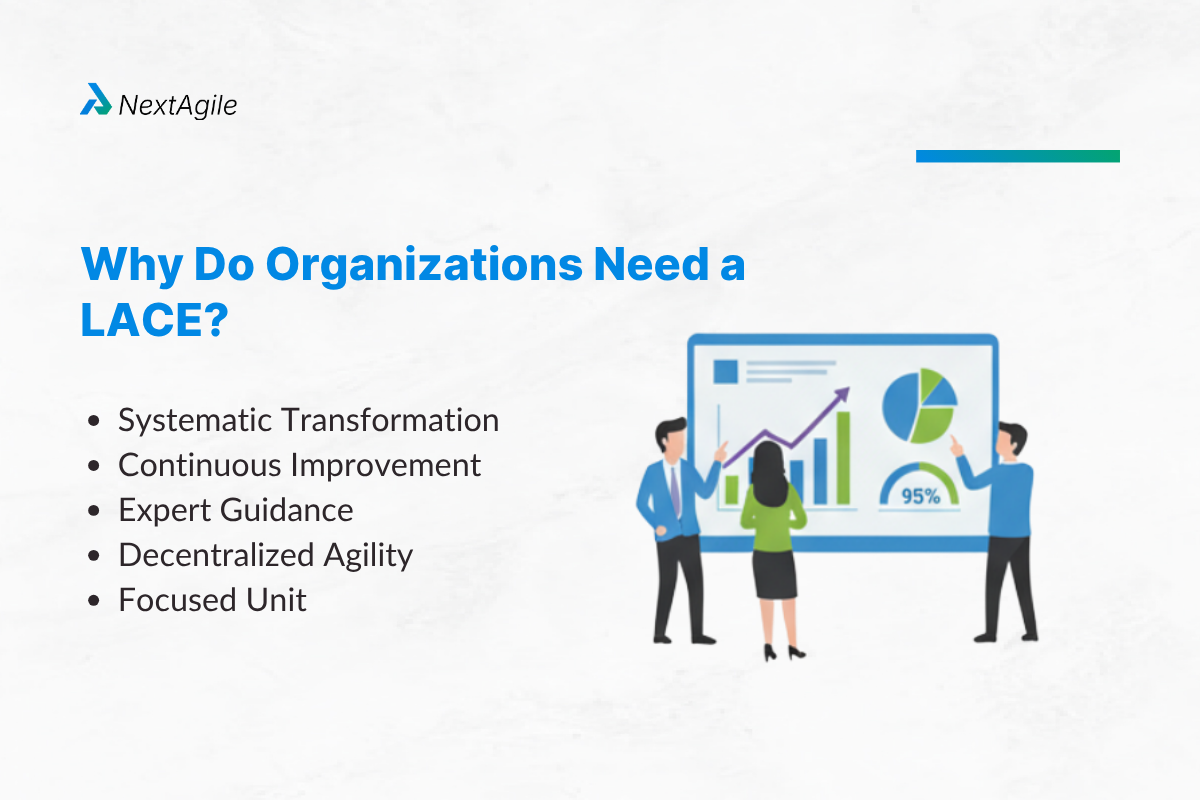
Implementing meaningful change, especially at scale, requires a systematic and effective approach. This is why the Lean-Agile Center of Excellence (LACE) is a necessary cohort to build in any organization.
Also, organizations turn to LACE to drive change that works. It’s about moving beyond isolated Agile experiments to a comprehensive, organization-wide transformation. The LACE provides the framework, expertise and guidance to ensure that Agile principles are consistently applied, building a culture of continuous improvement.
In larger enterprises, the LACE delivers an economy of scale. Decentralizing Agile practices are important so that we don’t feel that we are in the shackles of a certain ‘body’, and at the same time we need to have guiding principles which an individual can achieve by applying any set of practices. In the end, agility matters more over the set of practices.
The size and composition of the LACE are crucial for its effectiveness. Successful transformations often see the LACE grow from a core group of a few to multiple teams in larger organizations. But regardless of size, the LACE must always remain a focused and dedicated unit.
What is usually the size of a Lean Agile Center of Excellence Team? Experience has shown that a small team of three to five dedicated individuals can effectively support dozens of practitioners. This focused team can provide coaching, training and guidance, ensuring that Agile practices are implemented consistently and for the right purpose. As organizations grow, so too should their LACE capabilities, with teams doubling in size to support proportionally larger groups.
Characteristics of a Lean Agile Center of Excellence
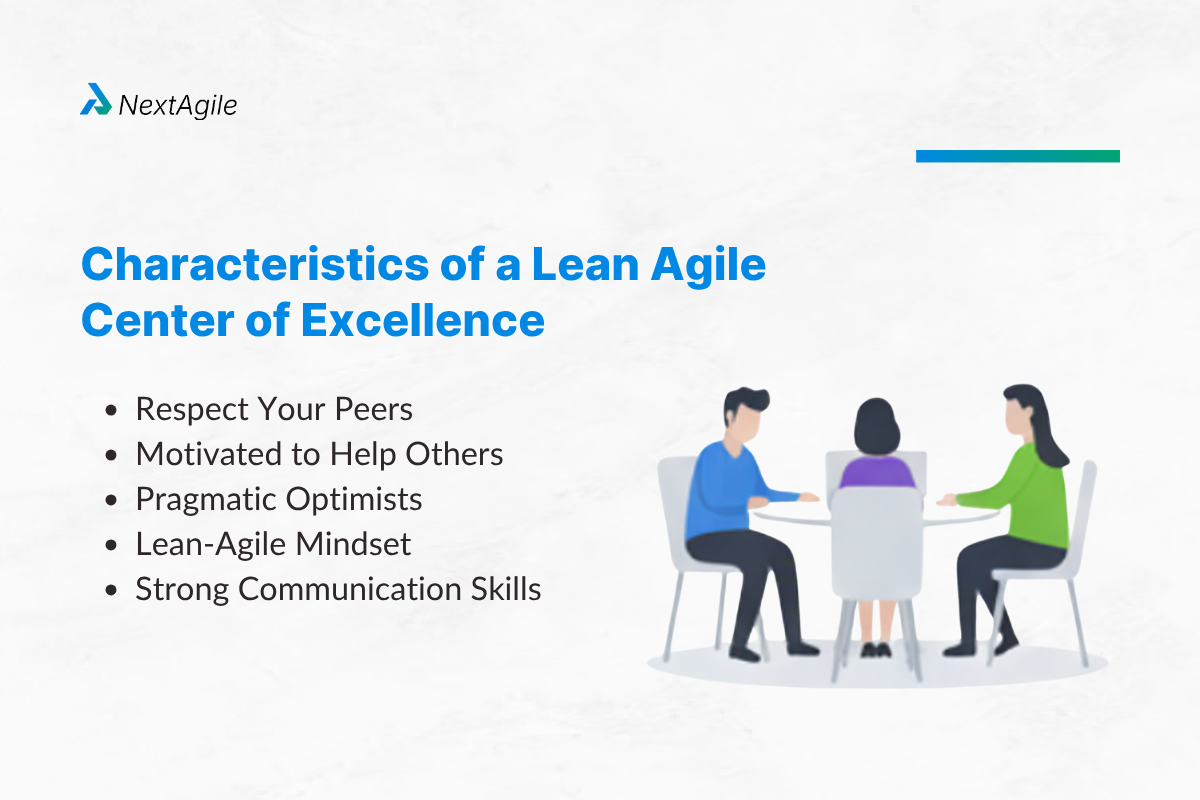
If you are planning to set up LACE at your workplace or already running it then following characteristics could help you in vetting it:
 Skip to content