The Complete SAFe PI Planning Guide: Checklist, Roles, Agenda and Best Practices
Alok Dimri
Talk to Expert for Free
Table of Contents
Key Highlights of SAFe PI Planning
PI Planning is a timebox event within an Agile Release Train that delivers incremental value through working software, requiring meticulous, transparent, and proactive planning.
The recommended mantra for effective PI planning is “Plan, Do, Check, Adjust, Communicate” which serves as the guiding principle throughout the planning process.
Pre-PI preparation is critical and includes scheduling all ART and team events in advance, readying the program backlog with top ten features, and ensuring all logistics and collaboration tools are in place.
Stakeholder alignment is non-negotiable. Product management, business owners, RTEs, architects, and all team members must actively participate and stay aligned on business context, vision, and key milestones.
PI Objectives must be SMART, business-toned rather than technical, and made visible to all. Business value is assigned to objectives to encourage collaboration between business owners and teams.
Dependency management is a key risk area. Dependencies should be planned earlier in the PI, kept simple, and never result in spaghetti-like connections on the program board.
Team confidence drives commitment. Objectives with low confidence or unresolved external dependencies should be moved to an uncommitted bucket and capacity should not be planned against them.
Continuous improvement is embedded through retrospectives, lessons from previous PIs, SOS events, and working agreements that promote discipline and availability.
“A timebox event within Agile Release Train (ART) which delivers incremental value in the form of a working software” is how SAFe defines a Program Increment (PI), and an effective PI requires work to be planned meticulously, transparently, and proactively.
Introduction to PI Planning
This article is an attempt to pen down a few hygiene elements to bear in mind while planning your PIs. Sort of a checklist that is drawn from our coaching experience and exposure to various pertinent best practices.
PI planning often sounds and feels humongous, almost intimidating! But with practice, rigor and iterations focusing on inspection, adaptation and improvement, the experience only gets smoother and easier.
Our go-to mantra for effective PI is “Plan, Do, Check, Adjust, Communicate”.
What is PI Planning – Depth of Explanation
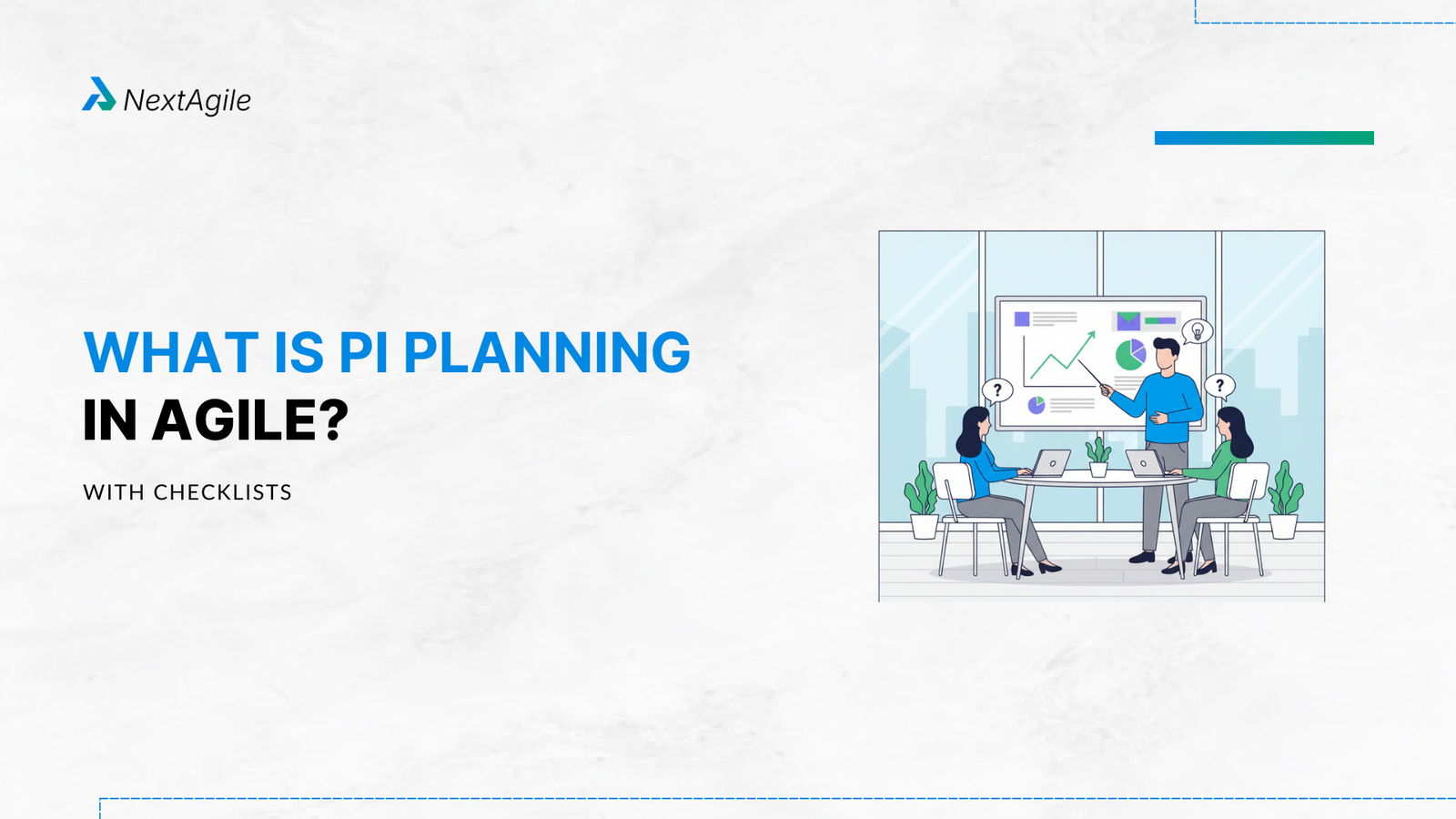
PI Planning is a face-to-face or virtual event held at the start of every Program Increment, typically spanning two days. It brings the entire Agile Release Train together, including all teams, product management, business owners, and architects, to align on a shared mission and plan the work for the upcoming increment.
A Program Increment typically spans 8 to 12 weeks, consisting of 4 to 5 development iterations followed by an Innovation and Planning iteration. PI Planning sits at the heart of SAFe and is often described as the heartbeat of the ART. It is not just a planning session. It is a synchronization event that creates alignment, builds team confidence, and establishes a shared commitment to delivery.
The key outcomes of a PI Planning event are:
A committed PI Backlog with stories planned for the first two iterations
A Program Board showing features, dependencies, and milestones
PI Objectives for each team and the ART as a whole
Identified risks that are either resolved, owned, accepted, or mitigated
A confidence vote from all teams on the overall plan
Without PI Planning, teams operate in silos, dependencies go unnoticed, and delivery becomes unpredictable. PI Planning is the single most powerful tool in SAFe to achieve alignment at scale.
Large enterprises often work with a specialist SAFe consulting company for coordinated planning events.
Roles and Responsibilities of PI Planner
Clarity on roles is fundamental to a successful PI Planning event. Here is a breakdown of who owns what:
Release Train Engineer (RTE) The RTE is the chief facilitator of PI Planning. The RTE is responsible for scheduling and coordinating the event, ensuring logistics are in place, facilitating the two-day agenda, managing timelines, surfacing impediments, and driving the ART toward a confident and committed plan.
Product Management Product management owns the program backlog and is responsible for presenting the product vision, roadmap, and top ten features to the ART at the start of PI Planning. They prioritize features, clarify requirements, and make real-time decisions on scope during the planning sessions.
Product Owners Product Owners work closely with their teams to break features down into stories, refine the team backlog, and ensure the team’s plan aligns with the broader PI Objectives. They act as the bridge between product management and the development team.
Scrum Masters Scrum Masters support their teams during PI Planning by facilitating team breakout sessions, tracking capacity, identifying dependencies and risks, and ensuring the team produces a realistic and committed iteration plan.
Business Owners Business Owners participate actively in PI Planning by reviewing team PI Objectives, assigning business value scores, and providing real-time feedback to teams. Their engagement ensures the plan remains commercially relevant and strategically aligned.
System Architect and Enterprise Architect Architects present the architectural vision and runway needed to support upcoming features. They guide teams on technical decisions, ensure non-functional requirements are accounted for, and highlight any architectural risks.
Development Teams Development teams are the backbone of PI Planning. They participate in team breakout sessions, plan iteration by iteration, identify dependencies, raise risks, and ultimately vote on their confidence in the plan.
PI Planning Agenda Walkthrough
A standard PI Planning event runs over two days and follows a structured agenda. Here is a high-level walkthrough:
 Skip to content