Skip to content
Introduction to Leadership Skills
Why do some leaders inspire action while others find it hard to engage their teams? The answer often lies in leadership skills, which are the behaviors that turn ideas into results. In today’s fast-changing business world, organizations need more than managers; they need leaders who can influence, adjust, and drive change. Leadership skills translate intent into consistent action and results.
The good news is that leadership isn’t just for a select few. Anyone can develop these skills at any point in their career. This guide covers the essentials: what leadership skills are, why they are important, and how to build them. Influence today is earned through behavior, not hierarchy. Think of it as your personal guide to becoming not just a manager, but a truly effective leader who creates lasting impact. Developing leadership skills is therefore a career-long advantage, not a one-time effort.
What are leadership skills?
Leadership skills are abilities that allow someone to guide and influence others. These skills shape how leaders think, decide, and relate to others daily. Leadership skills provide stability when conditions are uncertain. Key components include:
- Communication: Sharing ideas clearly and listening actively
- Decision-making: Choosing effectively under uncertainty
- Emotional intelligence: Understanding and managing people’s emotions
- Strategic thinking: Connecting vision with execution
- Collaboration: Building trust and teamwork to achieve shared goals
Why do leadership skills matter in Business?
In business, leadership skills are not just “nice to have”; they are essential. Organizations confront constant disruption, shifting markets, and rapid technological changes. Leaders with strong skills handle this complexity, making decisions that balance immediate needs with long-term strategy. Leadership skills provide stability when conditions are uncertain.
Here’s the truth: projects don’t fail due to technical gaps; they fail due to people gaps—miscommunication, lack of trust, or poor direction. Effective leadership skills help close these gaps, ensuring accountability and alignment. Most execution breakdowns originate in human dynamics rather than technical flaws.
For companies, leadership capacity directly relates to performance. High-performing leaders build engaged teams, foster innovation, and create resilience during crises. Without these skills, businesses risk stagnation, missed opportunities, and losing top talent. Leadership capability directly determines organizational resilience.
Who Benefits from Leadership Skills?
You might think leadership skills only matter for executives, but they actually benefit everyone in the organization.

- Emerging leaders build confidence and credibility.
- Mid-level managers improve their ability to align teams.
- Senior executives boost their influence and strategic impact.
- Even individual contributors benefit from learning how to communicate, collaborate, and influence without holding formal authority.
Leadership impact compounds when influence exists at every level. Consider this: projects succeed when people lead at every level. Whether you’re managing a small initiative or shaping company culture, leadership skills enhance your effectiveness. They are valuable for everyone, and the earlier you develop them, the more they compound over time. Early investment in leadership skills accelerates long-term effectiveness.
Types of leadership skills
Leadership skills come in various forms. They include traits, learned behaviors, and flexible approaches that leaders use in different situations. Broadly, they can be grouped into three categories:
- Leadership traits: Innate qualities or tendencies that shape how a leader presents themselves.
- Elements of effective leadership: Foundational practices that build trust and influence.
- Additional leadership styles: Different approaches leaders use based on the situation or culture.
Balanced leaders deliberately expand skills across all three areas. Understanding these categories helps leaders assess themselves and intentionally widen their skill set. The best leaders are not one-dimensional; they know when to be direct, when to collaborate, and when to step aside so others can shine.
Leadership Traits
Leadership traits are the personality-driven aspects of being a leader. Confidence, integrity, and resilience often come to mind first. However, traits also include subtler qualities: curiosity, humility, and emotional balance. Traits become strengths only when applied with intention.
In my coaching experience, I have seen that leaders with natural confidence can inspire quickly, but those who combine it with humility build deeper trust. Traits alone will not make you effective; they must be used intentionally. For example, resilience is crucial in a crisis, while curiosity fosters innovation. Knowing your main traits is the first step to turning them into assets instead of liabilities. Self-awareness transforms traits into leadership leverage.
Elements of Effective Leadership
Effective leadership usually combines:
- Vision: Clear direction for the future
- Influence: Inspiring others to act
- Accountability: Owning decisions and outcomes
- Adaptability: Adjusting to change
- Trust-building: Creating psychological safety
These elements create consistency across teams and decisions.
Additional Leadership Styles
Beyond common methods, leaders often adopt styles such as:
- Servant leadership: Prioritizing team growth and well-being.
- Transformational leadership: Inspiring innovation and significant change.
- Authentic leadership: Leading with honesty and transparency.
- Situational leadership: Adapting their approach to the current context.
The most effective leaders mix styles based on the situation, ensuring their influence resonates across different teams and challenges. Context determines which leadership style delivers the most impact.
Key Leadership Skills
Every effective leader relies on a key set of skills. Together, these skills form the operating system of effective leadership. Here are the essentials:
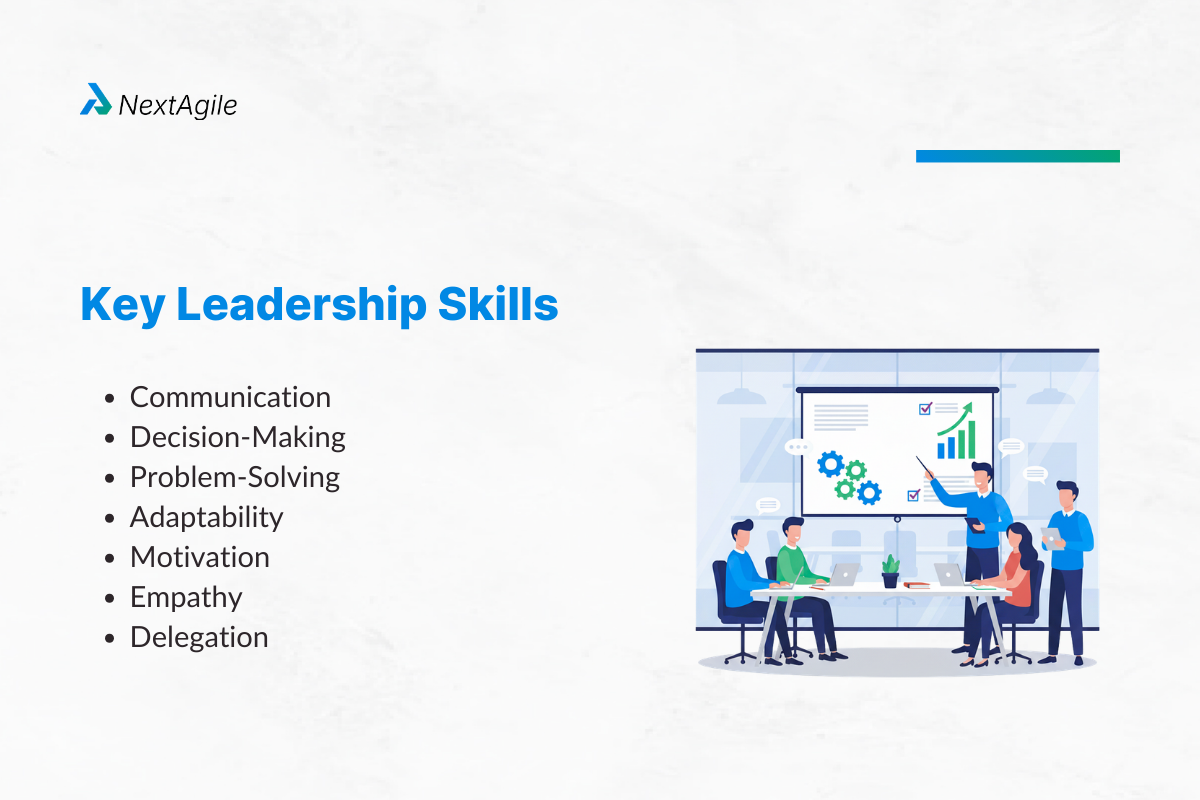
- Communication: Leaders must convey messages clearly while listening deeply. Great communicators adapt their style to the audience, ensure alignment, and foster openness. Strong communication reduces confusion, speeds up collaboration, and builds trust; it is the foundation for all other leadership abilities. Clarity accelerates trust and execution.
- Decision-Making: Leaders constantly weigh risks and opportunities. Strong decision-makers combine data with gut instinct and accept accountability. They act decisively, explain their reasoning, and adjust quickly when conditions change, balancing speed with thoroughness. Decisiveness builds confidence even in uncertainty.
- Problem-Solving: Complex challenges are normal. Effective problem-solvers define issues clearly, involve different perspectives, and generate innovative options. They view problems as chances to strengthen teams, processes, and strategies. Strong problem-solving strengthens both outcomes and capability.
- Adaptability: Disruption is inevitable. Adaptable leaders stay calm amidst uncertainty, shift strategies, and model resilience. They promote flexibility among teams, turning turbulence into opportunities for growth and learning. Adaptability keeps teams productive amid disruption.
- Motivation: Leaders energize their teams by connecting work to purpose. They recognize contributions, set ambitious goals, and empower individuals. Motivation comes from meaning, recognition, and trust rather than being forced. Purpose sustains effort beyond compliance.
- Empathy: Empathy allows leaders to see through others’ eyes, creating psychological safety and deeper engagement. It’s not just about kindness; it’s about strengthening understanding and connection to enhance performance. Empathy enhances performance by strengthening connection.
- Delegation: Effective delegation empowers others, shares responsibility, and prevents burnout. Leaders who trust their teams encourage growth while freeing themselves for higher-value strategic tasks. Delegation scales leadership capacity beyond the individual.
- Conflict Resolution: Conflict is a natural occurrence. Leaders who address it constructively protect relationships while keeping focus on shared outcomes. They maintain fairness while holding people accountable. Constructive conflict preserves trust while restoring alignment.
- Self-Awareness: Leaders who understand their strengths, weaknesses, and triggers can manage themselves better. Self-awareness builds authenticity, credibility, and potential for growth. Self-regulation begins with self-awareness.
- Integrity: Integrity defines a leader’s credibility. Leaders who act transparently and ethically build lasting trust that sustains influence even in tough situations. Integrity anchors leadership credibility under pressure.
- Strategic Thinking: Leaders must look beyond immediate issues and connect today’s actions to future opportunities. Strategic thinkers recognize trends and align resources with long-term goals. Strategic thinking aligns today’s actions with tomorrow’s goals.
- Teamwork: Great leaders promote collaboration and inclusivity. They break down silos, support diversity, and ensure team performance thrives. Collaboration multiplies individual capability.
- Creativity: By encouraging experimentation and diverse ideas, leaders foster innovation and spark breakthrough solutions. Innovation thrives where experimentation is encouraged.
- Relationship Building: Strong leaders cultivate genuine relationships. Trust and respect form the foundation for influence and collaboration. Relationships sustain influence over time.
Who needs leadership skills?
Leadership isn’t just for executives; it benefits everyone.
- Individual contributors gain visibility and influence.
- Managers align and empower teams.
- Executives shape vision and drive culture.
Leadership effectiveness is independent of formal authority. In reality, leadership is about influence, not titles. The earlier you develop these skills, the more your career trajectory and organizational impact will improve.
Ways to Develop Leadership Skills
- Develop Essential Skills: Strengthen communication, decision-making, and adaptability to handle challenges effectively.
- Learn and Grow: Read, attend workshops, and learn from role models to broaden your perspective. Curating context driven learning interventions leveraging a good leadership training company can kickstart the leadership growth journey..
- Embrace Continuous Improvement: Seek feedback, reflect on progress, and practice leadership daily, treating growth as an ongoing journey rather than a one-time goal.
Progress depends on repetition, reflection, and reinforcement.
Practical Leadership Development Path
Structured development accelerates leadership maturity.
Growing leadership skills works best when approached systematically. Here’s a path that many successful leaders follow:
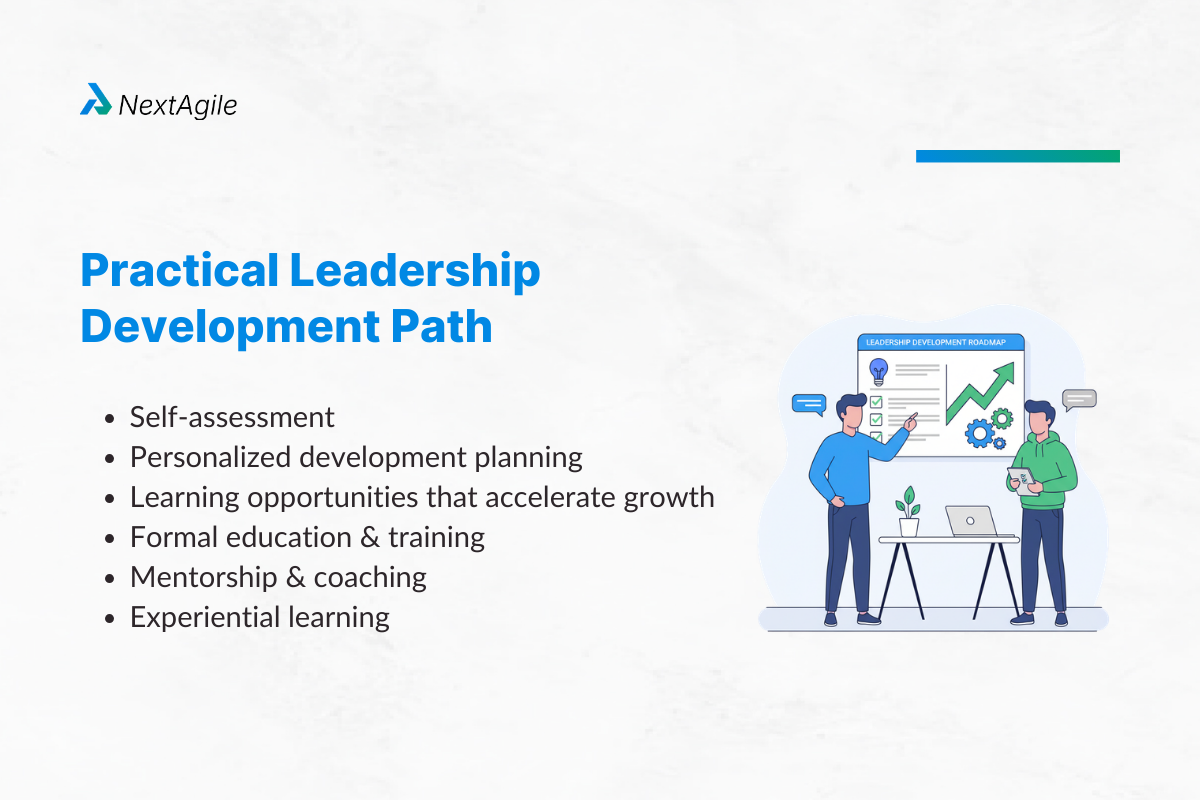
- Self-assessment: Identify your leadership strengths and weaknesses. Tools like 360-degree feedback and leadership assessments can reveal blind spots. Honest self-reflection is the first step. Insight precedes improvement.
- Personalized development planning: Tailor your goals. Focus on two or three critical skills at a time instead of spreading your efforts too thin. Focused effort delivers faster results than broad intention.
- Learning opportunities that accelerate growth: Engage in cross-functional projects or high-pressure assignments. Real challenges improve real leadership skills. Challenge accelerates capability.
- Formal education and training: Leadership programs offer frameworks and practice. Consider curating context driven learning training programs which are aligned to your organizational goals to cultivate innovation-driven leadership. Frameworks provide clarity and consistency.
- Mentorship and coaching: Guidance from experienced leaders speeds up growth. Executive coaching, for example, offers tailored feedback and accountability. External perspective sharpens internal judgment.
- Experiential learning: Hands-on experience in leadership is irreplaceable. Leading crisis projects, volunteer teams, or new initiatives expands your capacity. Leadership confidence grows through real responsibility.
- Self-directed resources: Books, podcasts, and online courses can support your growth at your own pace. Continuous learning sustains relevance.
- Measuring your leadership growth: Keep track of progress through feedback, performance metrics, or journaling. What gets measured gets managed. Measurement converts effort into progress.
What’s the difference between leadership and management skills?
Leadership and management are often confused, but they are not the same. Management centers on processes, planning, organizing, and ensuring tasks are completed efficiently. Leadership, conversely, focuses on people—motivating, inspiring, and aligning them with a vision. Leadership mobilizes people; management organizes work.
Both are important. An effective manager without leadership skills might achieve short-term targets but struggle with innovation and engagement. A leader lacking management discipline risks creating vision without execution. The ideal scenario is integration: leaders who manage well and managers who lead effectively. That balance transforms both performance and culture. Integration unlocks both execution and engagement.
Conclusion
Leadership skills are more than just buzzwords; they are the main drivers of influence, innovation, and organizational success. Whether you’re at the start of your career or leading thousands, your ability to lead determines your impact. Leadership skills shape outcomes more than authority.
The good news is that these skills are not fixed. With focused practice, feedback, and structured development, anyone can become an effective leader. The real question isn’t whether you’re born a leader, but whether you’re willing to develop into one. Growth begins with intentional practice.
At NextAgile, we help leaders grow through customized leadership journeys, from executive coaching to curated, business outcome driven contextual leadership training programs. Every step you take sharpens your influence, strengthens your teams, and transforms your organization. Leadership development is a strategic investment, not a soft skill.
Frequently Asked Questions on Leadership Skills
1. Can leadership skills be learned, or are people born leaders?
Leadership is not about being born with charm; it’s about building behaviors, mindsets, and habits. While certain traits help, most effective leaders grow their skills through deliberate practice, mentorship, and feedback. Leadership can definitely be learned and honed. Behavioral change drives leadership growth.
2. How long does it take to develop strong leadership skills?
There’s no set timeline because development relies on consistency and context. However, most professionals notice tangible improvements within 12 to 24 months of purposeful focus, especially when they combine formal training, coaching, and real-world application. Leadership growth is gradual but accumulates over time. Consistency compounds leadership capability.
3. Which leadership skill should I develop first?
Communication is foundational. Without it, even great strategies or decisions will struggle to gain traction. Start by improving your clarity, active listening, and feedback skills. Once you master these, other capabilities like problem-solving, motivation, and conflict resolution naturally follow. Communication enables every other leadership skill.
4. Can leadership skills help me if I’m not in a management position?
Definitely. Leadership is about influence, not titles. Strong communication, teamwork, and initiative make you more effective and visible, no matter your role. Exercising leadership skills early prepares you for growth opportunities and strengthens your impact within cross-functional projects and teams. Influence expands opportunity regardless of role.