Leadership Coach: Building Adaptable, Resilient Leaders for Organizational Growth
Alok Dimri
Talk to Expert for Free
Table of Contents
Introduction
Leadership in the rapidly changing business world today is more daunting than ever before. Companies are confronted with skill shortages, changing workforce needs, and increasing pressure to perform. In reality, research shows that more than 60% of employees believe leadership ineffectiveness exists and is affecting engagement and productivity. Leadership gaps often surface not during stability, but under pressure, when ambiguity, pace, and competing priorities expose limitations in decision-making, influence, and resilience.
This guide will walk you through what leadership coaching is, how leadership coaching works, the measurable benefits for individuals and organizations, and how to choose the right coach. Organizations looking to curate their leadership coaching program can also explore leadership enablement services of NextAgile. Leadership coaching creates a structured pause for reflection and recalibration, enabling leaders to operate with clarity rather than reacting under constant pressure.
What is a Leadership Coach?
A leadership coach is a professional who has undergone training to work alongside leaders to help them become more effective, confident, and influential. While mentors tend to provide advice based on experience, leadership coaches utilize systematic approaches, research-based tools, and assessments to determine strengths, deficiencies, and areas for growth.
Here’s the thing: leadership is not innate, it can be developed. That’s where a professional leadership coach comes in. Through tailored coaching, leaders at all levels, from emerging managers to C-suite executives gain the insights, tools, and strategies they need to perform at their best.
Good coaches possess qualifications including executive or leadership coaching certifications, a wealth of business acumen, and sound awareness of organizational dynamics. They operate in various industries, guiding leaders in communication, decision-making, and strategic thinking.
In practice, a professional leadership coach might help a senior executive navigate complex organizational changes, guide mid-level managers in team performance improvement, or provide emerging leaders with skills to lead confidently. Their expertise ensures coaching sessions are goal-focused, actionable, and measurable, fostering tangible leadership growth. The true value of a leadership coach lies not in giving answers, but in sharpening judgment, that way helping leaders think better, decide faster, and act with intent.
What is Leadership Coaching?
Leadership coaching is a systematic development process in which a coach collaborates with leaders in order to improve their skills, attitude, and performance. It integrates assessment, feedback, goal-setting, and pragmatic strategies to drive individual and organizational outcomes.
Core values encompass active listening, accountability, and behavioral intervention.
Leadership coaching developed from casual mentoring to an advanced practice combining psychology, business strategy, and performance metrics over the years.
Professional leadership coaches today pay attention not only to skill building but also to building self-awareness, staying resilient, and strategic thinking. Leaders are provided personalized guidance to overcome challenges, engage stakeholders, and deliver measurable results, all while connecting personal development with organizational outcomes. Unlike one-size-fits-all training, leadership coaching adapts to context, ensuring development is relevant to real business challenges rather than abstract models.
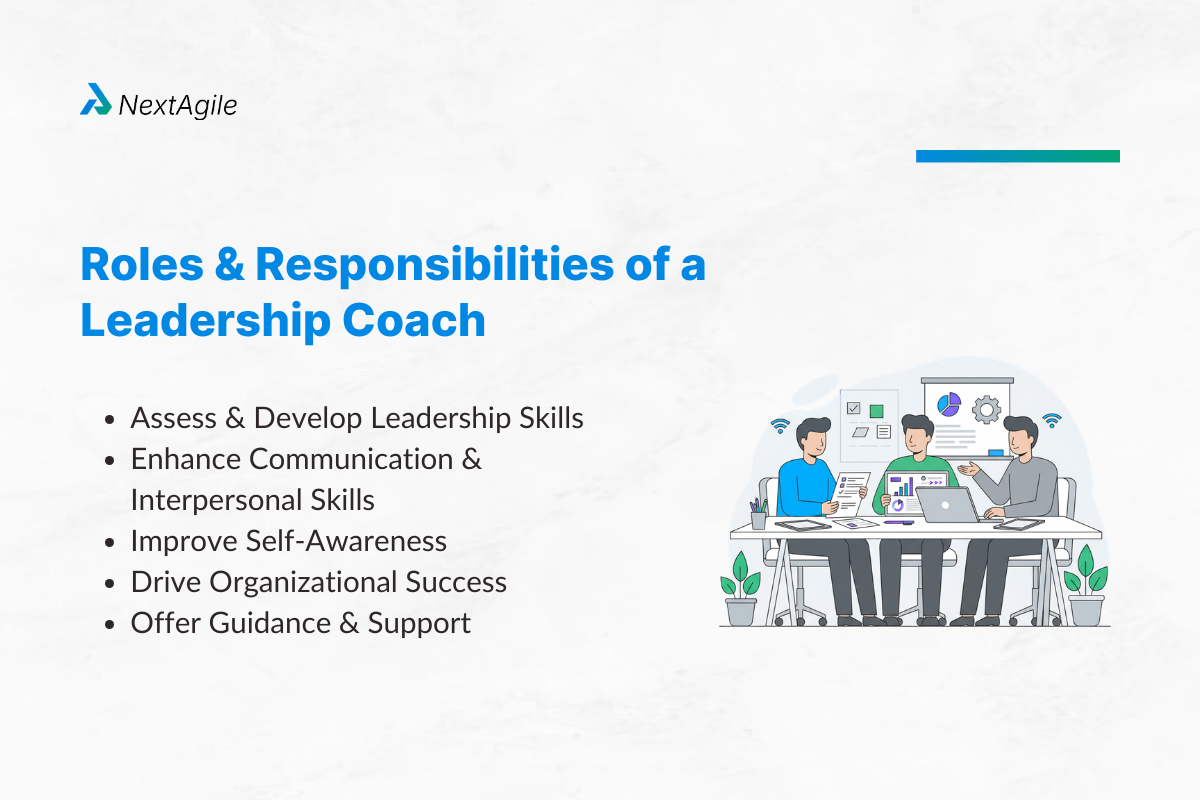
Coaches assess skills such as communication, decision-making, and vision-setting. Through assessments, feedback, and observation, they uncover gaps and create development plans. Leaders receive focused strategies to build influence, confidence, and strategic competence. Structured assessments convert intuition into insight, allowing leaders to focus effort on the few behaviors that create disproportionate impact.
Enhance Communication and Interpersonal Skills
Strong leadership relies on effective communication. Coaches assist leaders in sharpening messaging, active listening, and stakeholder communication. With practice of these skills in real situations, leaders build stronger relationships, drive collaboration, and reduce conflict. When leaders communicate with clarity and empathy, alignment improves and execution friction drops across teams.
 Skip to content