Defect Management in Software Testing: Tools, Process, and Agile Best Practices
Key Highlights of Defect Management Defect management goes beyond simple bug tracking and acts as…
 Skip to content
Key Highlights of Defect Management Defect management goes beyond simple bug tracking and acts as…

Introduction Ever wonder why some leaders consistently inspire trust, alignment, and high performance while others,…

Introduction In 2026, enterprises are not failing because they lack strategy. They are failing because…
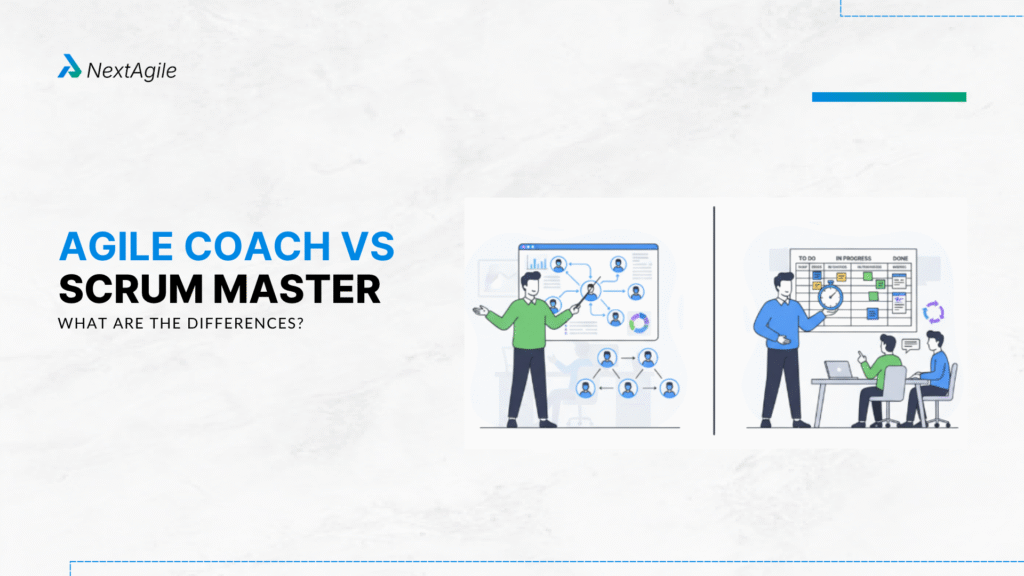
Introduction to Agile Coach vs Scrum Master The Information Technology Industry since its inception understood…
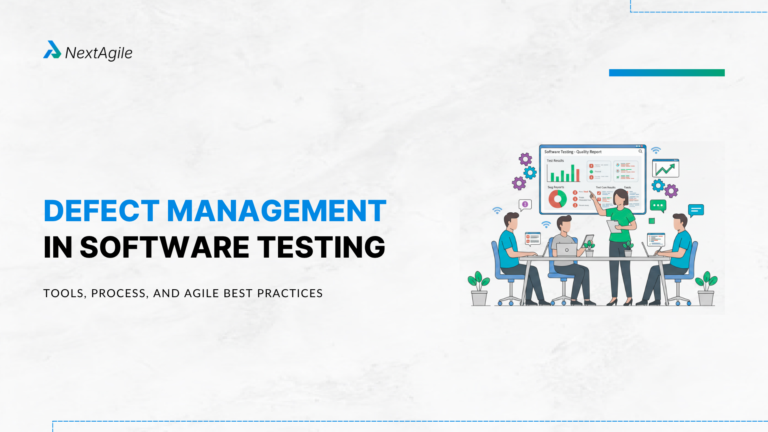
Key Highlights of Defect Management Defect management goes beyond simple bug tracking and acts as a quality intelligence system, helping teams identify patterns, root causes, and process gaps instead of just fixing issues. A structured defect management process, from identification to verification, ensures faster resolution, better prioritization, and significantly fewer production incidents. In Agile environments,…
Introduction Ever wonder why some leaders consistently inspire trust, alignment, and high performance while others, equally experienced, struggle to get buy-in? Here’s what we’ve observed repeatedly in executive transformation work: most leadership failures aren’t strategy failures; they’re self-awareness failures. A senior leader can have a sharp strategy, a capable team, and strong market positioning and…
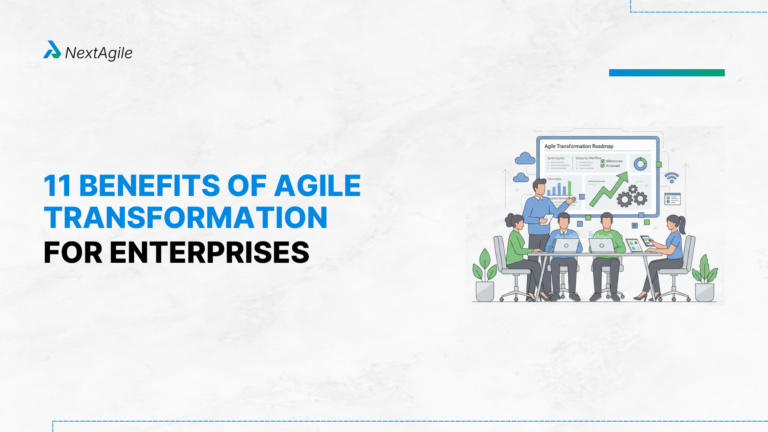
Introduction In 2026, enterprises are not failing because they lack strategy. They are failing because they cannot adapt fast enough to continuous change. Markets shift in real time. Customer expectations evolve instantly. Competitors respond faster than ever. This is why Agile transformation has moved from a delivery improvement initiative to a business survival capability. But…
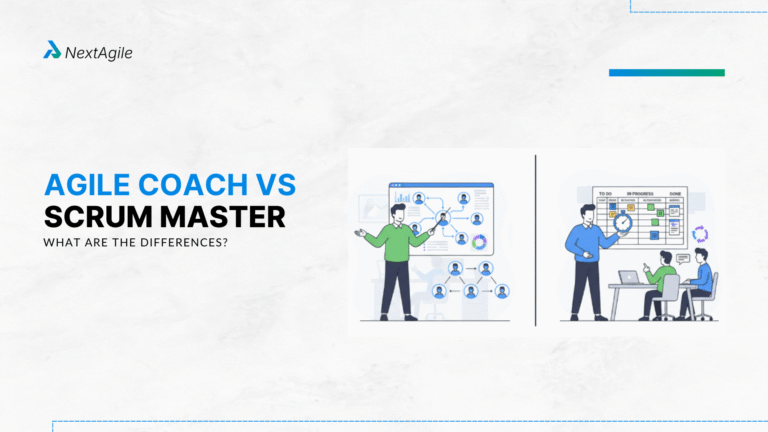
Introduction to Agile Coach vs Scrum Master The Information Technology Industry since its inception understood the essence of agility as the user requirement continuously evolved due to the rapid advancement in technology and the associated ecosystem. This got further impetus with the digital transformation wave that touched almost all sectors along with an overwhelming need…
Introduction Nearly 60% of enterprise Agile transformations stall at scaling not due to lack of effort, but due to unclear maturity progression. Most organizations adopt Agile practices. Few understand how maturity evolves and what it takes to move forward. This is why the Agile Transformation Maturity Model is essential. Agile transformation is not a rollout…
Key Highlights of Weighted Shortest Job First WSJF (Weighted Shortest Job First) is a powerful prioritization technique used in SAFe that helps teams decide what to work on first by maximizing economic value in the shortest possible time, moving away from assumption-based and politics-driven decision making. The WSJF Formula is straightforward: WSJF = Cost of…
Introduction Many organisations still measure engineering performance through activity metrics: builds completed, tickets closed, or pipelines executed. Those metrics describe effort. They rarely describe business impact. DevOps OKRs bridge the gap between engineering activities and measurable business outcomes, moving beyond vanity metrics like deployment counts. DevOps OKRs shift the conversation from engineering activity to customer…
Introduction A global telecom with 10 Agile Release Trains and 1000+ engineers came to us in early 2025 with a problem they couldn’t name clearly. Everything was running: PI planning, ART syncs, Inspect & adapt, but delivery still felt sluggish. Decisions were late. Dependency maps were stale before the PI event ended. They weren’t doing…
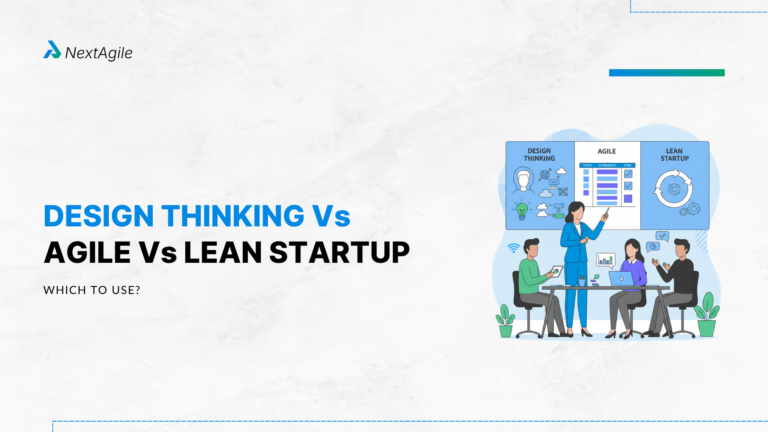
Introduction Here is a question we hear constantly from CXOs and product heads across India: “We have heard of Design Thinking, Agile, and Lean Startup. Which one should we actually use?” It is a fair question. And the honest answer is: it depends on where you are stuck. Design Thinking, Agile, and Lean Startup are…
Introduction Generative AI tools have moved far beyond experimentation. In 2026, they’re powering content teams, software engineers, designers, marketers, educators, and enterprises at scale. From text and image generation to code automation and AI-driven testing, these tools are reshaping how work gets done. But with hundreds of options available, one question keeps coming up: what…

Gurgaon (HQ)
91springboard NH8, 90B, Delhi Jaipur Expressway, Udyog Vihar, Sector 18,
Gurugram, Haryana - 122015
consult@nextagile.ai
+91 85276 63706
Bangalore
BLOCK-L, WeWork Embassy TechVillage,
Outer Ring Rd, Bellandur,
Bengaluru, Karnataka - 560103
consult@nextagile.ai
+91 85276 63706