Key Highlights About Agile Transformation Journey Agile transformation helps organizations respond faster to change, deliver value quickly, and stay competitive in uncertain markets A successful journey starts with understanding your current state, setting clear goals, and creating a realistic step-by-step roadmap Strong leadership support, team collaboration, and a culture of continuous improvement are critical for long-term success Agile consultants can accelerate transformation with expert guidance, structured milestones, and an unbiased outside perspective Introduction Agile transformation
This blog aims at understanding the key aspects of Agile Transformation like :
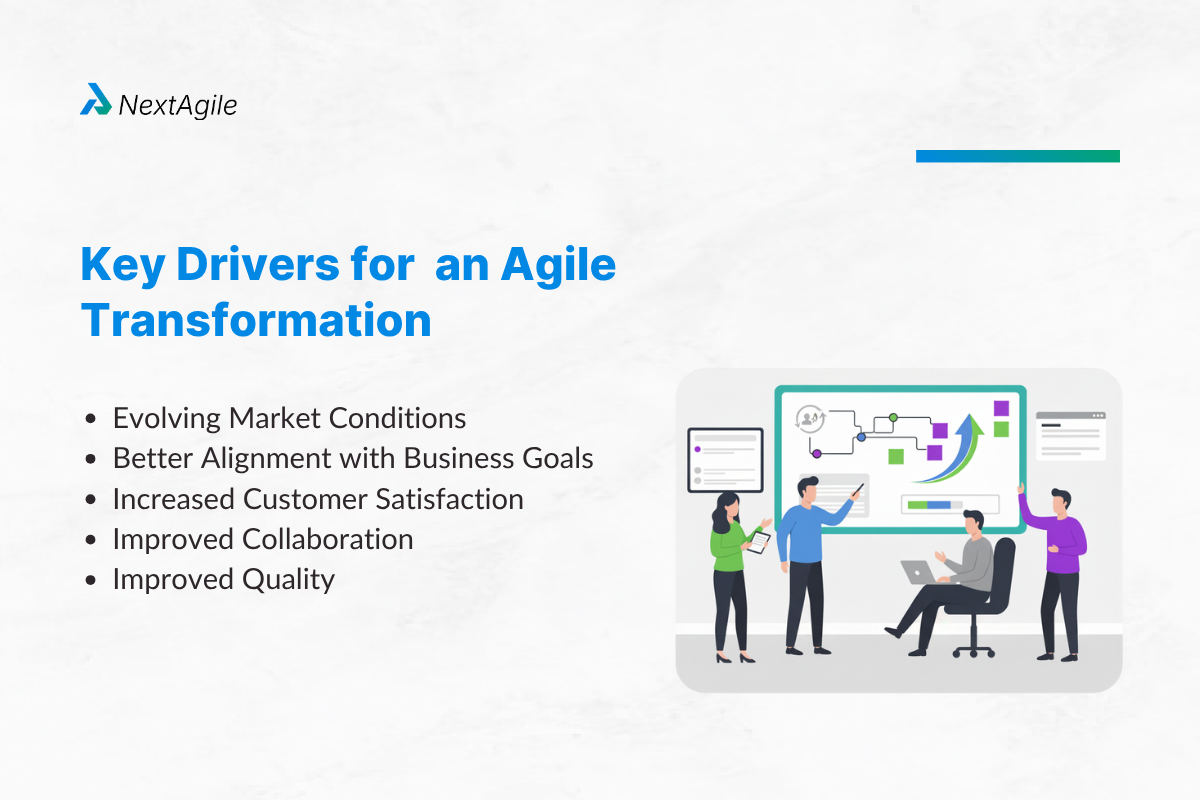
Why Should Organizations pursue Agile Transformation? How to plan your agile transformation journey Success factors in an Agile transformation journey How can Agile consulting bring in output driven timebound Agile transformation Why Should Organizations Pursue Agile Transformation Journey? With changing market dynamics (VUCA – volatility, Uncertainty, Complexity & Ambiguity), organizations can’t follow their set procedures for decades and have to revamp their processes to resolve business bottlenecks and continue to be purposeful and relevant. Following are the key drivers that has become a need for an organization to go through agile transformation –
Key Drivers for an Agile Tranformation Key Drivers for an Agile Tranformation
Evolving market conditions: In today’s rapidly changing business environment, companies need to be able to respond to change quickly and effectively. Agile methodologies provide a framework for adapting to changing market conditions and customer needs with help of shorter development cycles , faster release cycles , shorter feedback loops , and frequent introspection Better alignment with business goals: Agile methodologies promote a focus on delivering value to the customer and aligning with business goals, which can help companies achieve their strategic objectives more effectivelyThe need for increased customer satisfaction: Companies are under increasing pressure to deliver products and services that meet the needs of their customers. By the time companies deliver products they are soon becoming obsolete and thus the needs of the customer are also demanding. Agile methodologies place a strong emphasis on customer collaboration and feedback, helping companies build products and services that meet the needs of their customers in this rapidly changing worldThe need for better collaboration: As organizations become more complex as demands are ever changing, technologies are advanced, teams are distributed , there is a growing need for improved collaboration and communication across teams and departments. Agile methodologies promote cross-functional collaboration and improved communication, leading to better alignment and more efficient problem-solvingThe need for improved quality: Companies need to deliver high-quality products and services to remain competitive in today’s marketplace. Agile methodologies promote continuous testing and improvement, helping companies deliver high-quality products and services. Involving quality assurance teams early and during development also helps in detecting bugs in the product and faster correction paves way for quality product Reducing the Feedback Loop: Agile methodologies promote the delivery of smaller pieces of working software frequently, which can help teams validate the goals of the product and pivot in case needed Faster Value Realization: With Incremental delivery, companies reduce development time and get products and services to market faster which can deliver value to the end users faster. Step by Step Plan for Your Agile Transformation Journey Any agile transformation requires careful consideration of the organization’s current state and a clear understanding of the desired outcomes. Here are the steps to consider implementing in your Agile transformation journey:
Understanding your Current State: The first step in planning an Agile transformation is to assess the current state of the organization. This includes analyzing the current processes, structures, culture, and technology to determine the strengths and weaknesses of the organization (this is called As-Is Agility health Assessment )What do you want to achieve with the transformation: Once the current state has been assessed, the next step is to define the desired outcomes of the Agile transformation. This includes understanding the goals and objectives of the transformation and defining the desired outcomes in terms of improved processes, structures, culture, and technologyStakeholder Sensitization and Buy-in Engaging key stakeholders is critical to the success of an Agile transformation. This includes engaging executives, managers, team leaders, and individual contributors in the planning process to build buy-in and ensure that everyone is working towards the same goalsIdentify the teams and processes that will be involved: The next step is to identify the teams and processes that will be involved in the Agile transformation. This includes understanding the interdependencies between teams and processes and determining which teams and processes will be impacted by the transformation Develop a detailed Implementation Roadmap: Once the teams and processes have been identified, the next step is to develop a detailed implementation plan. This includes creating a timeline for Agile implementation, identifying the resources that will be needed, and developing a budget for the transformation Establish a governance structure: Establishing a governance structure is important to ensure that the Agile transformation is managed effectively. This includes defining the roles and responsibilities of the key stakeholders, creating a governance committee, and establishing clear decision-making processes Communicate the plan and Onboard Team: Once the plan has been developed, the next step is to communicate the plan to the organization. This includes communicating the goals and objectives of the transformation, the timeline for implementation, and the resources that will be needed Train and coach: Training and coaching are critical components of an Agile transformation. This includes providing training on Agile methodologies and coaching teams and individuals on how to apply Agile practices in their work Implement and monitor: The next step is to implement the Agile transformation, which involves putting the changes into effect and monitoring progress. This includes regular check-ins with teams to ensure that the transformation is on track and making the necessary adjustments along the way Continuously Monitor and Improve: Agile transformations are ongoing processes that require continuous improvement. This includes regularly reassessing the organization’s processes, structures, and culture to identify areas for improvement and making changes as needed. Use this agile transformation checklist
Agile Transformation Goals Agile transformation refers to the comprehensive process of shifting an organization from traditional, often hierarchical and waterfall-based approaches to agile methodologies, which emphasize flexibility, collaboration, and customer-centricity.
Agile transformation goals are the specific objectives that an organization aims to achieve by adopting agile methodologies. These goals are essential to guide the agile transformation process and ensure that the shift to agile brings tangible benefits. The organization’s long term agile transformation plan should align with its agile transformation vision.
What are their present ways of working and organizational culture? What is their desired to-be state? How much time do they have to pursue their agile transformation vision? Which would be the right agile framework or mix of framework for their agile transformation plan? What are the business bottlenecks that are easy to fix but impactful? What is the state of knowledge and skills required for agile transformation? These are some of the questions that the leadership should discuss in detail with their agile consulting team to align their agile transformation plan to their end goals.
Here’s a detailed look at the meaning and importance of common agile transformation goals:
Improved Time-to-Market: Reducing the time it takes to deliver products or services to customers from the initial idea to market launch. Enhanced Product Quality: Increasing the reliability, functionality, and performance of products or services. Increased Customer Satisfaction: Delivering products and services that meet or exceed customer expectations. Greater Flexibility and Adaptability: Enhancing the organization’s ability to respond to changes in the market, customer requirements, and technological advancements. Increased Transparency and Visibility: Providing clear insights into project progress, team performance, and workflow status. Enhanced Team Collaboration and Morale: Creating an environment where teams work collaboratively and maintain high levels of motivation and satisfaction. Better Alignment with Business Goals: Ensuring that agile practices and project outcomes are closely aligned with the strategic objectives of the organization. Efficient Use of Resources: Optimizing the use of time, budget, and talent to maximize value delivery. Agile transformation goals are pivotal in guiding the shift from traditional methodologies to agile practices.These goals provide a clear direction for the agile transformation vision, ensuring that the changes lead to tangible improvements. By setting and pursuing these agile transformation goals, organizations can drive significant improvements in their processes, products, and overall business outcomes. Each goal contributes to creating a more responsive, efficient, and customer-centric organization.
Success factors For An Agile transformation Journey There are several success factors that can contribute to a successful Agile transformation:
Executive support: Executive support is critical to the success of an Agile transformation. This includes commitment from senior leaders to the goals and objectives of the transformation and providing the resources and support needed to ensure its successClear vision and strategy: Having a clear vision and strategy for the Agile transformation is important for ensuring that everyone is working towards the same goals. This includes defining the desired outcomes of the transformation and creating a roadmap for achieving those outcomesEngaged and empowered employees: Engaging and empowering employees is critical to the success of an Agile transformation. This includes providing employees with the training and coaching they need to succeed and creating an environment that encourages collaboration and innovationThrive towards continuous improvement: Agile transformations are ongoing processes that require continuous improvement. This includes regularly reassessing the organization’s processes, structures, and culture to identify areas for improvement and making changes as neededWillingness to Change : Cultural change is often one of the biggest challenges in an Agile transformation. This includes creating a culture that supports collaboration, innovation, and continuous improvement and addressing any resistance to changeEffective governance: Effective governance is important to ensure that the Agile transformation is managed effectively. This includes defining the roles and responsibilities of the key stakeholders, creating a governance committee, and establishing clear decision-making processes. Drive innovation and efficiency with agile software development consulting . Tailored solutions for seamless project execution. Explore our services today.
How can Agile consulting company bring in output driven timebound Agile transformation? Agile consulting companies or agile consultants
Below are a few highlights of why an organizations can lean towards an external agile consultant for their Agile transformation journey
Neutral Perspective : Agile consultants are not influenced or biased with any particular person or management. They bring in neutrality for a better recommendation or suggestionIn depth Analysis of current state: Agile consultant’s sole purpose is to implement agile within the organization. Hence is it a key thing for them to understand all the aspects of current work culture without being partialMilestone Driven Approach: Agile consultants are mostly milestone driven. That is, in an implementation roadmap, they focus on the milestones achieved and quickly inspect and pivotOutside-In Perspective: Since Agile consultants are usually on contracts, they tend to work with multiple organizations. Which helps them in bringing the best practices or even look at a solution or a problem from an external perspectiveTimebound Agile Transformation: Agile consultants are focused with one thing in their plate, they can create positive tension and sense of urgency which helps teams achieve their agility goals on time Recommended Read Conclusion With this, our blog “How To Plan Your Agile Transformation Journey?” comes to an end. We really hope this is of help. In case of any feedback or suggestions, please reach out to us at consult@nextagile.ai.
Frequently Asked Questions 1. How to adapt agile transformation to evolving needs? The very essence of agile is flexibility and responsiveness to change. Regular review and assessment, flexible planning, frequent iteration, cross-functional teams, open communication, closed feedback loops, monitoring, and encouraging a culture of continuous learning, experimentation, failing faster and innovation are some key steps to adapt agile transformation roadmap to evolving needs.
2. How to craft an effective agile transformation strategy? Crafting an effective agile transformation strategy involves assessment, careful planning, alignment with organizational goals, selection of the right agile framework or mix of frameworks and a clear understanding of the current state and the desired to-be state of the organization.
Assessing the current state, defining objectives and goals, creating a vision, establishing leadership support, building a cross-functional transformation team, developing an agile transformation roadmap, providing agile training and support, promoting a culture of collaboration and continuous improvement and finally measuring progress and adjustments are a few steps through which you can craft an effective agile transformation strategy that sets the foundation for organizational agility, innovation and sustainable success in your agile transformation journey.
3. What is agile transformation and why is it vital for organizations? Agile transformation is the process of adopting agile principles and practices across an entire organization and not just within select teams or departments. It involves a cultural shift and changes in processes, structures and mindsets to enable greater adaptability, collaboration and responsiveness to change. Agile transformation plan aims to empower organizations to deliver value to customers more quickly and efficiently, while also fostering a culture of continuous improvement and innovation.
Agile transformation is vital for organizations for several reasons as it increases flexibility and adaptability, efficiency, encourages innovation, enhances employee engagement and satisfaction, customer-centricity, and facilitates risk mitigation. Overall, agile transformation vision is vital for organizations looking to thrive in today’s complex and competitive business landscape.
4. How to develop a tailored agile transformation roadmap? Developing a tailored agile transformation roadmap requires a thorough understanding of the organization’s current state, its goals, challenges, and the unique context in which it operates. Here’s a step-by-step guide to developing a tailored agile transformation roadmap:
Assessment of Current State Defining Objectives and Goals Engaging Stakeholders Tailored Agile Framework Identifying Pilot Projects Developing Roadmap Phases Prioritizing Initiatives Allocating Resources Establishing Governance and Oversight Communication and Change Management Monitoring and Measuring Progress Iterating and Adapting Your Roadmap By following these steps, you can develop a tailored agile transformation roadmap that addresses the specific needs and challenges of your organization, ultimately leading to a successful and sustainable journey to an agile organization.
5. What are the primary goals of agile transformation? The primary goals of agile transformation revolve around achieving greater adaptability, efficiency, customer satisfaction, and innovation within an organization. Here are the key goals of agile transformation plan:
Delivering Value to Customers Increasing Adaptability and Responsiveness Improving Efficiency and Productivity Fostering Innovation, experimentation, and Creativity Enhancing Employee Engagement and Satisfaction Reducing Risk and Uncertainty Driving Continuous Improvement Overall, the primary goals of agile transformation plan centers around enabling organizations to thrive in today’s dynamic and competitive business environment by becoming more adaptable, customer-focused, efficient, innovative, and resilient.
6. What’s the leadership’s role in agile transformation? Leadership plays a critical role in the agile transformation journey, as it sets the tone, provides direction, and drives the cultural and organizational changes necessary for the successful adoption of agile principles and practices in an agile journey. Setting vision and strategy, creating a culture of agility, providing resources and support, removing roadblocks and barriers, empowering and trusting teams, leading change management efforts, measuring and monitoring progress, and continuous learning & improvement are some key aspects of leadership’s role in the agile transformation process.
Overall, leadership’s role in agile transformation is to provide vision, support, and guidance to enable the organization to embrace agile principles and practices fully. Effective leadership is essential for driving cultural change, overcoming resistance to change, and ultimately achieving the desired outcomes of the agile transformation facilitating the journey to an agile organization.
7. What are the stages of enterprise agile transformation? Enterprise agile transformation typically involves several stages, each building upon the previous one and leading toward the organization’s desired state of agility. While the specific stages may vary depending on the organization’s context and needs, here is a common framework for enterprise agile transformation roadmap:
Assessment and Planning Foundation Building Pilot Projects and Proof of Concept Scaling Agile Practices Optimization and Continuous Improvement Enterprise Agility and Transformational Change Throughout each stage of the enterprise agile transformation roadmap, it’s essential to engage stakeholders, communicate transparently, and provide support and resources to ensure the success of the transformation journey. Additionally, organizations should recognize that agile transformation is an ongoing process, and the journey toward enterprise agility may take time and require persistence and dedication from everyone involved.
8. What does the agile transformation process entail? The agile transformation process entails a series of steps to adopt agile principles and practices across an organization. While the specific approach may vary depending on the organization’s context, culture, and goals, here is a general outline of the agile transformation process:
Assessment and Readiness Evaluation: Define Objectives and Goals Create a Vision and Roadmap Build Awareness and Alignment Establish Agile Teams and Practices Provide Training and Support Pilot Projects and Iterative Implementation Scale Agile Across the Organization Monitor Progress and Adapt Embed Agile into Organizational Culture Celebrate Success and Continuous Improvement By following these steps, organizations can navigate the agile transformation process effectively, enabling them to become more responsive, adaptive, and customer-focused in today’s dynamic and competitive business environment.
9. How to create a successful agile transformation project plan? Creating a successful agile transformation project plan involves several critical steps, focusing on strategy, cultural change, training, and continuous improvement. Here is a comprehensive guide to help you develop an effective agile transformation project plan:
Define Vision and Goals Secure Executive Sponsorship Assess Current State Develop a Transformation Roadmap Form Agile Teams Training and Coaching Implement Agile Frameworks Foster an Agile Culture Continuous Improvement and Scaling Measure Success Communicate Progress By following these steps and focusing on continuous improvement and adaptation, your agile transformation project plan can lead to a successful and sustainable agile adoption in your organization.
10. What are the initial steps for starting an agile transformation? Starting an agile transformation involves several key initial steps that lay the foundation for a successful transition. Here’s a detailed breakdown of the agile transformation steps:
Define the Vision and Objectives Secure Executive Sponsorship Conduct a Readiness Assessment Develop a Transformation Strategy Form Agile Teams Provide Training and Coaching Communicate the Change Implement Agile Practices Establish Metrics and Feedback Loops Scale the Transformation An Example of an Initial Agile Transformation Steps Plan is shared below:
Vision and Objectives
Executive Sponsorship
Readiness Assessment
Transformation Strategy
Form Agile Teams
Training and Coaching
Communicate the Change
Implement Agile Practices
Metrics and Feedback
Scale the Transformation
By following these initial agile transformation steps, organizations can set a strong foundation for a successful agile transformation journey, ensuring that the change is strategic, well-supported, and continuously improved.
11. How to cultivate a supportive agile culture? Cultivating a supportive agile culture is crucial for the success of an agile transformation. Here are steps to create and nurture an environment that embraces agile principles and practices:
Foster leadership support by securing executive buy-in and provide training for leaders on agile principles and servant leadership. Promote agile values and principles by educating the organization about the agile manifesto and its core values. Create a safe and open environment through psychological safety workshops. Empower teams and give them autonomy and support. Encourage collaboration and cross-functional teams. Focus on continuous improvement and encouraging a culture of kaizen (continuous improvement). Recognize and reward agile behaviors. Provide ongoing agile training and professional development. Align organizational processes and structures. Measure and adapt. Example of Actions to Cultivate a Supportive Agile Culture
Leadership Support
Agile Values Promotion
Safe and Open Environment
Team Empowerment
Collaboration Enhancement
Continuous Improvement Focus
Recognition and Rewards
Training and Development
Process and Structure Alignment
Measurement and Adaptation
By implementing these steps, you can cultivate a supportive agile culture that encourages collaboration, innovation, and continuous improvement, ultimately leading to a successful agile transformation.
12. What are common agile transformation challenges and solutions? During your course of Agile transformations journey, one can encounter various challenges, ranging from resistance to change to organizational inertia. Here are some common challenges along with potential solutions:
Resistance to Change – Employees may resist adopting new agile practices due to fear of the unknown, skepticism about the benefits, or concerns about job security.
Probable Solutions:
Communication and Education: Provide clear and transparent communication about the reasons for the transformation and the benefits it will bring. Training and Support: Offer comprehensive training and support programs to help employees understand and adapt to agile practices. Leadership Role Modeling: Encourage leaders to lead by example and demonstrate their commitment to agile principles through their actions. Organizational Culture Clash – The existing organizational culture may not align with agile values, leading to friction and resistance.
Probable Solutions:
Cultural Assessment: Conduct a thorough assessment of the current culture to identify areas of alignment and misalignment with agile principles. Culture Change Initiatives: Implement targeted culture change initiatives to address cultural barriers and foster an environment conducive to agile practices. Top-Down Support: Ensure that senior leaders actively support and promote the desired cultural changes Lack of Executive Support – Without visible support and commitment from senior leadership, the agile transformation may struggle to gain traction.
Probable Solutions:
Executive Engagement: Secure buy-in from senior leaders and involve them in the planning and execution of the transformation. Education and Coaching: Provide executive-level training and coaching on agile principles and practices to help leaders understand their role in supporting the transformation. Empowerment: Empower leaders to champion the agile transformation and actively remove obstacles that hinder progress. Siloed Organization Structure – Traditional organizational structures characterized by functional silos can impede collaboration and hinder the adoption of agile practices.
Probable Solutions:
Cross-Functional Teams: Create cross-functional teams that include members from different departments or disciplines to promote collaboration and shared accountability. Matrix Organization: Implement a matrix organization structure that allows for both functional specialization and cross-functional collaboration. Organizational Redesign: Consider redesigning the organization to break down silos and promote agility, such as adopting a product-centric or customer-centric model. Lack of Agile Skills and Expertise – Many organizations lack the necessary agile skills and expertise to successfully implement and sustain agile practices.
Probable Solutions:
Training and Certification: Invest in comprehensive agile training programs and certifications to build agile competencies across the organization. Coaching and Mentoring: Engage experienced agile coaches and mentors to provide guidance and support to teams and individuals. Communities of Practice: Establish communities of practice where employees can share knowledge, best practices, and lessons learned related to agile. Inadequate Tooling and Infrastructure – Outdated tools and infrastructure may not support agile ways of working, leading to inefficiencies and friction in your agile transformation journey.
Probable Solutions:
Tool Evaluation and Adoption: Assess the organization’s current tools and infrastructure to identify gaps and select tools that better support agile practices. Automation and Integration: Invest in automation and integration to streamline processes and eliminate manual overhead. Continuous Improvement: Continuously evaluate and improve tooling and infrastructure to keep pace with evolving agile needs and practices. Scaling Agile Across the Organization – Scaling agile practices beyond individual teams to the entire organization can be complex and challenging.
Probable Solutions:
Scaled Agile Frameworks: Implement scaled agile frameworks such as SAFe, LeSS, or Nexus to provide guidance and structure for scaling agile practices. Pilot and Iterate: Start with pilot projects or teams to test scaling approaches before rolling them out more broadly. Iterate and refine as needed based on feedback and lessons learned. Collaborative Governance: Establish collaborative governance structures that bring together representatives from different teams and departments to coordinate and align efforts. Lack of Measurement and Feedback – Without proper measurement and feedback mechanisms, it can be difficult to gauge the effectiveness of agile practices and identify areas for improvement.
Probable Solutions:
Key Performance Indicators (KPIs): Define and track KPIs related to agile adoption, such as team velocity, cycle time, customer satisfaction, and quality metrics. Retrospectives and Reviews: Conduct regular retrospectives and reviews to reflect on what’s working well and what needs improvement. Use this feedback to make adjustments and course corrections. Continuous Learning: Foster a culture of continuous learning and adaptation, where teams are encouraged to experiment, learn from failures, and continuously improve. By addressing these common challenges with thoughtful solutions and proactive management, organizations can overcome barriers to agile transformation plan and create an environment that fosters agility, innovation, and continuous improvement.
13. What metrics measure agile transformation progress? Measuring the progress of agile transformation goals involves tracking a combination of quantitative and qualitative metrics that reflect changes in processes, behaviors, and outcomes. Here are some key metrics that can help you gauge the success of your agile transformation:
Delivery and Productivity Metrics like Velocity, Lead Time, and Cycle Time. Customer Satisfaction Metrics like Net Promoter Score (NPS), Customer Satisfaction (CSAT) and Qualitative customer feedback from customers. Team Health and Engagement Metrics through Team Happiness, Employee Turnover Rate and Engagement Scores. Process and Practice Metrics like Sprint Burndown, Release Burndown and Cumulative Flow Diagram (CFD). Business Value Metrics like Return on Investment (ROI), Business Value Delivered and Time to Market. Agile Maturity Metrics through Agile Maturity Assessments and Practice Adoption. By tracking these metrics, organizations can gain a comprehensive view of their agile transformation progress, identifying areas of success and opportunities for improvement. It’s important to use these metrics not just to evaluate performance but to drive continuous improvement and support the ongoing agile journey.
14. What are the key stages of an agile journey or key stages of agile transformation? The agile journey typically involves several key agile transformation stages, each representing a phase of the transformation process as an organization adopts and matures in its agile practices. Here’s a detailed overview of these stages of agile transformation:
Awareness and exploration to understand agile concepts and determine the need for transformation. Preparation and planning to lay the groundwork for the agile transformation. Initial implementation (piloting) and test agile practices with pilot teams and gather feedback. Scaling and broadening to expand agile practices across more teams and departments. Continuous improvement and maturation so as to embed agile deeply into the organizational culture. Sustaining and innovating to maintain agile practices as the new norm and drive continuous innovation. By progressing through these agile transformation stages, organizations can successfully navigate their agile journey, from initial exploration to a fully embedded agile culture that continuously adapts and improves.
15. What are the best practices for refining agile transformation processes? Refining agile transformation processes is essential to ensure continuous improvement and long-term success. Here are some best practices to guide this refinement:
Conduct Regular Retrospectives – Continuously identifying areas for improvement and celebrating successes conducting sprint retrospectives and by implementing actionable items from retrospectives. Foster a Culture of Continuous Improvement – Create an environment where continuous learning and improvement are ingrained in the culture by encouraging a kaizen mindset and by empowering teams to experiment and make decisions. Utilize Metrics and Feedback – Using data and feedback to drive decisions and improvements to track and analyze relevant metrics and gather qualitative feedback and act on it. Continuous Training and Development – Ensuring that all team members have the knowledge and skills needed to excel in an agile environment by providing ongoing training and certification opportunities and by engaging agile coaches and mentors. Foster Cross-Team Collaboration – Enhancing collaboration and knowledge sharing across teams by establishing communities of practice and by organizing knowledge-sharing sessions. Align with Organizational Goals – Ensuring that agile practices are aligned with the broader organizational objectives and strategies by regularly reviewing strategic alignment and engaging stakeholders in the transformation process. Optimize Tools and Infrastructure – Ensuring that the tools and infrastructure support agile practices effectively by assessing and integrating agile tools and automating repetitive tasks for efficiency. Address Cultural and Behavioral Barriers – Overcome cultural and behavioral barriers to foster an agile mindset by implementing cultural change initiatives and by using change management techniques. Inspect and Adapt the Transformation Strategy – Continuously refine the overall agile transformation strategy based on learnings and evolving needs by conducting periodic strategy reviews and adapting the strategy based on feedback and changing needs. Agile organizations, by ensuring they remain effective, efficient, and aligned with the business goals, continuously refine their agile transformation processes.
Wondering how to build an agile transformation roadmap? Start by aligning with business goals and breaking down the process into manageable steps.
Anuj Ojha is Co-Founder & Consulting Head at NextAgile. Anuj has designed & led multiple turnkey transformation journeys across industries, domains & geographies and has 16+ years of experience as an agile practitioner. He has worked with CXOs, CTOs & Key Leaders to translate their business objectives on the ground, contextualizing org transformations and creating buy-in across level, leading a team of coaches/consultants to implement agility across 150+ teams & trained more than 12k team members. Anuj’s core area of interest is business agility & working with leaders & teams to achieve long term sustainable, Agile culture & mindset.
 Skip to content