“Don’t tell me where your priorities are. Show me where you spend your money and I’ll tell you what they are.” – James W. Frick
In our experience as an agile consulting company, one of the biggest bottlenecks in an organizations agile transformation journey is to bring agility at the layer where investments to future strategies are managed. Specifically, how organizations handle their budget? Is it through the traditional approach of annual budgeting? If yes then It can be a massive roadblock, totally undermining the very agility you’re trying to build.
This is exactly where Mastering Lean Budgets in SAFe LPM for Value Delivery becomes crucial. Lean Budgeting is a fundamental piece of SAFe’s Lean Portfolio Management (LPM) and it’s genuinely transformative. Forget that tired practice of funding individuals and temporary projects year after year. Lean Budgets flips that approach on its head: now, you’re funding value streams, directly aligning your financial muscle with how value actually flows, continuously, to your customers.
Ditching Project-Based Funding for Value Stream Economics
We have all seen the problems with traditional, annual, project-focused budgeting in agile environments. You plan everything upfront based on assumptions that are basically obsolete by next week. That means endless rework, frustrating delays, and money just not going where it should. Teams end up spending ages writing detailed business cases and chasing approvals instead of actually delivering value.
Lean Budgeting within SAFe LPM offers a much more fluid, responsive way to manage your cash. It shifts the entire financial conversation. Instead of short-lived projects, you are now talking about your enduring value streams – those continuous, end-to-end pipelines that deliver your products and services. By giving these stable entities a budget for a longer stretch, LPM empowers the teams working within them to make smarter, faster decisions about how they use those resources.
The Mechanics of Lean Budgeting in SAFe LPM
Imagine your organization has a complex circulatory system. Your value streams are like those arteries and veins, constantly carrying the lifeblood (value!) to your customers. Lean Budgeting is all about making sure that system is always well-supplied and healthy. Here’s how it practically plays out in SAFe LPM:
Value Stream Funding: The core idea is giving a “lean budget” directly to each identified value stream. This hands a significant amount of financial freedom to your ARTs (Agile Release Trains) and the teams nested inside that stream. So, the old project-by-project funding model is out; a focus on the continuous value stream is in.
Empowered ARTs: With their own budget envelope, ARTs suddenly have the freedom to prioritize features, explore technical improvements (enablers), and even try out innovative new solutions without needing to jump through hoops for every single initiative. This autonomy is crucial, but don’t get me wrong – they still need to stay sharply aligned with the bigger strategic goals.
Smart Guardrails for Governance: Autonomy is fantastic, but it’s not a free-for-all. It happens within carefully set “guardrails” by LPM. These are like boundaries that ensure responsible spending and strategic alignment. They might define things like:
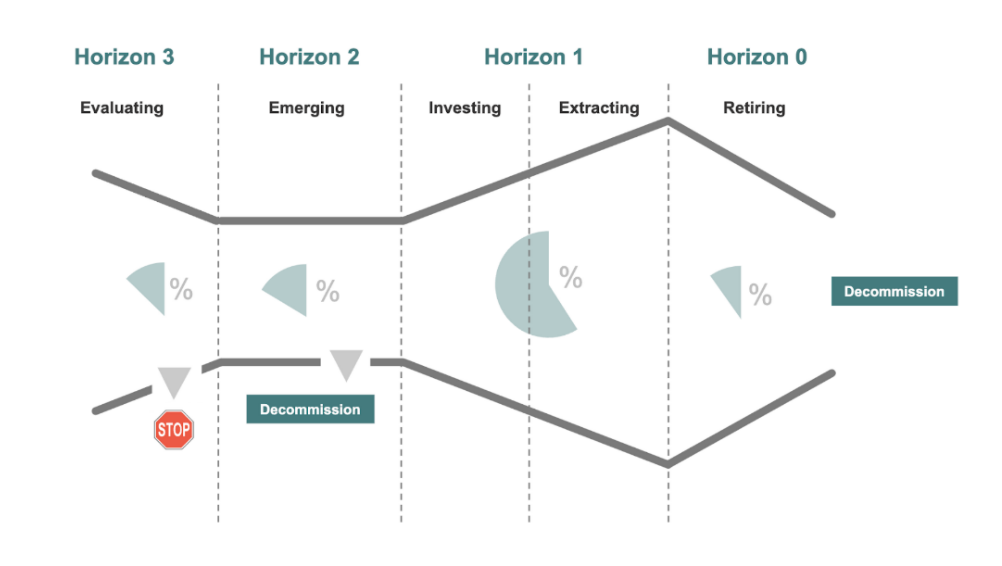
Investment Horizons: This is about where you’re putting your money.
Horizon 3: Think “discovery” – investing in brand-new, potentially disruptive solutions. You would typically start with an Epic and define an MVP to test if the idea even has legs. If it shows promise, it might move to Horizon 2; if not, you stop.
Horizon 2: These are promising new solutions that have come out of Horizon 3. The business is willing to invest in them even if they are not yet delivering a full return, because they represent future growth. If you decide to stop one of these, you might still need a small investment to properly shut it down.
Horizon 1: This is your sweet spot – solutions already delivering more value than they cost to run. These are your workhorses, and they need ongoing investment for maintenance and adding features. Often, these consume a lot of the budget, sometimes at the expense of innovation at other horizons.
Horizon 0: Simply put, this is the money needed to completely decommission something that’s no longer in use.
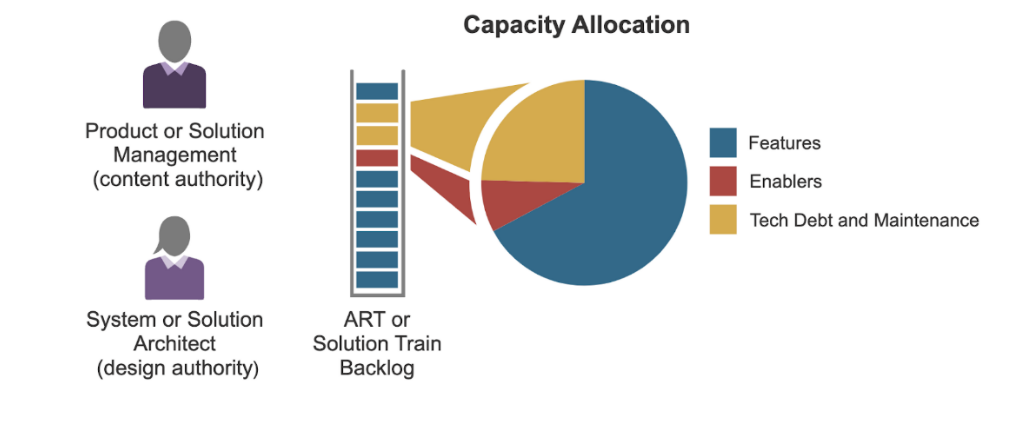
Capacity Allocation: How much budget goes to different types of work to ensure you’re balancing new features, technical debt, and exploration.
MVP Funding Limits: Setting clear limits for those initial “Minimum Viable Product” experiments, so you learn cheaply.
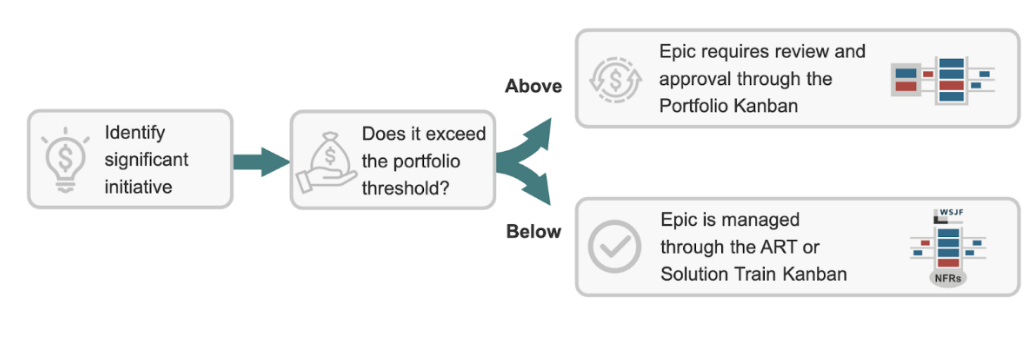
Approval Thresholds: Defining when bigger expenses need extra sign-off.
Decentralized Economic Decision-Making: This is huge. Lean Budgets push the power to make economic trade-offs down to the teams closest to the work. This creates a real sense of financial awareness and accountability right within the value stream.
Continuous Flow of Value: By eliminating out those stubborn funding bottlenecks that come with project-based budgeting, Lean Budgets let value flow to the customer much more consistently and predictably. It’s like unkinking a hose.
Effective Portfolio Operations: LPM isn’t just about setting budgets and walking away. It involves regular “portfolio sync” meetings to review how value streams are performing, double-check that they’re still aligned with the big strategic goals, and make any necessary budget tweaks as needs evolve and real value is delivered. This also involves:
Setting up and managing the Portfolio Kanban system (your visual roadmap for big initiatives).
Helping facilitate those crucial PI Planning events at the portfolio level.
Supporting the ART Syncs across all Agile Release Trains.
Actively managing dependencies and risks between different ARTs.
Constantly pushing for improvements in how the portfolio operates.
What does success look like here? You would see things like:
Epics flowing smoothly through the Portfolio Kanban;
really successful PI Planning events at the portfolio level;
ART Syncs that run like a well-oiled machine;
dependencies between ARTs getting handled efficiently; and
a clear trend of continuous improvement in portfolio operations metrics.
 Skip to content