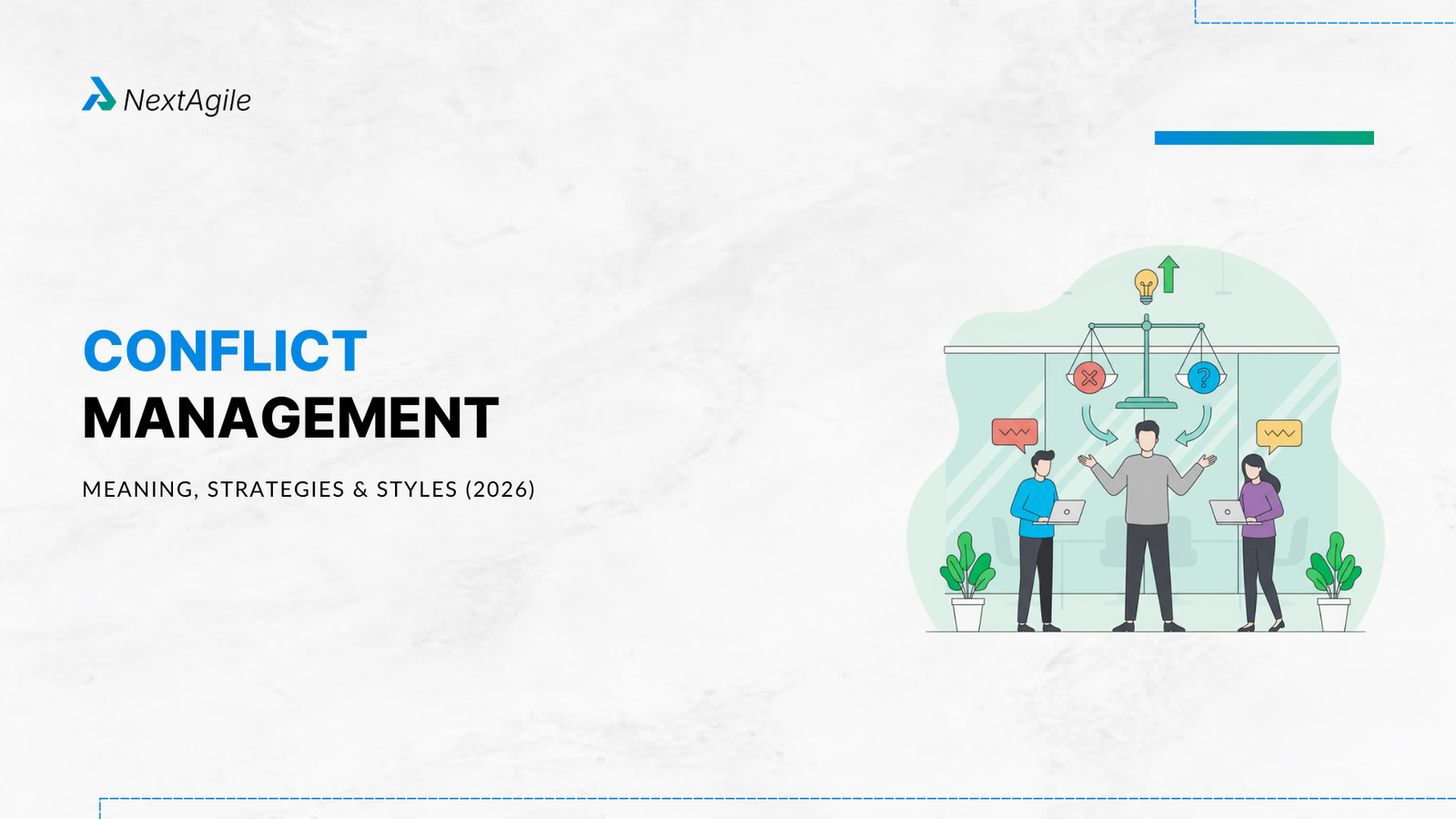
Conflict! Any workplace has it, and let’s face it, we have all encountered it. The question isn’t whether or not conflict will occur, it’s how you deal with it when it does. That’s where conflict management comes into play. Most leaders instinctively avoid conflict, assuming harmony equals performance. In reality, suppressed conflict quietly erodes trust and delays critical decisions.
This blog will deconstruct what conflict management is all about, meaning of conflict management, why it is important for professionals and companies, and how you can implement effective conflict management strategies and styles. You’ll gain hands-on workplace techniques, discover real-world case studies, and observe how leaders convert conflict into opportunities for development.
Whether you are an employee managing team dynamics or a manager leading cross-functional initiatives, this article will provide you with the insight and skills to resolve disputes effectively. Because at the end of the day, conflict is not the enemy: unmanaged conflict is.
What Is Conflict Management and Why It Matters?
Definition and goals of conflict management
Conflict management is the practice of recognizing, confronting, and resolving conflict in a constructive manner while maintaining relationships and fulfilling organizational objectives. It’s not about eliminating conflict entirely — which isn’t realistic. Rather, it’s about establishing a system by which disagreements are handled in a manner that fosters development, not destruction. Effective conflict management means preserving respect while resolving differences.
The objectives of conflict management are three in number –
To reduce the harmful effects of such disagreements as stress, resentment, or disengagement
To encourage constructive dialogue where differing opinions are appreciated
To push cooperation towards solutions to mutual benefit for both parties and the organization. When organizations skip these goals, conflict shifts from task-focused to personal, making recovery harder and costlier.
In the hybrid and changing business environment of today, conflict is no longer merely about disagreements among co-workers. It pervades across cross-functional groups, virtual working, allocation of resources, and even varied leadership styles. Conflict can hurt trust, suck away productivity, and drive away high-performing staff when not managed. Managed, though, conflict becomes an innovation driver, more solid relationships, and improved decision-making. Hybrid work has amplified invisible conflict and the misunderstandings grow faster when tone, context, and intent are filtered through screens.
In reality, conflict management is a mix of strategies, styles, and communication skills that enable individuals to manage disputes effectively. From selecting the appropriate negotiation style to using active listening, the goal is always to transform conflict into a chance for improved outcomes. The leaders who become skillful at this tend to have their teams more resilient, innovative, and engaged.
Why managing conflict is so crucial in work and life
Ever wonder why some teams thrive under pressure while others implode? The difference often lies in how conflict is managed. Unresolved disputes tend to escalate, leading to toxic work environments, reduced productivity, and higher turnover. Teams don’t collapse because conflict exists; they collapse because conflict lingers unaddressed.
On the other hand, managing conflict well can cultivate trust, deepen collaboration, and spark creative problem-solving. In leadership coaching, I’ve seen executives transform difficult conversations into breakthrough innovations simply by handling conflict differently. Leaders who reframe conflict as data rather than disruption respond more rationally and constructively.
Conflict resolution also applies beyond the workplace. Families, friendships, and social interactions all depend on the same concepts – respectful communication, listening, and conflict resolution. The reality is that conflict is inherent in every relationship, whether business or personal. Being able to resolve it keeps relationships intact while arriving at solutions that benefit everyone concerned.
That’s why companies are spending more money on curating contextual conflict management training programs. It’s no longer a “soft skill” – it’s a key leadership competency for success in today’s complicated world.
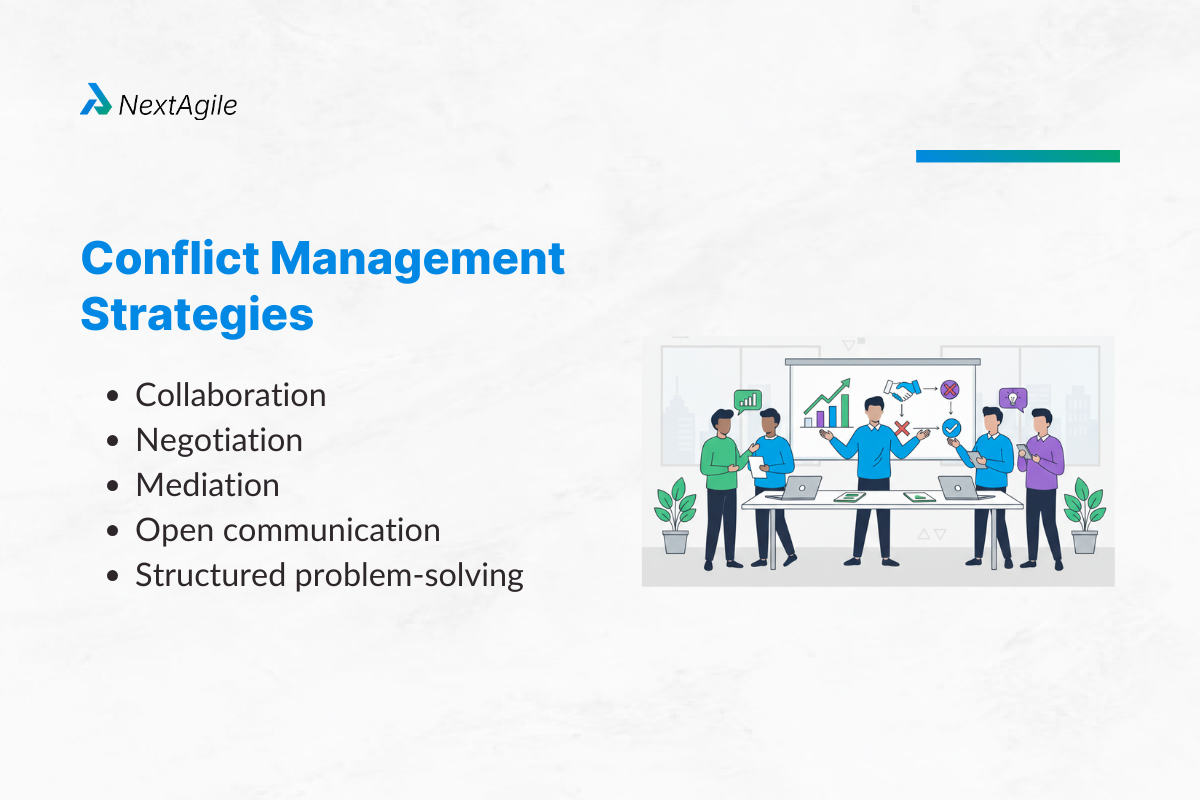
Conflict Management Strategies
Conflict management is fundamentally a matter of strategy. You can’t use the same solution to every problem – what you do to settle a minor team spat isn’t going to resolve a boardroom-level fight.
Some of the most prevalent conflict management techniques include:
 Skip to content