Growing businesses rarely fail because of poor strategy. They fail because execution slows as the organization expands. Projects stall, decisions move upward, and leaders spend more time resolving operational issues than driving growth.
The biggest reason is often a weak middle management layer.
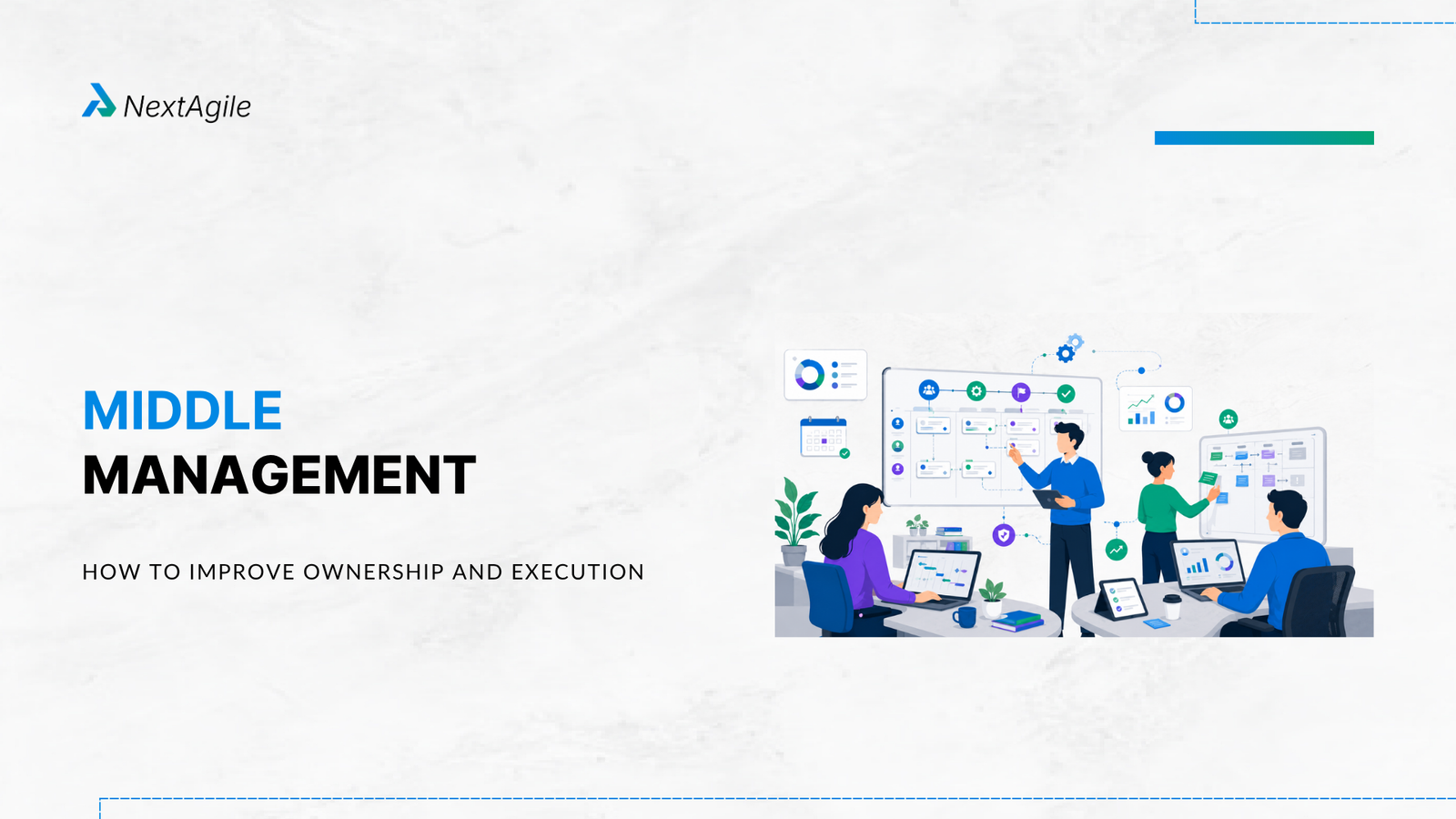
Middle managers sit between strategy and execution. They translate business goals into team priorities, coordinate across functions, make operational decisions, and ensure work moves forward. When this layer lacks ownership, even the best leadership team struggles to execute consistently.
Strong middle management is not about supervising people. It is about creating accountability, making timely decisions, and removing barriers before they become business problems. Organizations that invest in middle management skills, manager coaching, and clear decision rights build teams that execute faster and rely less on senior leadership.
This guide explains how to strengthen middle management, close the execution gap, and build a culture where managers own outcomes instead of escalating every decision.
Key Highlights of Middle Management Middle management connects strategy with day-to-day execution. Ownership improves when decision rights are clearly defined. Most execution problems stem from unclear accountability rather than lack of effort. Weekly ownership reviews create better execution than traditional status meetings. Strong middle managers solve problems instead of escalating them. Decision rights, authority boundaries, and manager coaching are essential for sustainable execution. Organizations should evaluate managers based on business outcomes, not activity levels. A structured ownership framework helps reduce delays, improve accountability, and increase execution speed. As companies grow, leadership responsibilities change dramatically. Founders and senior executives can no longer oversee every project or make every operational decision. Teams become larger, departments become more specialized, and cross-functional work increases.
This is where middle management becomes critical.
Middle managers convert strategic priorities into measurable action. They coordinate across departments, develop team capability, make operational decisions, and ensure execution remains aligned with business goals.
Unfortunately, many organizations unintentionally weaken this layer.
Managers receive promotions because they perform well as individual contributors, but they rarely receive structured support to develop leadership capability. They become responsible for larger teams without clear authority, consistent coaching, or defined decision-making boundaries. As uncertainty grows, managers begin escalating routine decisions upward, slowing execution across the organization.
The result is familiar in many growing businesses:
Senior leaders spend too much time resolving operational issues. Teams wait for approvals before moving forward. Accountability becomes unclear. Cross-functional initiatives slow down. Ownership shifts from managers back to executives. These symptoms are often treated as communication problems, process problems, or capability gaps. In reality, they usually reflect poorly designed management systems.
Improving middle management accountability is therefore not about asking managers to “take more ownership.” Ownership cannot be demanded. It has to be designed through clear expectations, authority, and operating rhythms that encourage independent decision-making.
Organizations that invest in middle management training, manager coaching, and execution systems consistently outperform those that rely solely on individual leadership capability.
Many organizations accelerate this capability through structured Leadership Coaching and Training Services , where managers learn practical coaching, delegation, decision-making, and accountability skills required to lead growing teams.
What Middle Management Actually Owns in a Growing Business One of the biggest misconceptions about corporate middle management is that managers exist primarily to supervise people. While people management is important, their real responsibility is much broader.
Middle managers own execution.
Organizations that consistently strengthen execution usually establish a clear management rhythm that enables managers to review priorities, resolve blockers, and make timely decisions without waiting for executive intervention.
They ensure strategic priorities become operational outcomes by coordinating people, processes, and decisions across the organization.
Their responsibilities typically include:
Translating organizational strategy into team objectives. Making operational decisions within defined authority. Prioritizing work against business goals. Coordinating across multiple departments. Removing execution bottlenecks. Developing future leaders. Managing performance and accountability. Escalating only strategic or high-risk decisions. Think of middle management as the organization’s execution engine.
Senior leaders determine where the business should go. Frontline teams perform the work. Middle managers ensure the work reaches its destination. Without this execution layer, strategy remains a presentation instead of becoming measurable business results.
fdThe Gap Between “Managing” and “Owning” Outcomes Many managers believe their role is to monitor progress. High-performing managers believe their role is to improve outcomes. This distinction changes how decisions are made every day.
A manager who simply manages tasks asks questions like:
Has the work been completed? Is the deadline still realistic? Has everyone submitted an update? A manager who owns outcomes asks different questions:
What is preventing success? Which decisions need to be made today? Who owns resolving this issue? What support does the team actually need? The difference may seem subtle, but it has a significant impact on execution.
Managing Activity Owning Outcomes Tracks progress Drives progress Reports problems Solves problems Escalates frequently Makes decisions within authority Focuses on deadlines Focuses on business outcomes Measures completion Measures impact Supervises work Improves execution
Organizations often reward visibility rather than ownership. Managers become excellent at creating reports, attending meetings, and communicating updates, yet struggle to make timely decisions that keep work moving.
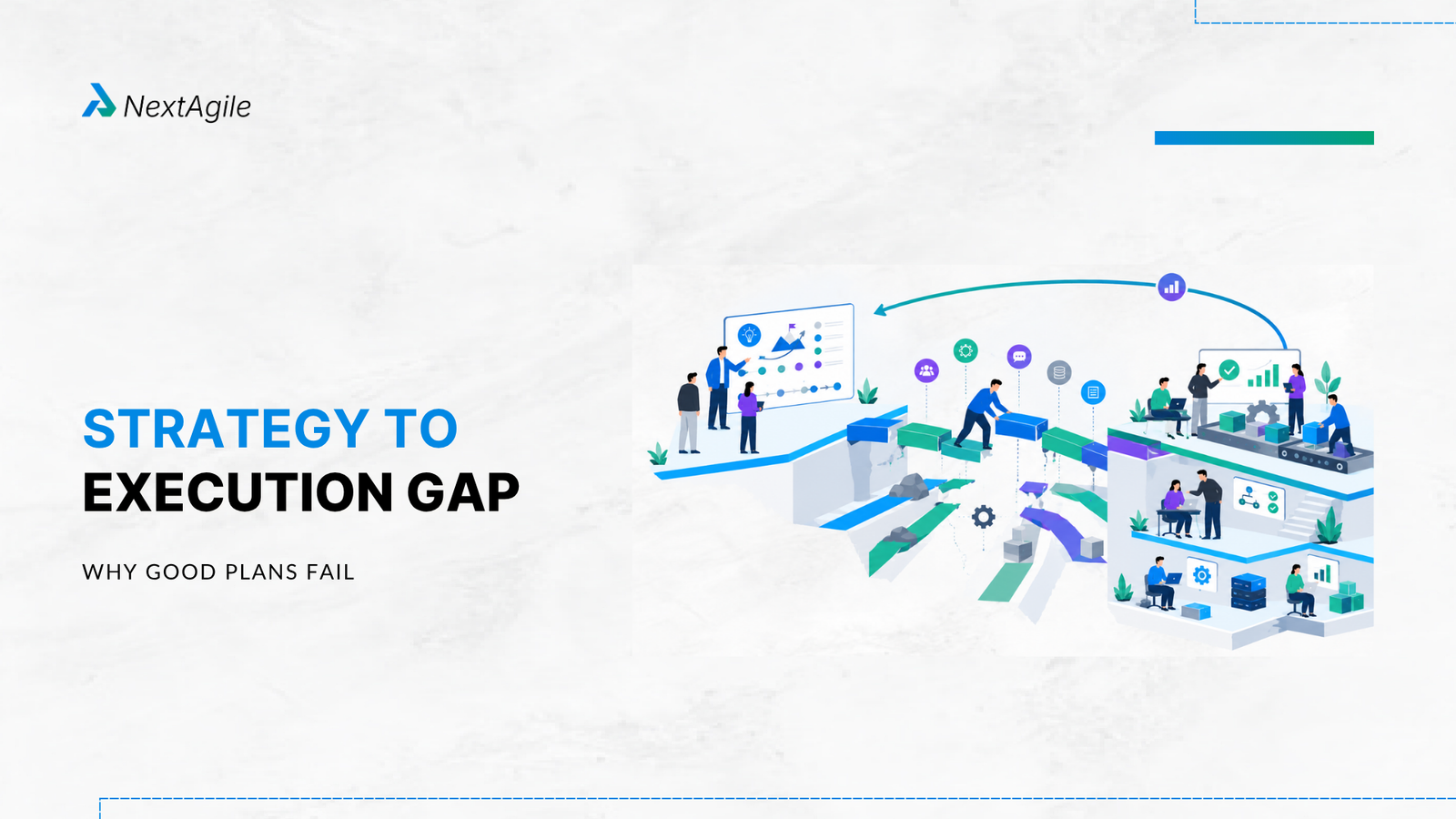
This is one reason many companies experience a widening middle management execution gap as they scale.
Ownership requires authority. Authority requires trust. Trust requires clearly defined decision rights. Without these elements working together, managers naturally become coordinators instead of business leaders.
Why Ownership Breaks Down as Companies Scale Ownership problems rarely appear when organizations are small.
In smaller companies:
Communication is direct. Founders make most decisions. Teams work closely together. Problems become visible immediately. Growth changes everything.
Departments specialize.
Management layers increase.
Projects involve multiple teams.
Decision-making becomes distributed.
Without redesigning the management system, execution starts slowing down.
Several factors contribute to this decline.
1. Decision rights become unclear Managers hesitate because they do not know which decisions they own.
Instead of making progress, they seek approval.
Over time, escalation becomes the default operating model.
Using a decision rights framework can eliminate much of this uncertainty by clearly defining who recommends, decides, contributes, and approves key business decisions
2. Founders remain involved in operational work Many growing businesses unintentionally reinforce dependency by reviewing every significant decision.
Managers learn that independent decisions are often reversed, so they stop taking initiative altogether.
This creates a cycle where executives become increasingly overloaded while managers become increasingly passive.
If this sounds familiar, our guide on Founder dependency explains why organizations must deliberately reduce reliance on founders as they scale.
3. Managers inherit responsibility without authority Many middle managers become accountable for results but cannot approve budgets, adjust priorities, or resolve cross-functional conflicts.
When accountability exceeds authority, ownership quickly disappears.
People cannot be expected to own outcomes they lack the power to influence.
4. Performance reviews reward activity instead of execution Organizations often measure:
Meeting attendance Project updates Team utilization Number of completed tasks Far fewer measure:
Decision quality Speed of execution Cross-functional collaboration Business outcomes Ownership at work When metrics reward reporting rather than results, managers naturally optimize for visibility instead of execution.
5. Management systems never evolve Many companies continue using the same operating rhythm after doubling or tripling in size.
Weekly meetings become status updates.
Decision-making slows.
Ownership becomes fragmented.
Cross-functional coordination becomes reactive instead of proactive.
As organizations grow, management systems must evolve alongside the business. A structured Management Rhythm ensures managers spend less time reporting progress and more time driving execution through consistent decision-making, accountability, and follow-through.
Middle Management: How to Improve Ownership and Execution Many organizations try to improve execution by introducing new tools, dashboards, or approval processes. While these initiatives may increase visibility, they rarely address the real issue.
Execution improves when managers have the clarity, authority, and confidence to make decisions without waiting for senior leadership.
The objective is not to make middle managers busier. It is to help them become the primary drivers of execution within their areas of responsibility.
The following practices consistently strengthen middle management accountability and reduce execution delays.
Clarify Decision Rights Before Adding Process One of the fastest ways to improve execution is to eliminate uncertainty around decision-making.
Managers frequently ask questions like:
Who approves this? Can I make this decision? Should I involve another department? Does this need leadership sign-off? Every unanswered question slows execution.
Many organizations respond by adding more approval steps or creating additional meetings. In reality, the better solution is to clarify decision rights.
A decision rights framework defines who has the authority to:
Make the final decision. Recommend a course of action. Provide input. Execute the work. Be informed after the decision is made. This prevents confusion and reduces unnecessary escalation.
Organizations implementing OKR Consulting Services often strengthen decision rights alongside goal alignment so managers can make faster operational decisions while remaining aligned with strategic priorities.
For example, consider a product launch.
Decision Owner Launch timeline Product Manager Marketing campaign Marketing Manager Budget changes Department Head Pricing approval Executive Leadership Customer communication Customer Success Manager
When these responsibilities are documented, managers spend less time seeking approval and more time moving work forward.
Use RACI Carefully Many organizations use the RACI framework to assign responsibilities.
While RACI is useful, it often becomes too complex if every project includes dozens of stakeholders.
Instead, keep it simple.
Every significant decision should clearly answer four questions:
Who decides? Who contributes? Who executes? Who approves, if approval is required? If multiple people believe they own the same decision, nobody truly owns it.
Likewise, if everyone must approve a decision, execution slows dramatically.
The goal is not more documentation. The goal is faster, more confident decision-making.
Build a Weekly Ownership Review, Not a Status Update One of the biggest mistakes organizations make is confusing meetings with management.
Many weekly meetings sound like this:
What did you complete? What are you working on? Are you on track? These conversations provide information but rarely improve execution. High-performing middle managers run ownership reviews instead. The discussion shifts from reporting activity to removing barriers.
Instead of asking what happened last week, ask:
Which business outcomes are at risk? What decisions need to be made this week? Where are teams blocked? Which issues require cross-functional coordination? What can we solve today without escalating? This approach creates accountability because managers leave the meeting with clear decisions rather than a list of updates.
A practical ownership review includes five elements:
Focus Area Key Question Outcomes What business result are we driving? Decisions What decisions must be made this week? Risks What could delay execution? Ownership Who is responsible for resolving each issue? Follow-through When will we review progress?
Notice what is missing.
There is no lengthy slide deck.
There is no detailed project update.
There is no discussion of completed tasks unless they affect outcomes.
Managers spend their time solving problems rather than presenting information.
A structured review cadence also complements a well-designed Management Rhythm , ensuring operational reviews become decision-making forums instead of reporting sessions.
Common Reasons Middle Managers Default to Escalation Most managers do not escalate because they lack capability. They escalate because the system encourages it. When organizations reward caution over ownership, managers naturally seek approval before acting.
Below are the most common reasons this happens.
Fear of making the wrong decision If managers are criticized whenever a decision does not produce the expected outcome, they quickly learn that asking for permission feels safer than exercising judgment.
Organizations that build ownership treat reasonable mistakes as learning opportunities rather than management failures.
Unclear authority Managers often hear statements like:
“You own the project.”
However, they may not control:
Budget Resources Priorities Cross-functional commitments Ownership without authority creates frustration rather than accountability.
Conflicting priorities Middle managers frequently receive requests from multiple senior leaders.
For example:
Sales wants faster delivery. Operations wants better quality. Finance wants lower costs. HR needs managers to prioritize hiring. Without clear prioritization, managers cannot satisfy everyone. Instead of making trade-offs, they escalate the conflict upward.
Leadership should define business priorities before expecting managers to execute them.
Lack of coaching Many organizations invest heavily in frontline employees but provide very little manager coaching.
As a result, new managers rely on instinct instead of proven management practices.
Regular coaching conversations help managers develop:
Better judgment. Stronger delegation skills. More effective decision-making. Greater confidence. Improved communication. This is one reason middle management training should focus on real operational challenges instead of generic leadership concepts.
Practical coaching programs such as our Delegation and Feedback Workshop help managers strengthen delegation, accountability, coaching conversations, and independent decision-making in real business situations.
Success is measured incorrectly Managers naturally optimize for whatever leadership measures. If success means producing reports, managers produce reports.
If success means closing execution gaps, managers focus on solving problems.
The KPIs should reinforce ownership by measuring outcomes such as:
Decision turnaround time Cross-functional delivery Escalation frequency Team accountability Business results These indicators provide a much clearer picture of management effectiveness than meeting attendance or project updates.
A Practical Framework for Building Manager Ownership Ownership cannot be created through motivational speeches or annual leadership programs. It develops through systems that consistently reinforce responsible decision-making.
The following three-step framework can help organizations strengthen middle management while improving execution across the business and work as a guide to transformational leadership .
Step 1: Map Decisions, Not Just Tasks Many organizations document workflows in great detail.
Very few document decisions.
Tasks explain what needs to happen.
Decisions determine whether work moves forward.
Start by identifying the recurring decisions managers make every week.
Examples include:
Resource allocation Hiring decisions Customer escalations Delivery trade-offs Priority changes Budget adjustments Risk management Cross-functional dependencies Once identified, classify each decision into one of three categories:
Decision Type Example Manager decides independently Team priorities, workload balancing Manager decides after consultation Hiring, delivery commitments Executive approval required Major investments, strategic direction
This simple exercise exposes hidden bottlenecks and highlights where authority needs to be redistributed. Many organizations also use Value Stream Mapping Consulting Services to visualize decision flow, identify execution bottlenecks, and improve cross-functional coordination across complex business processes.
When managers know exactly which decisions they own, execution becomes faster and far more consistent.
Step 2: Set the Manager’s Authority Boundary in Writing One of the biggest causes of inconsistent execution is ambiguity.
Two managers with identical job titles often operate with completely different levels of authority because expectations were never documented.
Define authority boundaries clearly.
For example:
Managers can:
Approve operational expenses up to a defined limit. Reprioritize team work. Resolve customer issues. Negotiate delivery timelines. Allocate team capacity. Managers must escalate:
Strategic investments. Organization-wide policy changes. Legal risks. Major financial commitments. Business model decisions. Written authority boundaries reduce hesitation and create confidence.
More importantly, they establish trust between senior leaders and middle managers. Delegation works best when authority and accountability grow together.
Organizations looking to strengthen this capability often benefit from practical programs like the Delegation and Feedback Workshop , where managers learn how to delegate effectively while maintaining accountability.
Step 3: Review Ownership Monthly, Not Annually Many companies evaluate managers once or twice a year. Ownership cannot be developed through annual conversations.
Instead, conduct a monthly ownership review focused on execution rather than performance ratings.
Questions to explore include:
Which decisions did the manager make independently? Where did unnecessary escalation occur? Which cross-functional challenges were resolved? How effectively did the manager develop others? What execution bottlenecks still exist? These conversations should focus on improving judgment rather than assigning blame.
Over time, monthly ownership reviews create a culture where managers become increasingly comfortable making decisions, solving problems, and taking responsibility for business outcomes.
This ongoing reinforcement is what transforms middle management from a reporting layer into a true execution engine.
Middle Management vs Senior Leadership: Where Execution Actually Lives As organizations grow, the distinction between senior leadership and middle management becomes increasingly important. Yet many companies blur these responsibilities, leading to duplicated work, delayed decisions, and frustrated teams.
Senior leaders are responsible for setting direction. Middle managers are responsible for making that direction happen.
When each layer understands its role, the organization operates with greater speed and accountability.
Senior Leadership Middle Management Defines business strategy Translates strategy into execution Sets organizational priorities Prioritizes team work Makes long-term investment decisions Makes operational decisions Designs organizational structure Coordinates cross-functional execution Builds organizational capability Develops team capability Reviews business performance Reviews execution performance Removes organizational barriers Removes operational barriers
Problems arise when senior leaders continue making decisions that middle managers should own.
For example:
Executives approve routine operational changes. Managers seek permission for low-risk decisions. Teams wait for leadership alignment before taking action. Functional leaders resolve conflicts that managers could handle themselves. Over time, this creates two major issues.
First, senior leadership becomes overwhelmed with operational work instead of focusing on strategic priorities.
Second, middle managers stop developing decision-making capability because they rarely exercise it.
Healthy organizations deliberately shift operational ownership downward while keeping strategic direction aligned at the leadership level.
This transition is especially important during periods of rapid growth. Businesses that are redesigning structure as the business scales often discover that execution improves only when decision-making authority moves closer to the teams doing the work.
Middle managers also play a central role in cross-functional coordination . Since they work across departments every day, they are best positioned to resolve dependencies before they become organizational bottlenecks. Senior leaders should step in only when conflicts affect strategic priorities or require organization-wide decisions.
Ultimately, execution lives in the middle of the organization. Strategy may start at the top, but results are created through the decisions managers make every day.
Signs Your Middle Management Layer Needs Redesign Many organizations recognize execution problems but misdiagnose the cause.
They introduce new software, increase reporting, or add additional approval steps. While these actions create more visibility, they rarely improve ownership.
The real issue often lies in how the middle management layer has been designed.
Here are some common warning signs.
Managers escalate routine decisions If managers frequently seek approval for operational matters, decision rights are likely unclear.
Senior leaders spend most of their time solving team issues When executives are constantly involved in day-to-day operations, managers are not operating with sufficient authority or confidence.
Cross-functional projects consistently miss deadlines Poor collaboration across departments often reflects weak ownership rather than poor planning.
Meetings focus on updates instead of decisions If weekly reviews consist primarily of status reports, managers are reporting activity rather than driving execution.
Accountability changes depending on the project Employees should never wonder who owns a decision. Ownership should remain consistent regardless of the initiative.
High-performing individual contributors struggle after promotion This is one of the clearest indicators that the organization lacks an effective middle management training approach.
Technical expertise alone does not prepare someone to lead people, make decisions, or manage execution.
Managers avoid difficult conversations Strong execution requires managers to address performance issues, clarify expectations, and provide timely feedback.
Organizations that invest in coaching and practical leadership development equip managers to handle these conversations with confidence.
Every important decision reaches the founder or executive team This is often a symptom of a broader execution problem rather than a leadership preference.
If every decision moves upward, the business remains dependent on a small group of leaders, limiting scalability.
Whether your organization follows traditional management models or embraces servant leadership , the principle remains the same: leaders should create the conditions for teams to succeed rather than becoming the solution to every operational problem.
A strong middle management layer enables exactly that.
Organizations experiencing these symptoms often face broader execution challenges. Our guide on How to Scale a Business Without Losing Control of Execution explains how decision-making systems help businesses grow without increasing executive dependency.
Conclusion Middle management is often described as the bridge between strategy and execution. In reality, it is much more than a bridge. It is the operating system that determines whether strategic plans become measurable business outcomes.
Organizations with strong middle managers execute faster, collaborate more effectively, and develop future leaders from within. Those with weak management layers experience constant escalation, inconsistent accountability, and growing dependence on senior leadership.
Improving middle management is not about adding more processes or expecting managers to work harder. It requires designing ownership into the organization through clear decision rights, defined authority, structured operating rhythms, and continuous coaching.
Start by mapping decisions instead of tasks. Clarify what managers can decide independently. Review ownership regularly rather than annually. Measure managers by the outcomes they create instead of the activities they report. As your business grows, these practices will help close the strategy-to-execution gap, strengthen ownership at work, and build a management layer capable of delivering sustainable results.
If your organization wants to strengthen middle management, improve ownership, and accelerate execution, NextAgile helps leadership teams build practical management systems through Leadership Development Training , Business Transformation Consulting Services, and OKR Consulting Services. Our consultants work with organizations to clarify decision rights, strengthen accountability, improve coaching capability, and create execution systems that scale as the business grows.
Frequently Asked Questions 1.What is the difference between middle management and team leadership? Team leaders primarily focus on guiding a single team, allocating day-to-day work, and supporting individual performance. Middle managers have broader responsibilities that include translating strategy into execution, coordinating across functions, managing multiple teams or leaders, and making operational decisions that affect business outcomes. Their role extends beyond supervision to ensuring organizational priorities are executed consistently.
2.Why do middle managers avoid taking ownership of decisions? Most middle managers do not avoid ownership because of a lack of commitment. They often face unclear decision rights, limited authority, conflicting priorities, or a culture where mistakes are penalized. When managers are accountable without having the authority to act, they naturally escalate decisions instead of making them. Defining authority boundaries and providing regular coaching encourages greater ownership.
3.How many direct reports should a middle manager have? There is no universal number, but most organizations find that 5 to 8 direct reports allows managers to provide adequate coaching, maintain accountability, and make effective decisions. The ideal span of control depends on factors such as the complexity of the work, team maturity, and the level of cross-functional coordination required. Highly specialized or rapidly changing environments may require smaller teams.
4.Can middle management be trained, or is it mostly experience? Experience is valuable, but it is not enough on its own. Effective middle management training develops practical capabilities such as delegation, decision-making, coaching, conflict resolution, accountability, and cross-functional leadership. Organizations that invest in structured development programs help managers become effective much faster than relying solely on experience.
5.What KPIs show whether middle management ownership is improving? Rather than focusing only on operational metrics, organizations should track indicators that reflect ownership and execution. These include decision turnaround time, escalation frequency, project delivery against commitments, cross-functional collaboration, employee engagement, manager effectiveness scores, and team productivity. Together, these metrics provide a clearer picture of whether managers are taking responsibility for outcomes.
6.Is flattening the middle management layer a good idea? Flattening an organization can improve communication in some situations, but eliminating middle management entirely often creates new execution challenges. Without capable managers, senior leaders become overloaded with operational decisions while teams lose the guidance needed to coordinate complex work. Instead of removing the management layer, organizations should strengthen it by improving decision rights, accountability, coaching, and execution systems so managers can operate independently and effectively.
Alok Dimri is the co-founder and leads the overall business at NextAgile, where he is responsible for strategy, client and consultant partnerships, and a whole lot of other core business activities like solutioning, branding, and customer engagement.
Over the past 16 years, he has worked extensively in business strategy, new business development, and key account management initiatives across process consulting and training domains.
 Skip to content