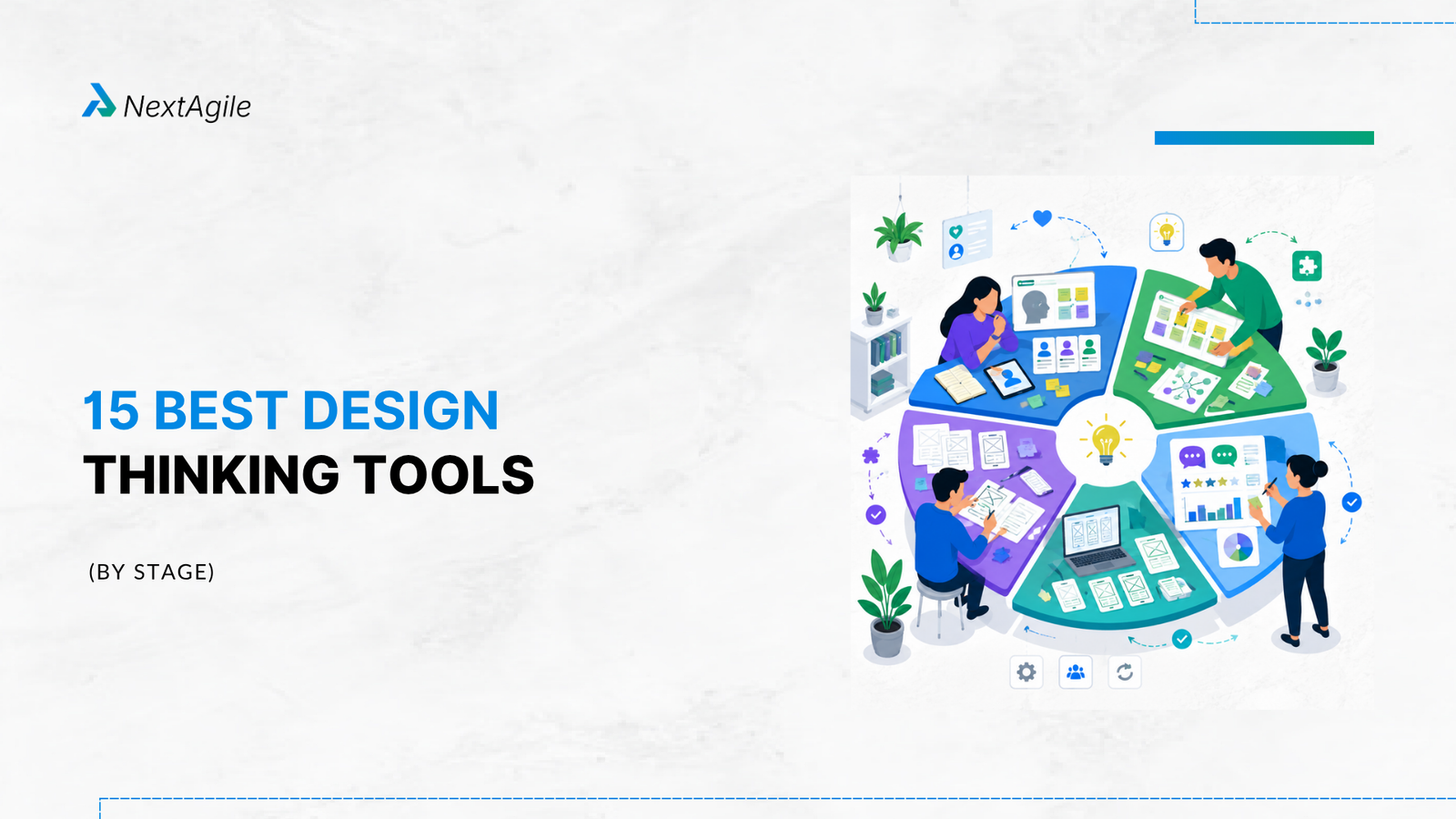
The document titled 15 Best Design Thinking Tools in 2026 (By Stage) provides a comprehensive overview of the most effective tools available for each phase of the design thinking process. These tools have been meticulously selected based on their ability to enhance creativity, collaboration, and problem-solving capabilities. By categorizing them according to their specific stages, the document serves as a valuable resource for professionals seeking to optimize their design thinking practices in 2026. Quick Answer: Miro, FigJam and Mural remain the strongest all-round design thinking tools in 2026 because they cover every stage on one shared canvas, but no single tool wins every stage. Smaply is the sharpest tool for the Empathize stage because it is built specifically for personas and stakeholder maps. XMind and MindMeister lead mind mapping for the Define and Ideate stages. UserTesting and Storyflow are the strongest picks for the Test stage, where AI-assisted synthesis is now standard. Students and small teams can run a full design thinking cycle on free tiers of Miro, FigJam and Canva. The tradeoff: free tiers cap boards and collaborators, so teams running frequent workshops usually move to a paid plan within two to three projects.
Key Highlights of Best Design Thinking Tools
Forrester’s Total Economic Impact study of IBM’s Enterprise Design Thinking practice found a 301% ROI over three years, driven largely by fewer defects and faster releases.
McKinsey’s Business Value of Design research tracked 300 public companies over five years and found top-quartile design-led firms posted 32% higher revenue growth than peers.
Miro, FigJam and Mural cover all five design thinking stages on one canvas, which is why they anchor most 2026 tool comparisons over single-stage point solutions.
AI-native tools such as Storyflow now synthesize user research and re-frame problem statements automatically, a capability that did not exist in mainstream design thinking tools before 2025.
Free tiers exist for Miro, FigJam, Canva and MindMeister, making a genuine end-to-end design thinking workshop possible at zero cost for students and early-stage teams.
Introduction
The right design thinking tools turn a vague brief into a tested prototype in weeks instead of months. Most teams do not fail at design thinking because the five-stage process is unclear. They fail because they pick a tool built for one stage and try to force the entire Empathize-Define-Ideate-Prototype-Test cycle through it. A whiteboard tool built for brainstorming is a poor fit for structured user interviews, and a persona builder is a poor fit for rapid prototyping.
This guide ranks 15 tools by the stage they actually solve best, includes real 2026 pricing, and flags the tradeoffs vendor pages leave out. It also covers where design thinking tools fit for engineering and management students building coursework projects, not just enterprise teams.
What Actually Makes a Design Thinking Tool Useful
A design thinking tool earns its place in your stack if it does three things: keeps every stage visible on one surface, lets a test result send the team back to an earlier stage without losing prior work, and gives non-designers (product managers, engineers, students) a low-friction way to contribute. Tools that fail on the second point are the most common reason workshops stall, because teams treat the five stages as a one-way ladder instead of a loop that a surprising test result can restart.
The 15 Best Design Thinking Tools, Organized by Stage
Snippet answer: The best design thinking tools by stage in 2026 are Smaply and dscout for Empathize, Miro and FigJam for Define and Ideate, InVision and Whimsical for Prototype, and UserTesting and Storyflow for Test. Miro, FigJam and Mural are the only three that cover all five stages on a single canvas.
Empathize Stage: Understanding Real Users
Smaply – Purpose-built for stakeholder maps, personas, and customer journey maps. Best for teams that need to document research formally before moving to Define. Pricing starts around $27/month per editor. Limitation: weaker for live workshop facilitation than Miro or Mural.
dscout – A remote research platform for diary studies and in-context video interviews. Best for teams validating assumptions with real users rather than internal stakeholders. Enterprise pricing only, which puts it out of reach for students and small teams.
UserTesting – Combines a large participant panel with AI-generated “Instant Insight Narratives” that summarize sessions automatically. Integrates with Jira, Slack, and Adobe XD. Best for teams that need fast, structured feedback across the Empathize and Test stages.
Define Stage: Turning Research Into a Problem Statement
Miro – The strongest all-around canvas in 2026 because it holds empathy maps, journey maps, and problem statements on one infinite board with real-time collaboration, comments, and version history. Free tier available; paid plans start around $10/user/month. See NextAgile’s
For teams still working out how empathy data should shape a problem statement,NextAgile’s guide to empathy maps and user personas is a useful companion to this stage.
Notion – Not a design thinking tool by origin, but widely used to document define-stage artifacts (problem statements, research synthesis, decision logs) in a format non-designers already know. Free for individuals; team plans start around $10/user/month.
 Skip to content