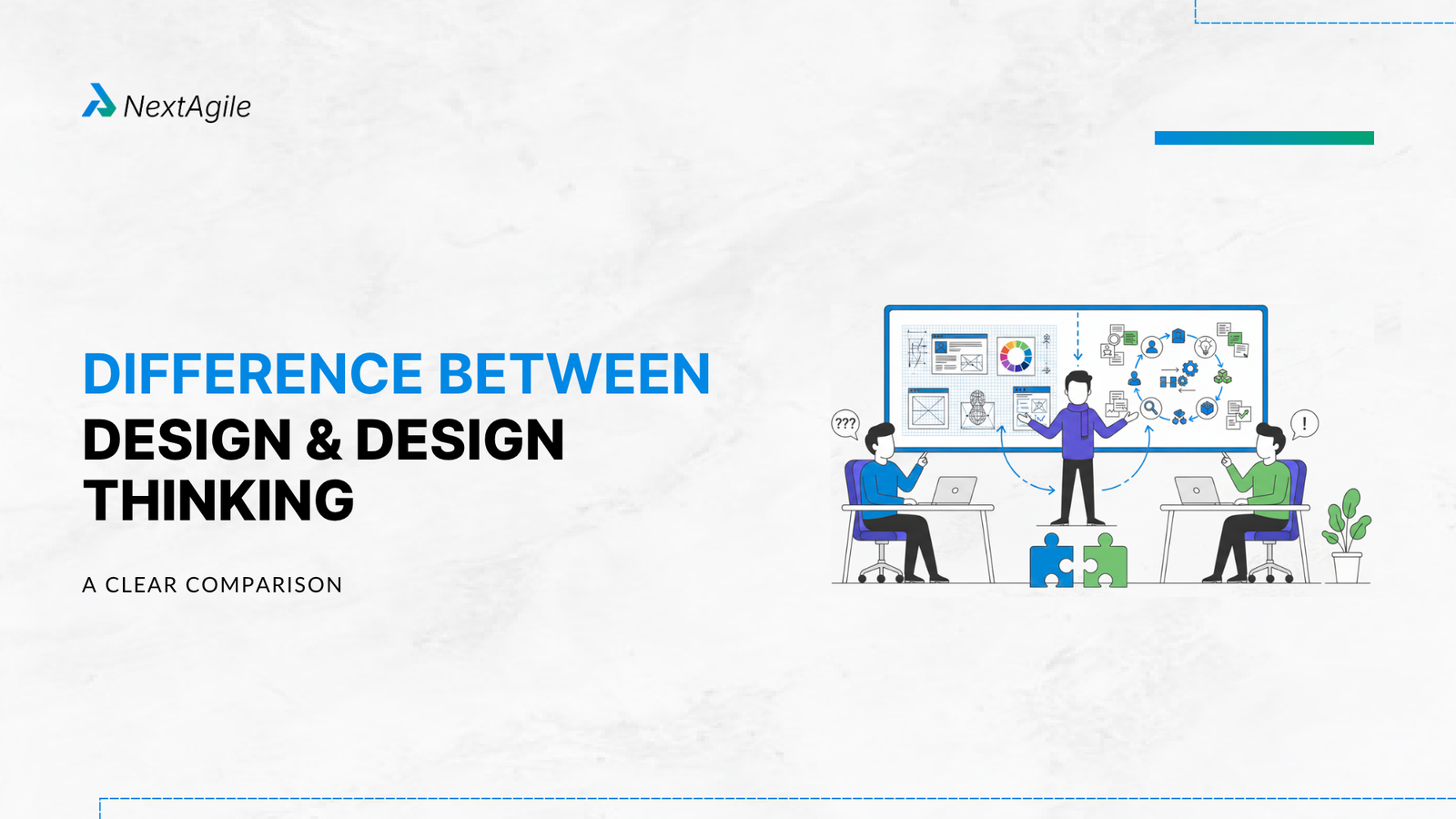
Difference Between Design and Design Thinking: Key Differences, Examples & When to Use Each
Alok Dimri
Talk to Expert for Free
Table of Contents
Key Takeaways From This Blog
Design and design thinking are not interchangeable
Design improves solutions, design thinking validates direction
Design thinking reduces risk by challenging assumptions early
Design delivers value when guided by clear, evidence based problem definitions
Organizations succeed when discovery and delivery are tightly integrated
Introduction
Design and design thinking are often used as interchangeable terms, especially in digital transformation and product conversations. Yet they represent two very different capabilities. One focuses on shaping solutions. The other focuses on understanding what should be solved in the first place.
Design improves how something looks, feels, and works. Design thinking examines whether the solution being built actually matters to users and the business. When organizations confuse the two, they often invest in beautifully executed outcomes that fail to deliver real value.
At NextAgile, we regularly see teams redesign interfaces, launch features, or rebrand experiences without ever questioning the original problem statement. The result is high execution efficiency applied to the wrong challenge.
This pillar page clarifies:
The difference between design and design thinking
How design thinking vs design affects outcomes
Where organizations lose momentum and trust
How to combine both approaches for sustained impact
Understanding this distinction is critical for leaders who want innovation that delivers measurable results, not just better looking outputs. Many organizations jump straight into execution without validating the problem. This confusion between design and design thinking is one of the most common reasons transformation efforts fail.
Definition of Design
Design is the discipline of shaping how users experience a solution once a direction has already been chosen. It focuses on execution, usability, and clarity.
In most organizations, design begins after a problem statement is locked and budgets are approved. Designers are asked to make something usable, intuitive, and visually coherent within given constraints.
Core characteristics of design
Focuses on tangible outputs such as interfaces, products, services, or environments
Follows a largely linear flow from brief to delivery
Relies on specialist expertise such as UX design, UI design, industrial design, or service design
Engages users mainly during validation or usability testing
Delivers polish, consistency, and functional excellence
Why design alone is not enough
Design is extremely effective at improving experiences when the problem is well understood. However, it rarely questions whether the original problem is valid.
When design operates without deeper discovery, organizations often experience:
Late feedback that forces costly rework
Strong usability paired with weak adoption
Solutions that optimize surface issues while deeper user pain remains unresolved
Design makes things work better. It does not always ensure that the right thing is being built.
 Skip to content