Introduction Ever wonder why some teams thrive while others struggle, even with the same resources? The secret often lies in two qualities: ownership and accountability. These aren’t just buzzwords, they are the backbone of workplace success.
When ownership and accountability are weak, the symptoms surface quickly:
Missed deadlines that quietly become acceptableSilent disengagement where people comply but stop caringDecision paralysis as teams wait for permission instead of taking initiative These are not the talent problems, but clarity and ownership problems.
Ownership is taking initiative, being committed, and making the organization’s objectives personal. Accountability is to follow through on commitments, be open about outcomes, and own the results. Together, these produce a robust culture where employees don’t merely arrive, they create outcomes. Without ownership and accountability, deadlines slip, decisions stall, and engagement fades.
In the modern-day workplace, with remote teams, rapidly shifting markets, and ever-growing expectations, ownership and accountability are no longer optional. They enable leaders to navigate complexity, keep workers motivated, and make sure performance doesn’t get lost in translation. I would also refer to this as a guide to High-Performance Teams.
In this guide, we will explore the difference between ownership and accountability, their benefits, and how to build a culture that encourages them. We’ll also look at practical strategies, real-world examples, and leadership practices that turn responsibility into measurable results.
Ownership and Accountability in the Workplace What is Ownership and Accountability? Ownership in the workplace is the attitude of behaving like an owner and not simply doing your job, but being concerned with results. It’s about demonstrating initiative, going the extra step beyond job descriptions, and asking, “What else can I do to get this done?” When ownership is missing, teams wait. When accountability is missing, work drifts.
Accountability goes hand-in-hand with ownership by fulfilling promises. It is not merely about being responsible when things fail. It is about clarity of roles, follow-through, and transparency of outcomes. When accountability is firm, teams are well aware of who does what, and deadlines are met.
These two principles support one another. Ownership without responsibility threatens enthusiasm without discipline. Responsibility without ownership threatens obedience without dedication. But combined, they are the foundation of performance.
Consider a project team: ownership guarantees individuals are stepping up with ideas and solutions energy, while accountability guarantees deadlines and deliverables are met. Both are required for success in today’s organizations.
Ownership vs Accountability: Key Differences
Most organizations over-index on one and under-invest in the other. Ownership and accountability are frequently used as synonyms, but they aren’t.
Ownership is a mindset – one feels responsible for outcomes.Accountability is a mechanism – a system that guarantees outcomes are monitored and achieved. For instance, a product manager who owns would go ahead and investigate new features to address customer requirements. But accountability happens when they report, take feedback, and deliver on scope and timeline.
Another way to view it: ownership provides the answer to “Who cares enough to make this work?” and accountability provides the answer to “Who is accountable for making it happen?”
Healthy organizations create both. Ownership gets people to do more, and accountability provides governance, structure, and discipline. Leaders who get these mixed up will overdo rules (accountability) without passion (ownership) or drive enthusiasm (ownership) without structure. Both lead to imbalance.
When ownership and accountability come together, people don’t merely get things done they own results and stand behind them. That’s where culture moves from mediocre to top-performing.
Culture shifts often start through Next Agile Organizational Development .
Advantages of Ownership and Accountability in Organizations Business Impact: Performance and Productivity Gains Ownership fuels effort; accountability converts effort into outcomes. High ownership and accountability cultures consistently outperform benchmarked peers. Why? Because workers don’t merely “get tasks done” they make results count.
Strongly owned teams feel free to find solutions on their own. They innovate, adjust, and initiate without requiring directions. Accountability, on the other hand, makes sure these efforts are measurable, goal-aligned, and delivered repeatedly.
Research indicates accountable teams are more productive because clarity prevents duplication and delay. Ownership drives energy, and accountability anchors results. The two together minimize errors, create efficiency, and speed up decision-making.
Greater ownership equates to people exceeding expectations, and accountability guarantees that added effort is converted into business results.
Real-Life Examples: Strong Accountability Culture Companies Consider Amazon’s “Ownership” philosophy. Employees are encouraged to do what’s best for the company, even if it’s not within their job description. This attitude fuels innovation and customer mania.
Or consider Netflix their “Freedom and Responsibility” culture marries ownership and accountability without conflict. They empower employees to make decisions (ownership) but also hold them accountable for business impact (accountability).
In both cases, trust is paired with visible accountability. Even highly agile organizations apply this on a daily basis. For example, during a sprint retrospective
These real-world examples demonstrate that ownership and accountability are not theoretical concepts. They’re cultural practices that foster sustained success.
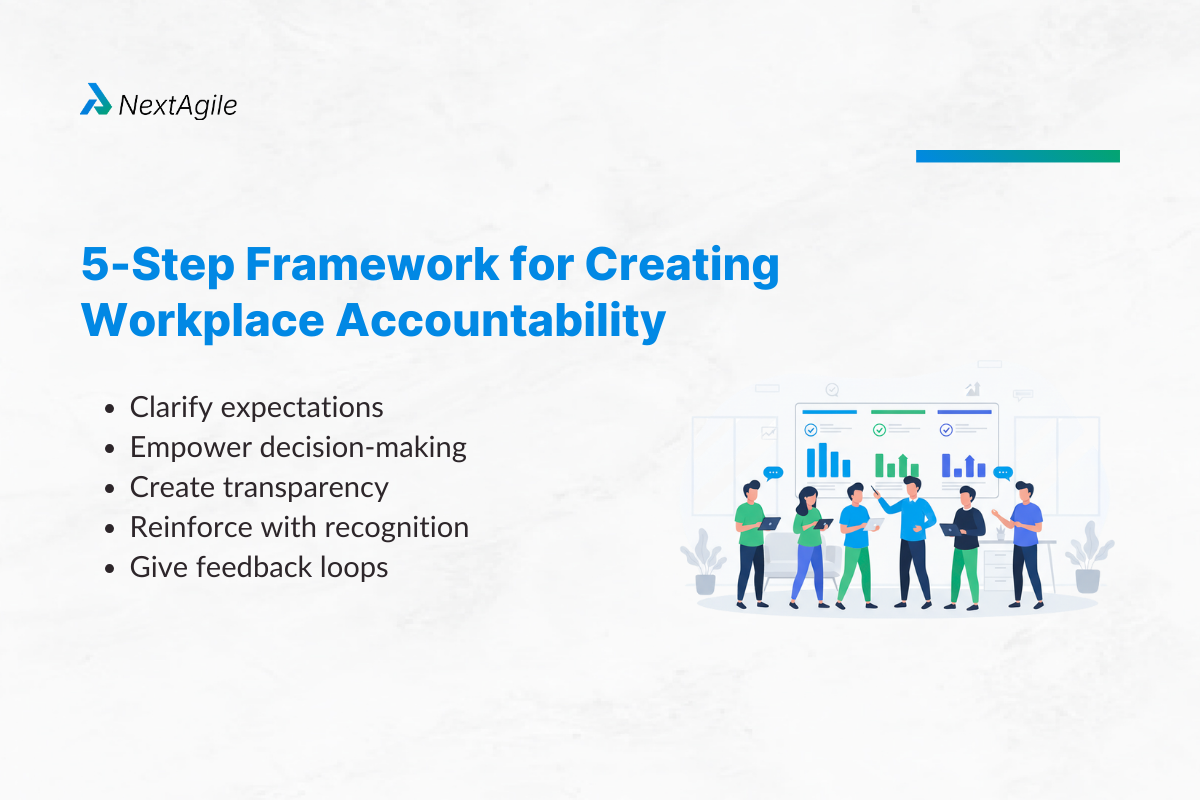
How to Build Ownership and Accountability Culture? 5-Step Framework for Creating Workplace Accountability Ownership and accountability require more than slogans. Culture shifts only when behaviors are supported by systems. Here’s a five-step framework:
Clarify expectations : Clearly define roles, results, and success metrics. Ambiguity is the killer of accountability.Empower decision-making : Give employees the authority to make the call. Ownership flourishes when people have control.Create transparency : Leverage dashboards, frequent updates, and transparent reviews to maintain accountability in sight.Reinforce with recognition : Praise when people show ownership and accountability. Public praise gains momentum.Give feedback loops : Provide developmental feedback, so accountability doesn’t come across as punitive but rather as developmental. This system guarantees that accountability is not about fault but about improvement, and ownership is not about accomplishing more work but about truly caring about results.
Leadership Function in Sustaining Ownership and Accountability Leaders are instrumental in influencing ownership and accountability. Leaders lead by example. When leaders take blame, follow up on agreements, and give credit, they create a culture of accountability. Teams mirror leadership behavior, not leadership intent.
Teams that want to build this with a facilitator can start with our ownership and accountability workshop , a one-day program that audits real commitments and rebuilds follow-through.
For ownership, leaders need permission to build psychological safety so that workers aren’t afraid to initiate. Micromanagement murders permission; empowerment nurtures it. Leaders who say, “What do you think we should do?” encourage permission, whereas those who tell you exactly what to do stifle it.
At NextAgile, we’ve seen leaders transform teams simply by shifting from control to coaching. We have enabled organizations to align expectations, build accountability systems, and foster ownership-driven leadership through contextual business outcome led performance management consulting services .
The message is clear: leaders don’t just enforce accountability, they inspire ownership.
Ownership and Accountability Implementation Strategies Practical Tools and Systems for Success Tools don’t create accountability, they reveal it. Accountability and ownership do not develop by happenstance, they require infrastructure that fosters them. Practical tools make things consistent and keep responsibility top of mind throughout the organization.
Some of the tested systems are:
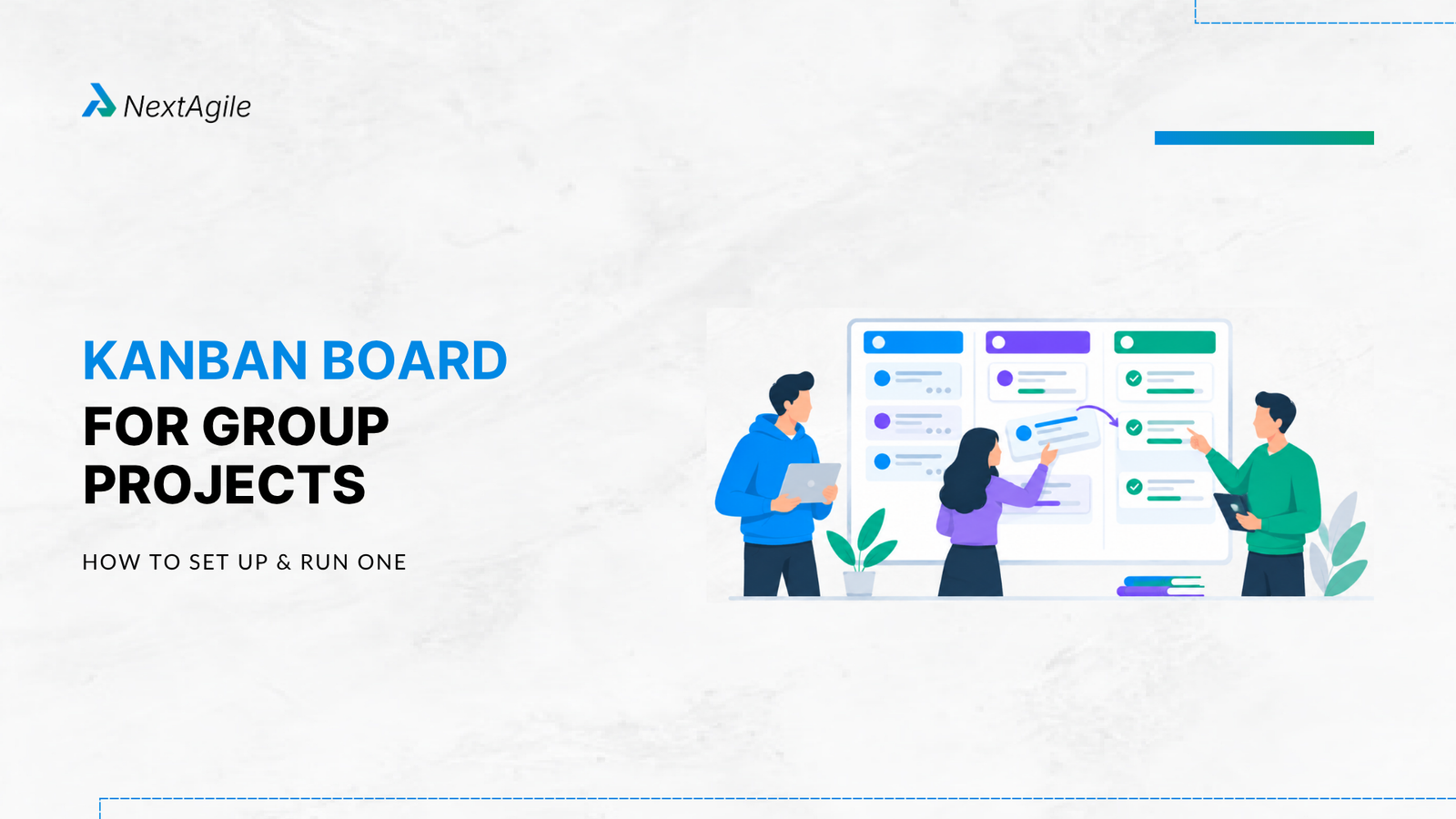
Agile boards (Kanban , Scrum tools) – They display who is responsible for what, which stage each task is in, and blockers. Visibility fosters both ownership and collective accountability.OKRs (Objectives and Key Results ) – Align individual contributions to organizational objectives. By making employees aware of how their work contributes to success, ownership increases.Daily stand-ups and check-ins – Brief updates maintain alignment, identify broken promises, and keep no responsibility lost.360-degree feedback – Encourages responsibility by permitting peers, managers, and reports to provide input. Ownership increases when workers are able to see how they influence others.Project management tools Knowledge-sharing platforms – Documentation centers or wikis prevent anyone from taking cover behind knowledge gaps, so accountability is shared. Even structured initiatives like agile training programs or leadership training programs
Measuring Ownership and Accountability: Key Metrics
What is measured improves. Monitoring accountability and ownership tells companies whether cultural shifts are succeeding. Metrics to watch include:
Commitment completion rates – Monitor how frequently promises are kept on schedule. Strong rates indicate accountability systems are in effect.Employee engagement scores – Surveys indicate whether workers feel empowered and trusted. Ownership tends to manifest as enthusiasm and motivation.Innovation/initiative tally – Count employee suggestions, new ideas, or active improvements pitched. The more initiatives, the greater the ownership.Cross-functional collaboration metrics – Measure how frictionless collaboration and coordination occur across teams to achieve mutual deliverables. Mature accountability is reflected in smooth collaboration.Escalation frequency – How frequently are problems escalated to leaders? Less escalation implies better ownership at the team level.Customer satisfaction and NPS scores – Ultimately, responsibility should enhance customer results. Increased ratings indicate ownership and follow-through.Participation in learning and development – Team members who own growth are indicated by signs of ownership, while regular monitoring demonstrates accountability to career paths. Leaders should not only gather numbers but also utilize them for recognition and feedback. Regular examination of such metrics helps solidify a culture where ownership and accountability are rewarded, not merely assumed. Metrics matter only when leaders respond to them.
Accountability becomes sustainable when leaders build core leadership skills across teams.
Consistent Challenges and Solutions to Ownership Culture Breaking the Implementation Resistance and Barriers Despite the best intentions, establishing ownership and accountability is not without its challenges. Workers might worry about being blamed, managers might resist relinquishing control, and organizations might slip into old patterns. Ownership thrives where mistakes are treated as learning moments.
The first step is redefining accountability. It’s not punishment, it’s progress. When errors occur, change the question from “who messed up?” to “what can we do better?” Eliminates fear and installs learning oriented accountability. The second step is acclimating leaders to empowerment. Most managers feel control guarantees outcome, but micromanaging kills ownership. A working method is testing autonomy on low-stakes projects. As employees deliver, both parties gain confidence. Another obstacle is a lack of transparency. Without defined roles or reporting processes, accountability disappears. Leaders need to create visible dashboards, regular check-ins, and common documentation so everyone knows what’s expected and delivered. Lastly, resistance tends to disappear with acknowledgment. When ownership and accountability are rewarded publicly whether through awards, shout-outs, or career development employees recognize them as opportunities, not threats. It’s also essential to provide training in coaching and delegation to managers so that responsibility comes across as supportive rather than controlling. With time, these small changes lower resistance and generate momentum toward a culture of responsibility and trust.
Conclusion Ownership and accountability are more than corporate ideals, they’re cultural forces that determine whether teams thrive or falter. Ownership ignites initiative, imagination, and enthusiasm, while accountability provides clarity, consistency, and follow-through. Without both, organizations get trapped in mediocrity loops.
Leaders need to understand that ownership can’t be imposed. It develops when workers are empowered, trusted, and motivated. Accountability, however, flourishes when roles are transparent, systems are clear, and feedback loops are ongoing. Together, they build an ecosystem in which people feel motivated to deliver and are responsible for results.
The journey is not without obstacles. Fear of failure, micromanagement, or resistance can derail progress. But as leaders transform accountability into learning, recognize ownership, and exhibit the behaviors they want to see, the culture changes.
For companies willing to expand, the message is straightforward: create systems, enable individuals, and track progress. The payoff is a workforce that does not merely get the job done but owns results and delivers success repeatedly.
Always remember, ownership creates momentum & accountability sustains it.
If you’re looking to inculcate ownership and accountability in your leadership teams, consider partnering with a trusted leadership training company like NextAgile that aligns contextual leadership training programs with executive coaching and overall organizational agility. Our team excels at aligning leadership development with organizational objectives.
Frequently Asked Questions 1. How does ownership and accountability vary by generations (Gen Z, Millennials, Gen X)? Generations differ in work style. Gen Z likes autonomy, Millennials need purpose, and Gen X values reliability. Customizing ownership opportunities and accountability systems to each group ensures involvement while aligning efforts with business results. Ownership scales only when leaders are willing to release control while maintaining absolute clarity on outcomes and expectations.
2. How do you deal with ownership and accountability in a remote work setup? Remote work demands intentional simplicity. Leverage digital tools, transparent dashboards, and regular check-ins. Foster trust by empowering remote workers with decision-making rights while holding them accountable through measurable objectives and transparent role expectations. Manage flexibility with structured follow-through.
3. How many years does it take to establish ownership and accountability culture? It is dependent upon leadership commitment and organizational maturity. Usually, observable changes take 6–12 months. Regular reinforcement, open systems, and observable leadership modeling are key to speeding the process and instilling accountability-led ownership as a sustainable cultural norm.
4. Is micromanagement the antithesis of ownership and accountability? Yes. Micromanagement is discouraging initiative and communicates distrust. Autonomy is what ownership thrives on, but accountability needs clarity and trust-based systems. Micromanaging leaders cut off both of them, inhibiting growth. Empowerment and open follow-through are the actual underpinnings of ownership and accountability in teams. Autonomy without clarity fails and structure without trust suffocates.
Alok Dimri is the co-founder and leads the overall business at NextAgile, where he is responsible for strategy, client and consultant partnerships, and a whole lot of other core business activities like solutioning, branding, and customer engagement.
Over the past 16 years, he has worked extensively in business strategy, new business development, and key account management initiatives across process consulting and training domains.
 Skip to content