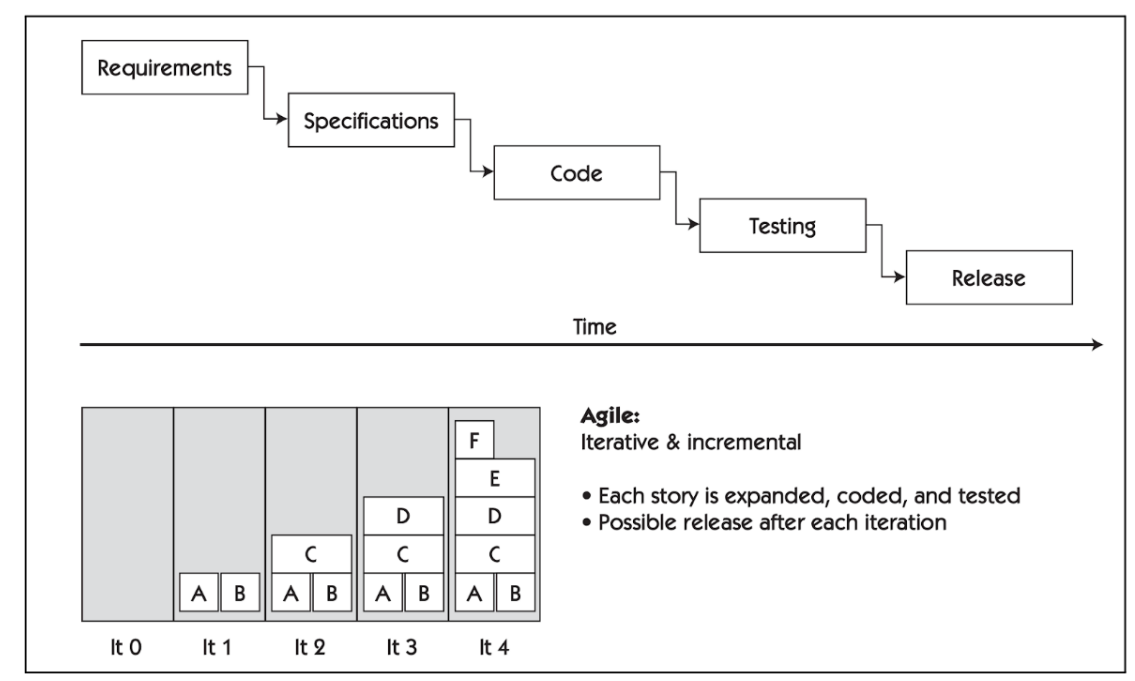
Agile has been the go to ways of working in most of the organisations in the recent days. Because of its iterative and incremental delivery it helps organizations, teams and projects to deliver high value items quickly, take feedback and pivot to ensure customers get high value delivered continuously and are satisfied. In today’s fast-paced digital landscape, software development teams face the challenge of delivering high-quality products at speed, without compromising on reliability or user satisfaction. And the primary reason for this struggle is the “Shunt Effect” caused at the testing phase.
Agile testing methodology, unlike conventional or traditional project delivery, where testing is just a phase of the project, needs change in the way we look at testing the product continuously. It requires a mindset shift towards improving quality at all the stages of the product lifecycle. Delay in traditional development causes teams to usually compromise on the quality because of one big fat release and fixed deadline usually. Agile methodology in software testing, promotes incremental and iterative development that requires a left shift in testing strategy to help teams deliver quality products to the customers. This blog aims at explaining:
What is Agile Testing Methodology or agile method in software testing?
Role on Agile Testers in the projects
What does a Tester do in the agile model in software testing?
Examples of Agile Testing Methods
How to strategise agile testing?
Examples of Agile Testing Strategies
Managing the agile testing flow
Advantages and Disadvantages of Agile methodology in software testing
What is an Agile Testing Methodology?
Agile testing methodology is the flow of testing which promotes agile principles in software development. Agile promotes software being developed in small chunks continuously in iterations. Agile method in software testing aligns with the iterative approach by integrating testing through the entire development lifecycle instead of just keeping it as a separate phase before the release.
Unlike traditional waterfall development, where testing typically occurs after the completion of coding, Agile testing begins as soon as there is a working piece of software, even if it’s just a small feature. This allows for early validation of features and ensures that defects are identified and addressed adequately.
Agile methodology in software testing is not just about finding defects, it’s about ensuring that the software meets business objectives, delivers value to the customer, and maintains a high level of quality throughout. By understanding Agile testing principles and practices, development teams can accelerate delivery, reduce risk, and ultimately build high quality software. Below are some of the characteristics of agile testing methods:
Test small chunks continuously rather than testing everything at once
Early validation with iterative testing
Enhances collaboration with the development team
Frequent regression testing with increments being integrated
Promotes seeking customer feedback after every iteration
What does an agile tester do?
Agile focusses on One team mindset. That is, it strongly promotes individuals to have T shaped skillset. It strongly encourages testing as an activity rather than a role. Development team members being cross functional, ensures we have all the skillset needed to convert a requirement into a working software. Testers are also part of the development team. They now play a wider role than just concentrating on testing activities alone. While the entire team takes equal responsibility in assuring quality, here are a few things which a tester does in an agile model in software testing:
Collaborate with all the team members that is PO, SM and development team to understand the requirements in detail
Take part in solutioning and approach discussion to arrest any buggy solution
Actively contribute in all the sprint ceremonies
Test early and often by introducing testing methods like TDD, BDD to ensure development is done with quality
Respond to changes in requirements by collaborating with the product team
Recommend changes in the process to arrest bugs early in the development
Track and monitor issues or bug reports to understand the gaps in the team
Automate the testing process to ensure continuous delivery is done
Ensure the end product meets the customer requirements
Build testing proficiency in scripting, automating and other pipeline concepts
Help developers in unit testing and peer reviews
Agile Testing Methods with 5 Examples
Agile testing methodology has evolved over the years significantly and there are several frameworks teams use in their environment to achieve quality. While different frameworks can be used based on the nature of the project, team maturity, automation expertise, all the frameworks promote teams with agile testing principles. Let’s understand the top 5 methods popularly used in agile software development testing:
Test-Driven Development (TDD) – It is a software development approach that emphasizes writing tests before writing the actual code. It follows a cycle of writing a failing test, writing the minimum amount of code necessary to pass the test, and then refactoring the code to improve its design while ensuring that all tests still pass.
Behavior Driven Development (BDD) – Behavior-Driven Development (BDD) is a software development methodology that focuses on defining and verifying the behavior of a system from the perspective of its stakeholders. At its core, BDD involves writing executable specifications called “scenarios” or “user stories” that describe the expected behavior of a feature or component in a language that is understandable by both technical and non-technical stakeholders. These scenarios are typically written using a structured format known as Given-When-Then (GWT) format
Exploratory Testing – Exploratory testing is an approach to agile software development testing where testers design and execute tests in parallel, exploring the application without predefined test cases or scripts. Testers rely on their domain knowledge, intuition, and creativity to find defects, observe system behavior, and evaluate user experience.
Session-Based Testing (SBT) – It’s a method of exploratory testing that structures exploratory testing into manageable time-boxed sessions. In SBT, testers conduct testing sessions typically ranging from 60 to 120 minutes, focusing on specific test objectives or areas of the application.
Acceptance Test-Driven Development (ATDD) – It’s a practice within Agile software development that involves collaboratively defining acceptance criteria for user stories or features before implementation. ATDD encourages collaboration between developers, testers, and business stakeholders to ensure a shared understanding of requirements and expectations. Once acceptance criteria are defined, automated acceptance tests are created to verify that the software meets these criteria
Agile Testing Strategies
Conventional software testing comes with a test plan which mostly is a rigid document which talks about scope of testing, timeline etc. However, in an agile model in testing, we must be able to respond to change. This requires a shift of looking at testing from following a rigid plan to having a broad level strategy in place. This helps teams to go by the strategy while practices can be modified later. Here is how a strategy can be looked at from a project phase stand point:
 Skip to content